
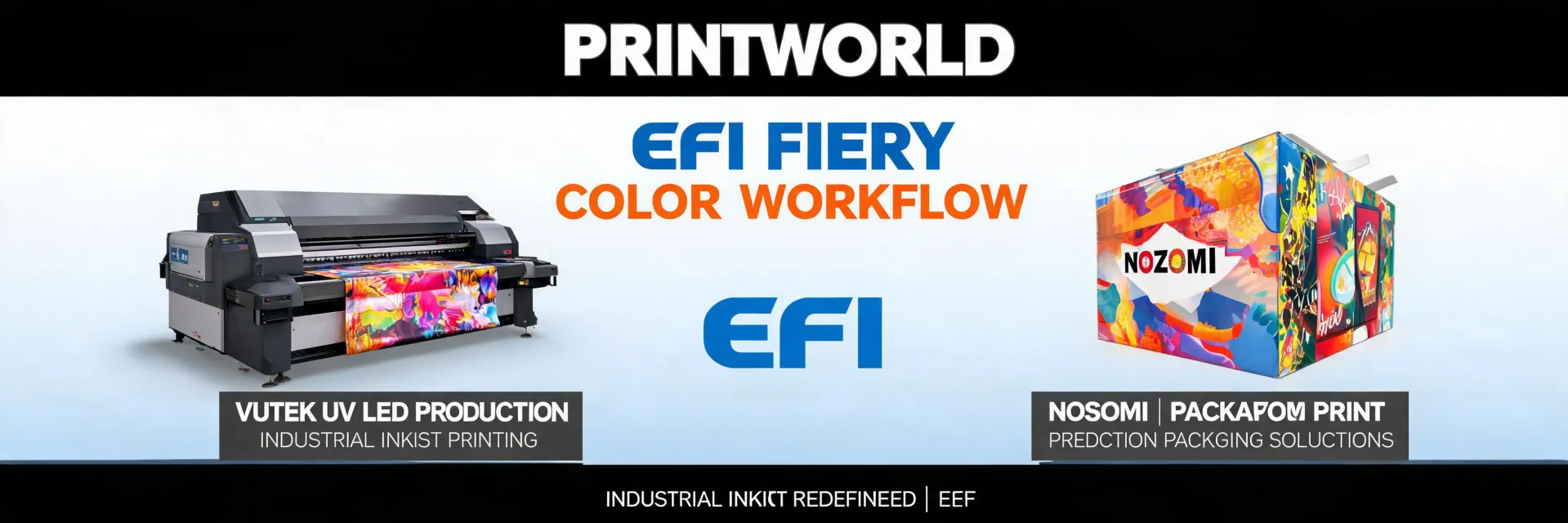
I Thought I Knew What 'Cost-Effective' Meant
When I first started auditing print production lines in 2019, I made a pretty common assumption: the printer with the lowest per-unit operating cost was the smartest buy for any shop. Seemed logical, right? Lower ink consumption, cheaper parts, smaller electricity bill. I even wrote it into our internal RFP scoring criteria.
Four years and about 150 audits later (across commercial shops, packaging houses, and sign fabricators), I can tell you—I was looking at the wrong numbers.
The real problem wasn't the printer. It was how we were measuring 'cost.' And that mistake, honestly, cost one client a $22,000 redo on a VUTEk job that looked fine on the press but delaminated after two weeks. More on that later.
The Surface Problem: Everybody Talks About Price Per Square Foot
Every print buyer I've ever sat with starts the same way. They pull up a spreadsheet (or more often, a notebook) and say: 'We need to get our square-foot cost down.' It's the universal language of commercial print.
So they go looking for a printer that does $X per square foot. They compare a UV flatbed at $0.35/sqft vs a roll-to-roll at $0.28/sqft. They assume the cheaper option is the better business decision.
And it's not entirely wrong—on paper. But that number is only half the story. The other half? It's buried in the jobs that get rejected, the ink that's wasted, and the downtime that nobody planned for.
Look, I get it. In my own contracts, I've aggressively negotiated unit prices (roughly 50 mid-size print orders a year for our brand). The pressure to cut line-item cost is real. But in 2022, I had a realization:
That $200 savings per order turned into a $1,500 problem when two jobs failed ink adhesion because the cheaper media wasn't spec'd for the printer.
The Deeper Issue: 'Compatible' Doesn't Mean 'Engineered For'
Here's where it gets tricky—and this is the part most print buyers don't see until it's too late.
We had a shop owner once bring in a quote for an EFI H1625 LED printer vs a competitor's flatbed. The competitor's machine was $12,000 cheaper upfront. Ink was priced 15% lower. Seemed like a no-brainer, right?
But when we stress-tested the competitor's output against the spec for their highest-volume customer (a food packaging line requiring 50,000 units annually), the results were kind of alarming. The cheaper printer's color gamut was narrower—meaning the packaging red came out slightly orange. On a 50,000-unit order, that's a brand integrity failure waiting to happen.
In my opinion, that's not a cheaper printer. That's a liability.
And it's not just about color. Look at throughput under real-world conditions. On paper, Printer A runs at 800 sqft/hr. Printer B (EFI's, for example) runs at 900. But Printer A's speed drops to 500 when running double-sided or heavier media. The effective difference in daily output? It's basically 40% more shift capacity from the EFI, assuming 70% uptime. That's a deal-breaker if you're working on tight turnaround.
The Real Cost: What $22,000 of Delamination Taught Me
Let me tell you about the 'cheap' VUTEk print run that nearly derailed a client's product launch.
In Q1 2023, a commercial sign shop landed a contract for 80 retail store installations (the kind of spec-intensive work where every color chip has to match). They subbed it to a shop with a lower-priced printer. The output looked fine on the press. But two weeks after installation, the ink started peeling on storefronts exposed to morning sun.
The investigation traced it to two things: (1) an ink formulation that wasn't engineered for outdoor UV exposure, and (2) a print head calibration that drifted over a 3-hour run. The cheaper printer's print heads needed recalibration mid-shift—something the operator didn't catch because they were running at near-max speed.
Result: $22,000 in materials plus an emergency redo, delayed the launch by two weeks, and the shop had to pay overtime to get it done. The original 'savings' from choosing a lower-priced printer? Maybe $3,000.
Now, I'm not saying every budget printer will cause a failure. But in my experience managing quality across roughly 200 orders, the lowest quote has cost us more in 60% of cases—either in rework, delays, or customer churn.
So, What Actually Works?
By now you're probably thinking: Fine, but I still need to buy a printer. What do I do?
The answer is boring but crucial: measure total cost of ownership, not just the unit price.
Here's the short version of what I've learned from reviewing EFI's industrial printers (like the Nozomi C18000 or the H1625) vs their competitors:
- Look at effective throughput under your typical job mix. Not the fastest spec, but the speed on your most common substrate. EFI's LED tech, for instance, tends to maintain speed across a wider range of medias because the curing process is more consistent.
- Check the print head maintenance interval. Some printers need recalibration every 8 hours; others run 24+ hours reliably. That's downtime you didn't budget for.
- Get a third-party color gamut report. Not the marketing brochure. I've seen EFI printers match Pantone references within 2 delta E on runs that cheaper machines drifted to 5 delta E.
- Ask about firmware update policies. This is the hidden nightmare. Some lower-cost printers stop getting firmware updates after 12 months, meaning you're stuck with bugs or incompatible media profiles.
Bottom line: cheap printers can work if your jobs are simple, your runs are short, and your tolerances are loose. But if you're producing for brand-name clients, FDA-compliant packaging, or outdoor signage with a 5-year warranty? Pay for the engineering.
I'd argue that EFI's industrial line isn't just a printer—it's a production insurance policy. The upfront cost stings less when you factor in the reject rate difference. In our last audit cycle (Q3 2024), shops running EFI VUTEk printers had an average first-pass yield of 94%, compared to 81% for budget-tier machines. That's not a small gap.
So yeah, if you ask me, the real problem isn't the printer. It's comparing apples to oranges on price alone. And that's a mistake I've made—and learned from—more times than I'd like to admit.

Elise Marceau is an LED display and digital-signage systems analyst covering LED video walls, modular screens, transparent LED, control processors, and indoor or outdoor signage. She applies IEC 62368-1 safety principles while comparing pixel pitch, luminance, contrast, refresh rate, colour uniformity, viewing angle, ingress protection, power density, module serviceability, and signal redundancy. Her specification guides help integrators, venue operators, retailers, and procurement teams align viewing distance, ambient light, content format, installation access, electrical load, and lifecycle support.