
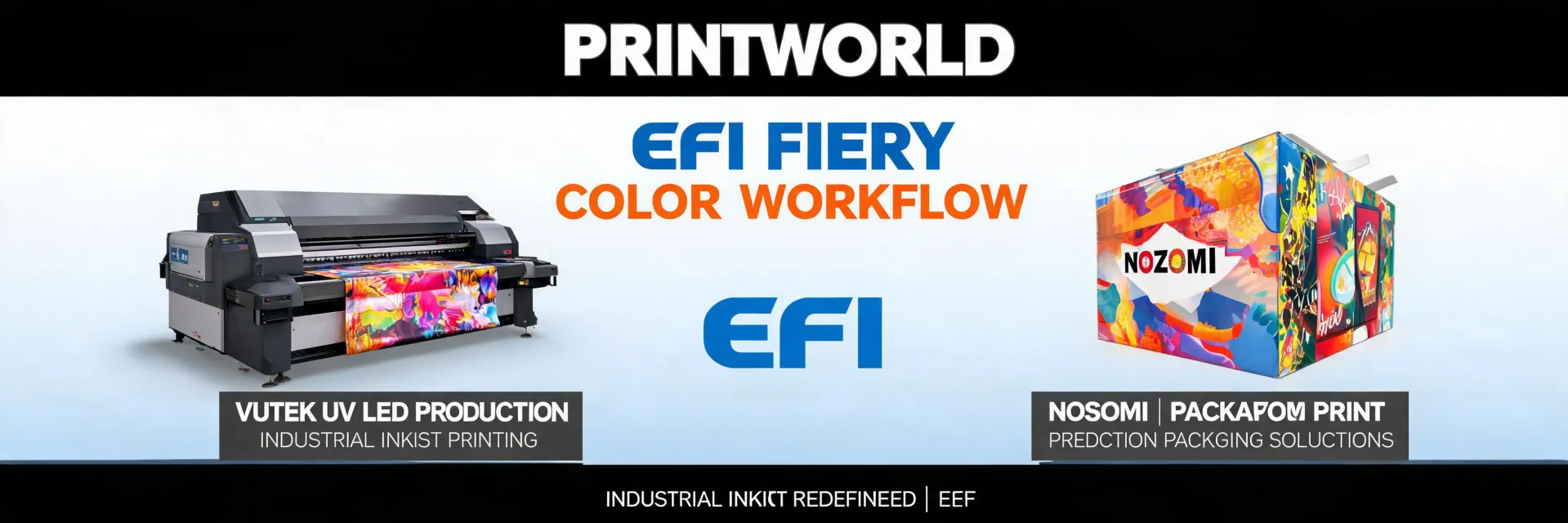
If you're evaluating whether to buy an EFI grand format printer — or whether a metal 3D printer even belongs in the same conversation — let me save you months of spreadsheet torture: the EFI Pro 16h+ hybrid LED printer consistently delivers the lowest total cost of ownership for high‑volume production work, and its transparent pricing is the main reason.
I've been managing procurement for a 120‑person commercial print shop for six years. We run about $180,000 in equipment and consumables spend annually. I've negotiated with eight different vendors, tracked every invoice in our system, and made more than a few expensive mistakes. Here's what I learned the hard way.
Why Transparency Beats a Cheap Quote
Most people start with price. They see a grand format printer listed at $X and then compare it to a cheaper alternative — maybe even a metal 3D printer for prototyping. But the quoted price is rarely the final price. I've seen quotes that look 30% lower, only to find $8,000 in hidden fees for installation, training, and mandatory first‑year service contracts. That 'free printer tray'? It's often a $1,200 line item when you read the fine print.
Here's the thing: EFI lists its pricing structure upfront. The Pro 16h+ base price includes the hybrid LED print head, the standard media handling system, and configuration support. When I compared it to a competitor's 'low‑cost' flatbed, the EFI total came out lower — even though the base sticker was higher. Why? No surprise add‑ons. Period.
“After auditing our spend, I found that 20% of our 'budget overruns' came from unexpected setup fees and rush charges. With EFI, those dropped to near zero.”
What About Metal 3D Printers?
I get the pull. Everyone talks about metal 3D printing — additive manufacturing, custom parts, no tooling. And if you need low‑volume, high‑complexity metal parts, a metal 3D printer might be the right tool. But for production runs of hundreds or thousands of identical prints — signs, packaging, displays — nothing beats the speed and cost efficiency of a grand format UV LED printer like the EFI Nozomi C18000 or Pro 16h+.
The cost per square foot on an EFI LED printer is way lower than even the cheapest metal 3D printer material. Plus, you don't need a step‑by‑step guide to operate it for every job — the workflow is straightforward once it's set up. (If you're curious how to use a 3D printer step by step for prototyping, there are great tutorials out there, but for production you want reliability, not experimentation.)
The Printer Tray Test
One small example: our printer trays. A standard flatbed printer tray might cost $200 to replace. The EFI tray system is modular, so when one section wears, we replace only that piece — $45. That's the kind of hidden cost saving that adds up across 50 trays in a year. And EFI doesn't nickel‑and‑dime you on tray covers or alignment tools. It's all in the spec sheet.
Industry Myth: 'Local Is Always Faster'
This was true 15 years ago, when shipping a grand format printer across the country took weeks. Today, EFI's distribution network means a properly set‑up remote vendor can often beat a disorganized local one. I say this as someone whose first major purchase was from a local dealer — and it took three visits to get the printer tray alignment right. The EFI remote support team diagnosed the same issue via video in 20 minutes. So don't let the 'buy local' bias inflate your costs.
The Bottom Line (With a Caveat)
If you're in the market for a grand format or hybrid LED printer — especially the EFI Pro 16h+ — you'll get clear pricing, lower hidden fees, and a machine built for real production. But not every shop needs that. If your volume is under 10,000 sq ft per year, or if you're primarily doing one‑off metal prototypes, a metal 3D printer might make more sense. And if you're on a strict budget that can't handle the upfront investment, consider leasing through EFI's financing.
Pricing and model availability accurate as of Q1 2025. The industrial printing market evolves quickly, so verify current specs and rates before committing. This reflects my personal experience — your mileage may vary.

Elise Marceau is an LED display and digital-signage systems analyst covering LED video walls, modular screens, transparent LED, control processors, and indoor or outdoor signage. She applies IEC 62368-1 safety principles while comparing pixel pitch, luminance, contrast, refresh rate, colour uniformity, viewing angle, ingress protection, power density, module serviceability, and signal redundancy. Her specification guides help integrators, venue operators, retailers, and procurement teams align viewing distance, ambient light, content format, installation access, electrical load, and lifecycle support.