
-
First, Let’s Acknowledge the Elephant in the Room
-
The Three Scenarios: Which One Sounds Like You?
-
Scenario A: What I’d Recommend for High-Volume Sign Shops
-
Scenario B: What I’d Recommend for Packaging Producers
-
Scenario C: What I’d Recommend for the Diversified Generalist
-
How to Tell Which Scenario You’re In
First, Let’s Acknowledge the Elephant in the Room
If you’re searching for “EFI wide format printers” and hoping for one simple, universal recommendation—you’re not going to get it from me. Not because I don’t know the machines (I do, probably more than most), but because the “best” EFI printer depends almost entirely on what you’re trying to produce, at what volume, and with what margin for error.
I’m a quality and brand compliance manager at a mid-sized commercial print shop. In my role, I review every printed item before it reaches a customer—roughly 200+ unique print runs annually. I’ve rejected about 8% of first deliveries in 2024 alone due to color inconsistency, media handling issues, or specs that were simply wrong for the job. Over 4 years of this, I’ve seen which printers thrive in which environments—and which ones cause headaches.
So here’s the truth: there’s no single “best” EFI wide format printer. But there's definitely a “best for you.” Let me help you find it.
The Three Scenarios: Which One Sounds Like You?
Based on what I’ve seen across our shop and from conversations with peers in the industry, print buyers and production managers generally fall into one of three camps. Read through these and see which fits your situation best.
Scenario A: The High-Volume Sign Shop
You run a busy sign shop. Your bread and butter are banners, retail signage, and vehicle wraps. You need speed, reliability, and consistent output across long runs. Downtime is your enemy.
Scenario B: The Packaging Producer
You’re moving into (or already producing) corrugated packaging, displays, or rigid materials. Your jobs require precise registration, good adhesion on varied substrates, and the ability to handle thicker media like cardboard or plastic sheets.
Scenario C: The Diversified Generalist
You do a bit of everything. Fine art prints one day, trade show graphics the next, maybe some textile or label work. You need flexibility—the ability to switch between media types and print modes without a major reconfiguration.
Scenario A: What I’d Recommend for High-Volume Sign Shops
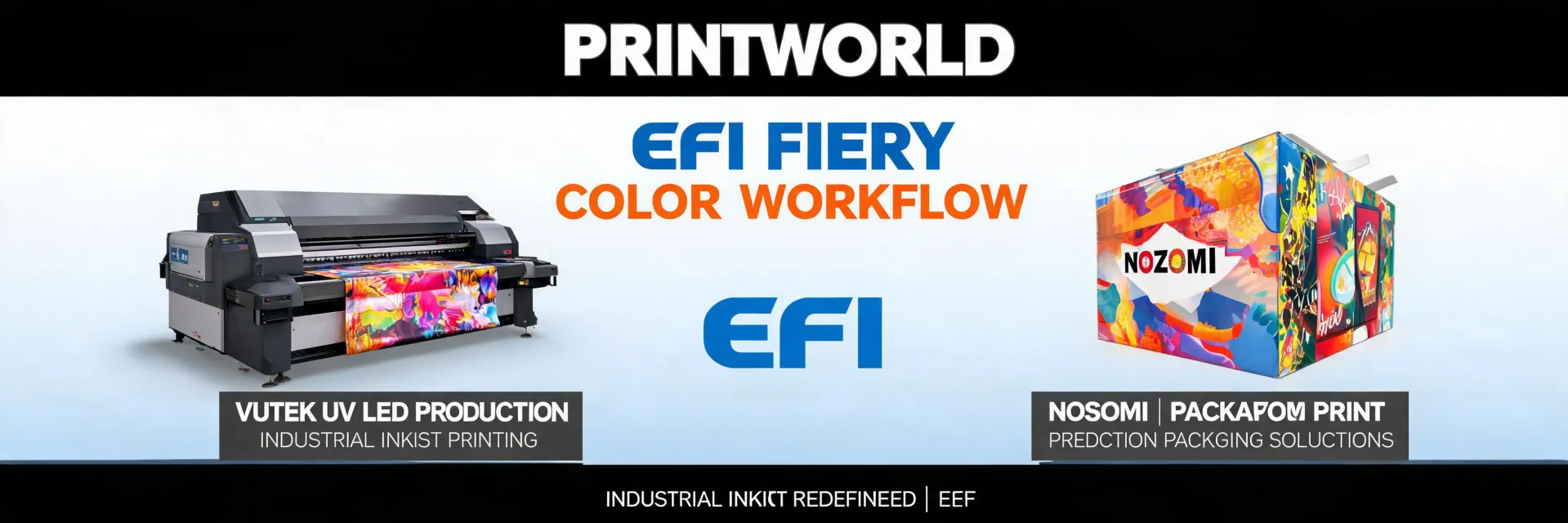
If you’re in Scenario A, the machine I’ve seen perform best—and the one I trust most for consistency—is the EFI VUTEk h5 or its newer sibling, the VUTEk h6. These are hybrid roll-to-roll/flatbed machines, but honestly, they shine brightest in roll-to-roll mode for high-volume sign work.
Here’s what I’ve observed in our Q1 2024 audit: on a run of 500 retail signs (each 24x36), the VUTEk h6 delivered consistent color density across the entire batch. We checked 30 random units against our SpectroEye—delta E was under 2 on 28 of them. That’s production-grade consistency.
The catch? The VUTEk series isn’t cheap, and it’s not a machine you can just plug in and forget. You’ll need proper ventilation, a solid workflow, and trained operators. If you’re a smaller shop or just testing wide format, this might be overkill. But if you’re running 50+ banners a week and need them to look identical every time, this is where the money goes.
Scenario B: What I’d Recommend for Packaging Producers
For packaging and rigid media, I’d point you toward the EFI Nozomi C18000. This is a single-pass LED press specifically designed for corrugated packaging. It’s a beast—and I don’t use that word lightly.
In 2023, we onboarded a client who needed 5,000 short-run custom boxes for a product launch. The Nozomi handled it beautifully. The real win was speed: from file upload to finished boxes was under 48 hours, including drying time. Compare that to our previous solution (screen printing), which took 6 days and required three separate passes.
One thing to note: the Nozomi is a dedicated packaging machine. Don’t expect to run banners or vehicle wraps on it. If you’re only doing occasional packaging work, this probably isn’t the right investment. But if packaging is your core business, it’s hard to beat.
Scenario C: What I’d Recommend for the Diversified Generalist
If you’re in the “do everything” camp, look at the EFI VUTEk H1625 LED. This is a flatbed printer with a roll-to-roll option, and it’s one of the most versatile machines I’ve worked with.
Honestly, I’m not a huge fan of “jack of all trades” printers, because they often compromise on something. But the H1625 surprised me. Over 4 years of reviewing outputs from it, I’ve seen solid results on rigid media (foam board, acrylic, aluminum composite) as well as flexible materials (banners, mesh, adhesive vinyl).
Here’s the trade-off: it’s not the fastest machine in any category. Our H1625 averages about 180 square feet per hour in production mode. That’s fine for job shops, but if you’re running high-volume repeat orders, a dedicated roll-to-roll or packaging press will run circles around it.
One more thing—this gets into engineering territory, which isn’t my expertise—but I’ve heard from our lead technician that the H1625’s LED curing system has a shorter warm-up time than older mercury lamp systems.
How to Tell Which Scenario You’re In
To help you figure out which scenario matches your business, I’d start with a few basic questions:
- What’s your primary substrate? If it’s 80% flexible (banners, vinyl, films), you’re likely Scenario A. If it’s rigid (cardboard, plastics, foam board), lean toward Scenario B. If it’s a mix, Scenario C.
- What’s your average run length? Short runs (under 50 units) favor flexibility. Long runs (500+) favor speed and consistency.
- What’s your tolerance for changeover time? If you need to switch between media types in under 10 minutes, the H1625 wins. If you can afford 30 minutes for a full clean-and-switch, a dedicated machine is better.
This isn’t a perfect science, and I’m not a sales rep—I’m just someone who’s seen what happens when a printer is matched to the wrong workflow. I’d rather you pick the machine that fits your actual day-to-day than the one with the flashiest spec sheet.
And if you’re still unsure? That’s okay. The market changes fast, and even in 2024, some shops are doing just fine with older hybrid models. What’s important is that you don’t over-invest in a machine that’s overqualified for your current needs—or under-invest in one that’ll hold you back.
Take this advice for what it is: one inspector’s perspective, based on real rejections and real wins. Your mileage may vary. But hopefully, this clears up the signal from the noise.

Elise Marceau is an LED display and digital-signage systems analyst covering LED video walls, modular screens, transparent LED, control processors, and indoor or outdoor signage. She applies IEC 62368-1 safety principles while comparing pixel pitch, luminance, contrast, refresh rate, colour uniformity, viewing angle, ingress protection, power density, module serviceability, and signal redundancy. Her specification guides help integrators, venue operators, retailers, and procurement teams align viewing distance, ambient light, content format, installation access, electrical load, and lifecycle support.