
-
Step 1: Nail Down Your Critical Substrates (and Your Volume)
-
Step 2: Run the Numbers on Ink Costs — Not Just the Price Per Cartridge
-
Step 3: Verify Your Workflow for Label and GHS-Compliant Jobs
-
Step 4: Don’t Trust the Marketing Resolution Stat Alone
-
Step 5: Calculate Total Cost of Ownership (TCO) — Not Just the Upfront Price
-
Step 6: Test the Color Matching Before You Commit
- Two More Things to Watch Out For
I’ve been handling production orders for a mid-sized commercial print shop for a little over six years. In that time, I’ve personally made — and documented — a handful of pretty significant mistakes when it came to specifying and buying wide format equipment. One of those mistakes cost us roughly $3,200 in redo work plus a two-week production delay. That’s a lot of wasted budget, and a lot of explaining to the boss.
Most of those screw-ups happened when we were dealing with EFI wide format printers. Not because the printers are bad — they’re solid, honestly — but because I didn’t have a damn checklist. I was going on gut feel, vendor promises, and whatever the salesman was pushing that month. That’s a recipe for disaster.
After my third expensive lesson, I created a pre-purchase checklist
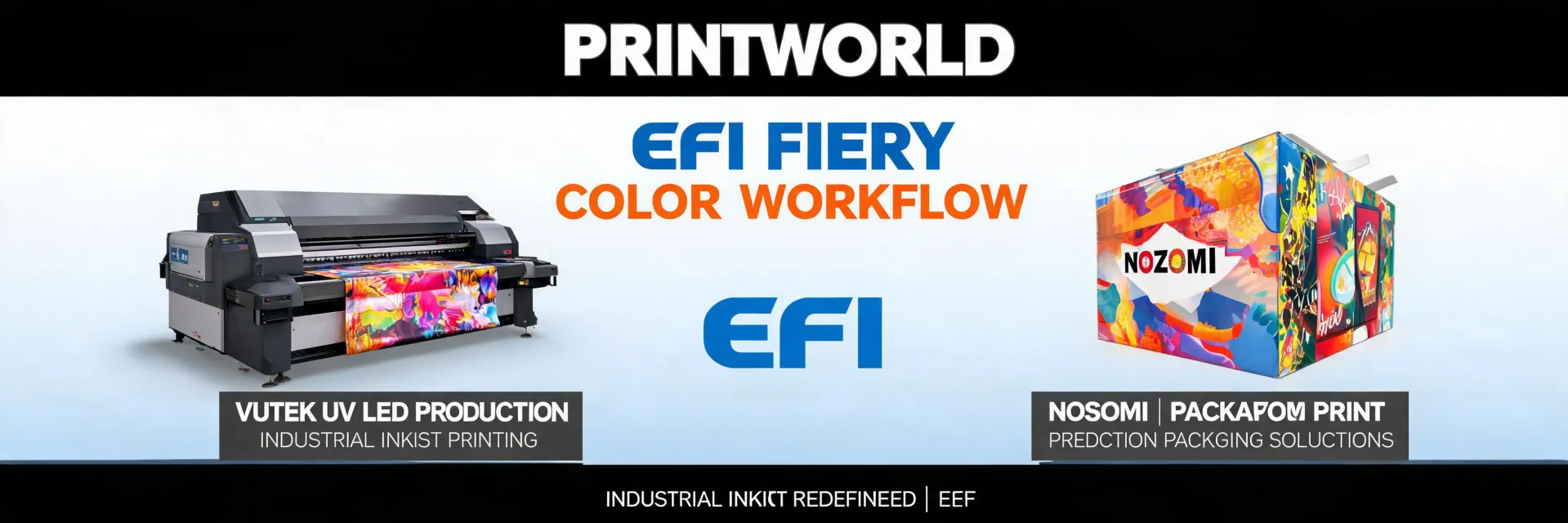
that I now use for every single wide format acquisition. It’s saved us from repeating the same mistakes. This article is that checklist. If you’re about to buy or upgrade an EFI wide format printer — whether it’s a flatbed like the H1625, a grand format like the VUTEk series, or a roll-to-roll — read this first.
It’s broken down into six steps, each with a specific check point. Skip one at your own risk.
Step 1: Nail Down Your Critical Substrates (and Your Volume)
This sounds obvious, but you’d be surprised how many people go shopping without really knowing what they’ll be printing on most of the time. I was one of them. We bought a flatbed thinking it would handle everything — rigid board, PVC, acrylic, corrugated plastic. Then we tried to run a big roll of thin paper on it without the proper roller kit. That was a mess.
EFI’s wide format printers are specialized. The VUTEk series is built for high-volume roll-to-roll and grand format stuff — think billboards, banners, vehicle wraps. The H1625 is their LED flatbed for rigid substrates up to about 64 inches wide. You can make either work for a range of jobs, but you’ll pay for it in productivity or quality if you try to force a square peg into a round hole.
Make a list of your top three substrates by volume. Then look at the printer’s specs for those materials specifically. Don’t assume the machine handles them well just because the brochure says “substrates up to 2 inches thick.”
Checklist item: Does the printer (and its media handling options) support your top substrates at the speed and quality you need?
Step 2: Run the Numbers on Ink Costs — Not Just the Price Per Cartridge
Here’s something vendors won’t tell you: the first quote for ink is almost never an accurate reflection of your long-term cost. I learned this the hard way. We got a great deal on the printer itself, but the ink pricing was structured in a way that made it really expensive on a per‑square‑foot basis for our typical jobs. By the time we figured it out, we were locked in.
EFI uses a proprietary ink — the UltraDrop technology — which gives excellent color and adhesion for outdoor and industrial use. But the cost per milliliter varies depending on your volume tier, how you set up the contract, and whether you’re buying OEM only. Some shops get favorable long-term deals, others get standard pricing that hits their margins hard.
Ask for a per‑square‑foot ink cost estimate based on your projected job mix. Not a per‑cartridge price. And get it in writing. If the vendor won’t provide it, that’s a red flag.
Checklist item: What is the estimated ink cost per square foot for your typical job types? Is it lower than your current method?
Step 3: Verify Your Workflow for Label and GHS-Compliant Jobs
This is a niche that can make or break a shop. If you’re handling label printing — especially GHS compliant label printer work — the machine’s software integration matters as much as the print head. GHS (Globally Harmonized System) labels have specific chemical hazard pictograms, signal words (like “Danger” or “Warning”), and precise color requirements. You can’t just slap any label design on and hope for the best.
EFI has the Nozomi C18000 for high-speed corrugated packaging, and they have solutions for label printing that integrate with their Fiery workflow software. That workflow handles variable data, barcodes, and color matching for regulatory stuff. But here’s the thing: you need to make sure the software version you’re buying is configured for GHS compliance out of the box. Some dealers don’t think to mention this.
We once had a job where the required safety orange (Pantone 152 C) was close but not exact. The client rejected it. 5,000 labels, straight to the shredder. Cost us $890 in redo plus a week of delay.
Checklist item: If you plan to print any regulatory labels, ensure the workflow supports the specific color standards and variable data fields required by GHS (or other applicable regulations).
Step 4: Don’t Trust the Marketing Resolution Stat Alone
Industry standard print resolution for commercial proofing is 300 DPI at final size. For large format — stuff that’s viewed from a few feet away — 150 DPI is often acceptable. But here’s the catch: native dots per inch on the print head isn’t the same as perceived resolution after screening and ink spreading.
I’ve seen people buy a printer based on a spec like “2400 DPI” and then be disappointed that fine text looks fuzzy on a textured vinyl. That’s because the ink spreads more on textured surfaces, reducing effective resolution. EFI’s LED printers (like the H1625) have excellent drop placement accuracy — typically 7-15 picoliter drops — but you have to test with your actual substrates.
For ghs compliant label printer work, you’ll want a printer that can produce sharp, small text (like “Warning” in 8pt font) on glossy label stock without significant dot gain. That’s where the combination of print head technology and ink-substrate interaction matters more than the theoretical DPI number.
Checklist item: Have you seen the machine print your specific job types on your specific materials? Not just demo images on gloss paper.
Step 5: Calculate Total Cost of Ownership (TCO) — Not Just the Upfront Price
Let’s talk about the “$7,000” vs. “$12,000” printer problem. The cheaper one can end up costing you way more in the long run. This is where total cost thinking comes in. My rule now is simple: calculate TCO before comparing any vendor quotes.
For an EFI wide format printer, TCO includes:
- Unit price (obviously)
- Shipping and installation ($500-$2,000 depending on location)
- Training for your operators (some dealers include this, some charge $1,000-$3,000)
- Ink and maintenance over the first 12-18 months
- Potential down time during the learning curve (that’s real cost)
- Financing interest if you’re leasing
The $500 cheaper printer often turns into $800 more after shipping and setup fees. The $650 all-inclusive quote was actually cheaper. I’ve seen this play out three times in my own shop.
Checklist item: Get a written TCO estimate covering at least the first 18 months of ownership. Include ink, service, and consumables.
Step 6: Test the Color Matching Before You Commit
This is the step I always skipped, and it bit me hard. Industry standard color tolerance is Delta E < 2 for brand-critical colors. Delta E of 2-4 is noticeable to trained observers. For corporate logos or brand colors, anything above 2 is likely to get rejected.
When we were evaluating an EFI printer, we ran a Pantone color test. But we only tested on one substrate — glossy paper. Later, when we tried to get the same Pantone 286 C blue on a matte polycarbonate sheet, the Delta E was something like 3.8. The client rejected it. That was a $450 mistake plus the cost of resubstrates (note to self: always test on the actual materials).
Make sure the demo facility or the dealer runs your specific brand colors on your substrates. Not just what they have sitting in their sample binder.
Checklist item: Do your mission-critical Pantone colors hit Delta E < 2 on your three most common substrates?
Two More Things to Watch Out For
Don’t Overlook the Service Contract
EFI’s service and support are generally good, but not all dealers offer the same terms. Some include preventive maintenance visits in the price, others charge separately. If you’re running a production-heavy shop, a missed maintenance visit can lead to a breakdown that costs you a day or two of output. That adds up fast. Make sure the service agreement covers response time and parts availability for your location.
Beware the “All-in-One” Promise
Some salespeople will claim an EFI printer can handle everything from thin paper to thick rigid board to roll-to-roll with no issues. That’s rarely true without add-on kits. The H1625, for example, is a flatbed with optional roll‑feed. The VUTEk Q3r is a roll‑to‑roll with a rigid option. Know the difference or you’ll end up with a machine that doesn’t fit your job mix. I still kick myself for not questioning that claim on our first purchase.
Bottom line: Print buying is full of hidden costs. But if you follow this checklist — and run the numbers with total cost in mind — you’ll make a better decision. And you’ll avoid the kind of expensive, regret-filled mistakes I made.

Elise Marceau is an LED display and digital-signage systems analyst covering LED video walls, modular screens, transparent LED, control processors, and indoor or outdoor signage. She applies IEC 62368-1 safety principles while comparing pixel pitch, luminance, contrast, refresh rate, colour uniformity, viewing angle, ingress protection, power density, module serviceability, and signal redundancy. Her specification guides help integrators, venue operators, retailers, and procurement teams align viewing distance, ambient light, content format, installation access, electrical load, and lifecycle support.