Fiery Digital Front End
RIP settings, ICC profiles, device links, spot-color libraries, queues, and calibration routines are governed at the DFE layer so operators can reproduce approved color instead of reinventing settings by shift.
EFI technology is not a single machine feature. It is the chain between artwork, profile, RIP, ink delivery, cure, media transport, finishing, and service. For production buyers, the useful question is whether that chain can be specified, measured, repeated, and supported under the same pressures as real commercial work.
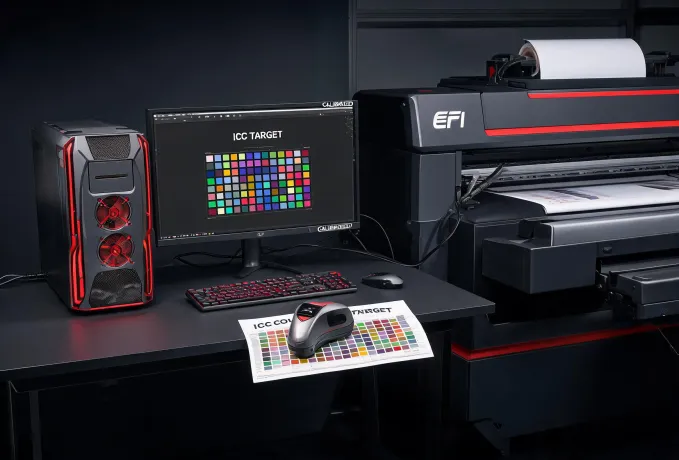
RIP settings, ICC profiles, device links, spot-color libraries, queues, and calibration routines are governed at the DFE layer so operators can reproduce approved color instead of reinventing settings by shift.
UV LED intensity, water-based packaging ink behavior, textile chemistry, and white or clear layers are evaluated against substrate limits. The goal is stable adhesion and appearance, not maximum ink laydown.
EFI Pace, Monarch, PrintSmith, and Web-to-Print workflows can connect estimating, job ticketing, scheduling, queueing, and finishing so a job's commercial assumptions follow it onto the floor.
File, spot colors, substrate, viewing condition, and finishing requirements are documented before the profile decision is made.
Fiery settings define gamut mapping, calibration target, gray balance, and spot-color approach for that press and material.
Ink limit, cure window, adhesion, and surface behavior are validated so the job survives handling and finishing.
Operator routine, color-bar review, and escalation rules are written into the job path before repeat production.
EFI can review an existing workflow or a planned production line. The best review includes sample files, substrate details, color tolerances, current RIP settings, MIS constraints, and finishing requirements.