-
The Printer That Made Me Reconsider Everything
- What "Which Printer Is Best" Actually Means
-
The Delta E Lesson That Changed My Vendor Scorecard
- What Stencil Printers and Label Printers Taught Me About Boundaries
-
But Wait—Is Specialization Just a Luxury of Large Vendors?
-
How to Ask Better Questions (Based on My Mistakes)
-
The Bottom Line I've Landed On
Here's an unpopular opinion: if a printing vendor tells you they can do everything, what they're really saying is they haven't tested their limits yet. And in industrial digital printing, untested limits mean costly surprises.
I say this after seven years of managing purchasing for a mid-sized manufacturer. When I took over in 2020, our company had one rule: find suppliers who can do it all. We lost about $18,000 in scrapped materials and rush shipping because a 'full-service' provider promised more than their equipment could deliver.
So when I see questions like "which printer is best?" or "3D printer what can you make?" — I get it. But the better question is: what should this specific machine do, and does the manufacturer have a clear answer for what it shouldn't do?
The Printer That Made Me Reconsider Everything
Our shop runs a mix of commercial jobs and industrial packaging prototypes. In 2024, I spent three months evaluating wide-format and industrial inkjet options. Not because we love shopping around—but because the vendor we'd used for years started selling 'solutions' that required them to subcontract half the work.
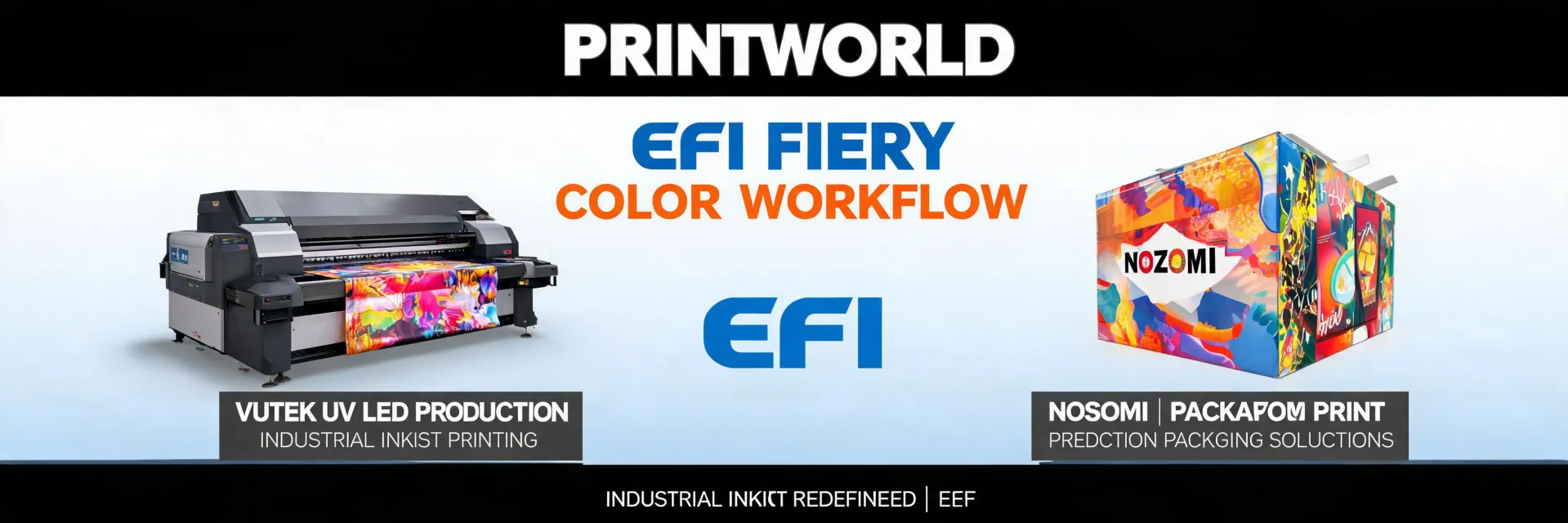
That's when I first seriously looked at EFI. Their lineup includes the VUTEk series for grand format, the H1625 LED flatbed for rigid substrates, and the Nozomi C18000 for high-speed corrugated packaging. What caught my attention wasn't just the specs—it was how openly their engineers discussed limitations.
One conversation stands out. I asked whether an EFI H1625 could handle a specific thin plastic substrate we were testing. Instead of a vague "sure, it'll work," the application specialist said: "That's not the right tool. Our flatbed needs at least a little rigidity. Here's who's solved this with a roll-to-roll and here's what to ask them."
That response should sound obvious. It isn't. I've gotten more "we can make it happen" quotes than I can count—followed by expensive trial-and-error.
What "Which Printer Is Best" Actually Means
People searching "which printer is best" rarely need a definitive answer. They need someone honest about the tradeoffs. Let me break it down the way I wish someone had for me:
- EFI VUTEk series — built for grand format and high-volume production. If you're printing billboards or fleet graphics, this is the class of machine you're looking at. They're not economical for short runs.
- EFI H1625 — a roll-to-roll LED printer that handles flexible media. If your work is signs, banners, or vehicle wraps, this is worth a demo. But if you mostly print rigid panels, a flatbed is a better fit.
- EFI Nozomi C18000 — single-pass inkjet for corrugated packaging. It's a different beast. You don't buy one because printing is a side task; you buy one because packaging is your business.
Notice what I didn't say? I didn't tell you which one is "best," because it depends on your workflow. That's the point.
A Quick Note on the "3D Printer What Can You Make" Question
The phrase "3D printer what can you make" gets mixed up in these discussions a lot—and I understand why. Print technology is converging. But industrial inkjet and 3D printing are not the same purchase decision. A UV flatbed can create dimensional effects and textured finishes, but it isn't a 3D printer in the additive manufacturing sense.
If someone is searching "3D printer what can you make," they're likely at the very beginning of understanding what's possible. That's a good time to talk to someone who'll say, "Depends on what you're trying to produce," rather than someone selling a machine that does everything passably.
The Delta E Lesson That Changed My Vendor Scorecard
In my first year of handling print purchasing, I made a rookie mistake: I judged output purely by how it looked under office lighting. Looked fine. Then our client rejected a run because the logo blue didn't match their brand standard under daylight.
Here's where EFI's engineering mindset matters. Industry-standard color tolerance is Delta E < 2 for brand-critical colors. Delta E of 2–4 is noticeable to trained observers; above 4 is visible to most people. (Reference: Pantone Color Matching System guidelines.) EFI's printers include calibration tools designed to keep you in that <2 range—but only if you use them.
No printer maintains Delta E < 2 by magic. It takes proper profiling, regular nozzle checks, and media settings that match your substrate. The difference is whether the manufacturer's software makes that easy or makes it a nightmare.
Another concrete example: Pantone 286 C, a common corporate blue, converts to approximately C:100 M:66 Y:0 K:2 in CMYK. But printed results vary by substrate and press calibration. EFI's Fiery workflow software handles these conversions internally and flags when a color might drift outside acceptable tolerances. That's not a marketing line—that saved us from repeating the office-lighting mistake.
What Stencil Printers and Label Printers Taught Me About Boundaries
When people search "efi label printer" or "stencil printer," they often assume more overlap than exists. A stencil printer in electronics manufacturing uses paste—that's a totally different process from inkjet. EFI makes industrial inkjet equipment, not stencil printers. A label printer, likewise, has specific media handling and ink requirements.
I mention this because "efi inkjet" is a more useful search term than "efi printer." Inkjet is the technology that binds EFI's VUTEk, H1625, and Nozomi lines. Understanding that boundary—what's inkjet versus what's something else—keeps you from calling the wrong sales rep.
Why "We Don't Do That" Earned My Trust
The vendor who said "this isn't our strength—here's who does it better" earned my trust for everything else. I've seen it happen both ways:
The specialist who knows their limits beats the generalist who overpromises. Every time.
And EFI does this well. Their sales team actively steered me away from a VUTEk when the Nozomi was better for packaging work. They lost a higher-margin sale in the short term—and gained a multi-year relationship. That's rare.
But Wait—Is Specialization Just a Luxury of Large Vendors?
Fair objection: EFI is a large company. Can smaller print shops apply the same "know your boundary" logic?
Actually, yes—and this is where the nuance matters. A small shop with one printer should absolutely maximize what that machine can handle. You can't specialize if you can't pay the bills. But even then, claiming you can print anything leads to jobs you'll regret accepting.
The mindset shift is this: boundaries are about what you commit to, not what you're capable of.
I've had it both ways in one year. In 2023, a supplier said "we'll handle it" for a specialty laminate job. They didn't. We burned three weeks and eventually sent it to a specialist who finished in four days. Meanwhile, another vendor declined a rush order because their facility wasn't set up for it, recommended a competitor, and kept our routine business. I trust the second one with everything.
How to Ask Better Questions (Based on My Mistakes)
If you're evaluating an EFI printer or any industrial inkjet system, skip the vague "which printer is best" search for a minute and ask the vendor these five questions. I wish I had:
- "What's this machine deliberately not good at?" — If the salesperson hesitates, that's a red flag.
- "What media has your team actually tested?" — Ask for the list. Not the brochure—the internal test log.
- "What's your color engine's Delta E tolerance on our substrate?" — If they don't know what Delta E is, walk away.
- "What happens when we need a material you haven't qualified?" — The right answer includes a testing process, not a guess.
- "Who owns the risk if the profile doesn't work?" — Get it in writing.
These questions matter more than comparing spec sheets. Because the spec sheet tells you what's possible. The vendor's response tells you what they'll actually stand behind.
The Bottom Line I've Landed On
Part of me wants to say "just buy the EFI and be done." Another part knows that got me into trouble in 2020. What I've reconciled is this: EFI is a serious industrial inkjet manufacturer for operations that have defined their production needs. That doesn't make them right for everyone—nor should it be.
EFI makes LED printers that run fast and hold color. Their Nozomi line is redefining corrugated packaging production. Their Fiery workflow software is genuinely excellent for color management. But none of that helps if you're not ready to ask precise questions about your own substrate, volume, and quality tolerances.
Other industrial suppliers—your Agfas, Dürsts, HPs—have strengths too. Maybe they're a better fit for your specific workflow, and that's exactly my point. Specialization at the manufacturer level means you'll get sharper answers if you're honest about what you need.
So the next time someone asks "which printer is best," ask them what they're printing, at what volume, on what materials, and to what color standard. If they can answer those four things, they'll know which EFI is right for them—or that they should look elsewhere. That's not uncertainty. That's professionalism.
And honestly? That's also what makes EFI's focused product line a safer bet than a generalist's 'we do everything' promise. Because in printing, as in purchasing, knowing your limits is where the real expertise starts.

Elise Marceau is an LED display and digital-signage systems analyst covering LED video walls, modular screens, transparent LED, control processors, and indoor or outdoor signage. She applies IEC 62368-1 safety principles while comparing pixel pitch, luminance, contrast, refresh rate, colour uniformity, viewing angle, ingress protection, power density, module serviceability, and signal redundancy. Her specification guides help integrators, venue operators, retailers, and procurement teams align viewing distance, ambient light, content format, installation access, electrical load, and lifecycle support.