
In March 2024—36 hours before a client's big consumer product launch, or rather 34 by the time I actually looked at the clock—I got the call that makes every print shop manager's stomach drop. The labels for 1,400 bottles weren't done. Their original supplier had run the job on the wrong material. The client had a booth at the regional trade expo and no inventory.
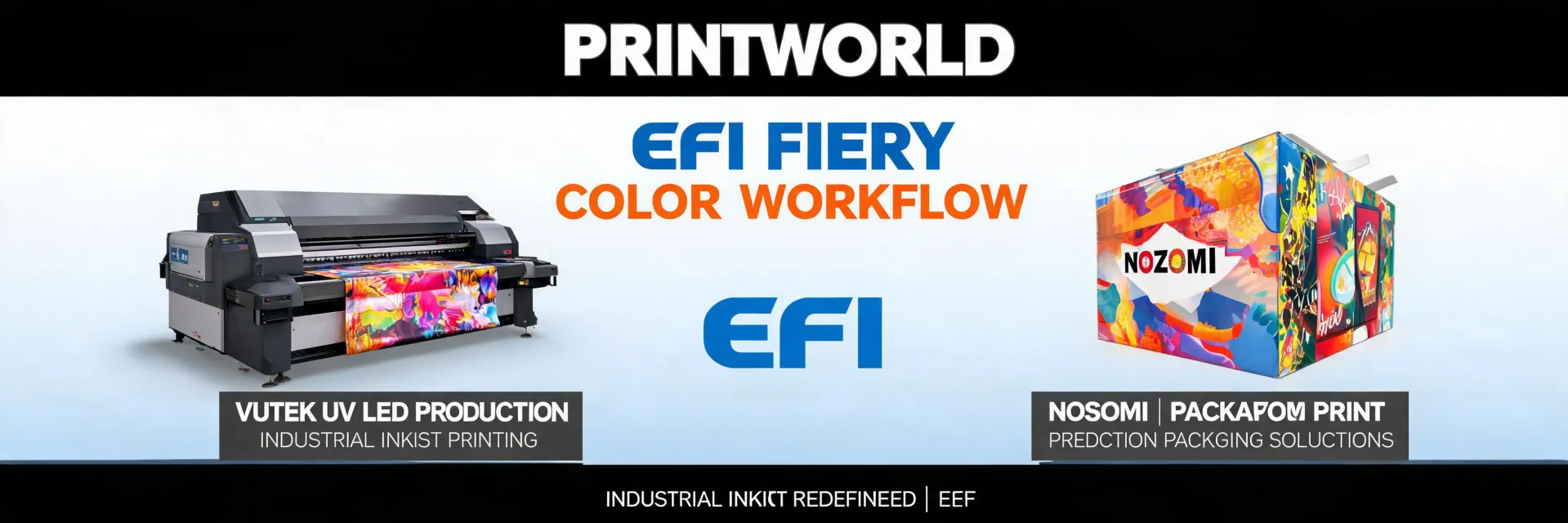
We have an EFI label printer in-house, and I've handled enough rush orders to know that "can you print these in a day?" is never as simple as it sounds. But this one also involved a ten-foot booth display, and that meant our EFI wide format printer was going to pull double duty.
The call
The client's procurement person, Dana, sent over a file with a panicked note: "Can you print 1,400 labels and a large format banner by Thursday morning?" It was Tuesday afternoon. Normal turnaround for that kind of color-critical label work is three working days. The event was Thursday. That's 36-ish hours. Add a wide-format display, and the gap between "possible" and "comfortable" gets very wide.
I've done maybe 200 rush jobs over the years—or 180, I'd have to check the system—and the ones that hurt are never the ones where the press itself breaks. It's the stuff around the press: an incompatible file, a missing profile, a driver that decides not to cooperate.
The setup
The plan was simple:
- Print labels on the EFI label printer using a pre-qualified adhesive stock.
- Print a 10-foot display on the EFI wide format printer at 150 DPI (fine for a trade show banner viewed from a few feet away).
- Luminate, cut, and pack by 2 p.m. Wednesday.
I knew I should have staged the whole job Tuesday morning and built in a buffer. But I thought, "What are the odds?" The odds, as it turns out, are a lot better than I'd like.
The file from the client was a PDF with layers. Great. The problem was that the barcode on the label was an older version—a mistake their original supplier had baked into the file. We caught it during preflight, but only because we have a checklist. Five years ago, we didn't have a formal checklist process for rush orders. That lack of process cost us an actual contract in 2019. Now we don't touch a file until it's been through preflight.
The driver detour
The real time sink was something stupid: installing the EFI printer driver on a new workstation. The production laptop that talked to the label printer had died the week before, and the replacement machine was sitting in a drawer, technically "set up" by our IT guy. But when we plugged it into the EFI, Windows didn't recognize the printer. Classic.
If you're looking for the Sons of the Forest 3D printer location, I can't help you—that's the wrong kind of printer. But if you're looking for a real-world "how to install printer driver" pain point, here's the part that ate up an hour on a night when every minute mattered.
First, the right driver was not the first download link on the generic printer driver site. It was on the EFI support page, and it had a version number that didn't exactly match the firmware on the machine. The newer driver supported the printer, but it didn't show the correct media profile for our label stock—or rather, it showed it under a name we didn't recognize. We ended up downloading an older driver version while running a firmware check on the printer.
Honestly, I'm not sure why the driver installation fought us that night. My best guess is that a Windows update had reset the USB port settings, and the printer handshake got confused. It would have been a 10-minute fix if we'd had another operator who had seen it before. At 11 p.m., it's a different story.
Lesson one: if you use an EFI wide format or label printer, keep a thumb drive with the right driver version in the print room. That alone can save you a night.
The color scare
Once the driver was sorted and the labels started running, the next thing on my mind was color. The client's brand had a red that wasn't just red; it was a specific Pantone red, the kind you develop after a focus group spends $80,000. Industry standard for brand-critical colors is Delta E under 2—meaning the printed color matches the target so closely that a trained observer has trouble telling them apart. We aim for Delta E below 2 on every proof.
I pulled a proof at 1 a.m., and the red was off. Not catastrophically, but enough that I knew Dana would notice. The EFI label printer is capable of hitting it, but the substrate was a coated film that required a different color profile. The RIP had swapped the profile. (Note to self: always check the profile after a driver update.)
I went back and forth between adjusting the color profile and re-ripping the file for ten minutes. What if the new profile shifted the other colors too? What if the customer's monitor was showing me a color that didn't exist on paper? Eventually I re-ripped with the manufacturer's profile for that exact stock, ran another proof, and it measured Delta E 1.6 from the Pantone reference. That was the number that let us hit "print" with confidence.
But here's the part that keeps me up: after re-ripping, I hit "print" and immediately thought, "Did I just burn 1,400 labels with a color shift?" I didn't relax until the first sheet came off the EFI label printer and the spectrophotometer gave the green light.
The wide format part
While the label printer ran, we switched the EFI wide format printer to the banner. The artwork was simple: a product shot on a white background, 10 feet wide. At the average viewing distance for a trade show display, 150 DPI is acceptable. We sent it at 150 DPI, but we also had to deal with a large white border that would waste eighty cents' worth of ink if we let it. The operator—new to the shop—didn't know how to crop it properly. That's when I realized the "how to install printer driver" issue really wasn't the actual problem. The problem was that we had no documented workflow for that new operator.
We got the banner printed and laminated by 9 a.m. Wednesday, and the labels were done by noon. The client made their Thursday deadline. They sold out of product at the expo. The $50,000 penalty clause in their booth contract never came into play.
What I'd do differently
We dodged a bullet. I'd like to tell you it's because we're geniuses. It's not. It's because EFI printers are reliable enough that a hard night becomes a manageable one. But I also made mistakes:
- I didn't stage the job until the client called. The printer was ready; the crew was not.
- I didn't verify the driver version when we set up the replacement workstation. An hour lost.
- I didn't have a printed color standard next to the press. We used a spectrophotometer, so we were fine, but a visual reference helps when the customer shows up unannounced.
A few months before this job, we looked at an Inksonic DTF printer for short-run garment transfers. We didn't buy it—the volume wasn't there—but the evaluation taught me something useful: no matter how good a machine is, the bottleneck is almost always upstream. It wasn't the Inksonic's fault. It wasn't even the EFI's fault. It was our prepress workflow.
To be fair, the client's original supplier wasn't incompetent. They just made a single bad call, and the dominoes fell. That's how rush jobs work. The only remedy is buffer time, checklists, and a driver install guide that doesn't rely on one person's memory.
Three lessons from a 36-hour turnaround
- Fix the process, not the printer. The EFI label printer and wide format printer held up. The near-failure was driver installation and file verification.
- Check the color profile after any system change. A driver update can reset a profile and shift output. Always run a proof and measure Delta E.
- Write down the "how to install printer driver" steps for each of your machines. Future you, or the new operator at 11 p.m., will thank you.
I don't have hard data on what percentage of rush failures are actually equipment failures. Based on our experience, it's rare. Most defects come from a skipped preflight, a wrong profile, or a driver mismatch. The printer is usually the one thing that does exactly what it's told.
So if you're in a production role and a deadline is closing in, do the boring stuff first. Check the file, check the driver, check the profile. Then let the machine run.

Elise Marceau is an LED display and digital-signage systems analyst covering LED video walls, modular screens, transparent LED, control processors, and indoor or outdoor signage. She applies IEC 62368-1 safety principles while comparing pixel pitch, luminance, contrast, refresh rate, colour uniformity, viewing angle, ingress protection, power density, module serviceability, and signal redundancy. Her specification guides help integrators, venue operators, retailers, and procurement teams align viewing distance, ambient light, content format, installation access, electrical load, and lifecycle support.