
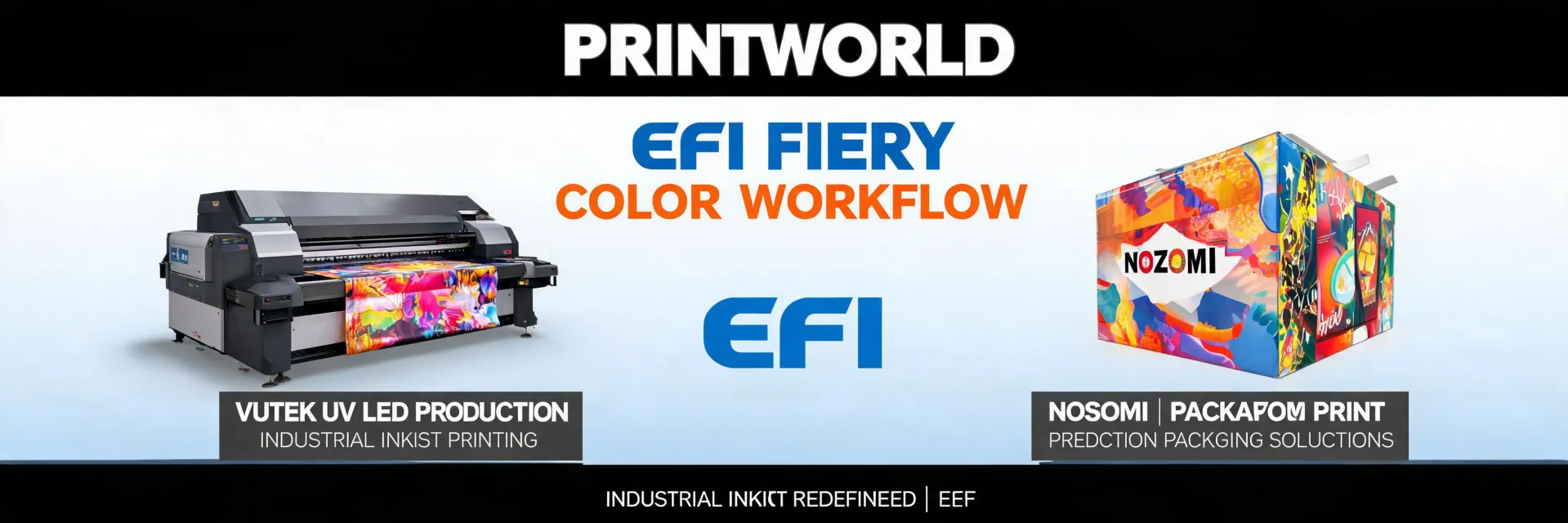
I've been handling print production orders since 2017. In that time, I've made some genuinely stupid mistakes—one cost me about $3,800 in VUTEk repairs. I've also answered the same questions over and over: 'How do you clean an EFI VUTEk?' 'How much energy does a 3D printer use?' 'What is an ADF printer?'
Here's the thing: the right answer depends on your situation. So let's break these down by scenario. That's the only way to make them useful.
Sort out which scenario you're in
- Scenario A: You run a commercial print or sign shop with an EFI VUTEk (or similar industrial printer) and need cleaning/maintenance advice.
- Scenario B: You're evaluating energy costs—maybe comparing a 3D printer in a workshop to an industrial UV flatbed printer.
- Scenario C: You're shopping for a small office printer and want to understand what ADF means.
These can overlap, but each has a different answer.
Scenario A: EFI VUTEk cleaning—where I lost $3,800
My rookie mistake was using the wrong cleaning solution. In 2020—maybe 2019? I'm mixing up the years—I saved $60 on a third-party 'compatible' cleaning fluid for our H1625. It was basically the same price as the EFI stuff? No, it was cheaper, which is why I bought it. The price looked smart until the printhead nozzles started dropping randomly about two weeks later.
We sent the printhead out for service, then ended up replacing it. Total: $3,800 plus five days of downtime. That $60 'saving' cost us thousands and a missed deadline. I still have the invoice in a folder titled 'what not to do.'
So what does EFI cleaning actually look like when done right?
- Daily wiper maintenance: Use EFI-approved wiping solution and lint-free wipes. Never use acetone or generic industrial cleaner. It strips the printhead coating.
- UV lamp glass: Clean with the same ethanol-based solution EFI recommends. We do it weekly, or after about 100 hours of printing—whichever comes first.
- Deep cleaning cycle: Every 500,000 linear feet or so, run a full head cleaning cycle and print a test pattern. Then recalibrate colors. No exceptions.
After cleaning, always verify color accuracy. Our shop uses Pantone references as a baseline: brand-critical colors should be within Delta E < 2. The first time I skipped calibration, we produced 200 banners with a slightly off blue. The customer didn't notice, but I did—and I've kept a checklist ever since.
The lesson: spending $60 to save pennies on a machine that costs as much as a house is exactly the wrong economy. If you need your VUTEk running for a Friday deadline, pay for the certainty of EFI-approved supplies. That's not fanboy talk; it's math.
Scenario B: How much energy does a 3D printer use (vs. an EFI VUTEk)?
I hear this question a lot, usually from people who see 'printer' and assume it's all the same. It's not.
For a 3D printer: our shop has an older FDM unit we use for prototyping. On a typical print, it draws about 120W average. A hobbyist machine with a heated bed can range from 50W to 150W. Basically, it's like running a few light bulbs. Energy is a minor factor for 3D printing.
An industrial EFI VUTEk H1625? That's a different universe. When the pumps, vacuum table, and heaters are all running, it can pull somewhere in the 20–30 kW range at peak. I watched our power meter during a production run—we measured a 32 kW spike on startup, but average maybe 22 kW during full-speed printing. That's the cost of moving ink at production speed.
This is where LED curing helps. The LED arrays use less energy than older mercury lamps. Our power bill showed roughly 18% lower kWh after we moved from a previous-generation UV lamp printer to an LED model. That comparison was in Q3 2024; I don't have the exact invoice handy, but the trend was clear.
If you're trying to decide, don't compare a 3D printer to a VUTEk. Compare them by cost per output:
25 kW × 1 hour × $0.10/kWh = $2.50 per hour of VUTEk run time. On a production job that bills several hundred dollars per hour, electricity is maybe 2–3% of the cost. Not nothing, but not the deciding factor.
So ask yourself: what's the machine producing? A 3D printer makes small parts; a VUTEk makes revenue. Energy matters, but throughput and reliability matter more.
Scenario C: What is an ADF printer (and do you actually need it?)
Honestly, when someone asks me 'what is an ADF printer?', I know they're looking at office equipment, not production gear. ADF stands for Automatic Document Feeder. It's the tray that lets you load a stack of pages, and the printer/scanner feeds them one at a time automatically. So if you're copying a 20-page contract, you don't have to place each page on the glass.
A good example is the HP Envy 6155e printer, which includes an ADF. My sister-in-law asked me about it last week—that's a solid choice for a home office where you deal with multi-page documents. But here's the key: if you're running a print shop, ADF doesn't matter. You need media width, color gamut, speed, reliability. The two are different tools for different jobs.
So when you're choosing a printer, first define the job. An office printer with ADF is great for paperwork. A production printer like an EFI VUTEk is great for banners, packaging, and signage. Neither is 'better.' They're just built for different scenarios.
How to tell which scenario you're in
Here's my shortcut:
- If you're maintaining a VUTEk, follow the official cleaning procedure. Don't let a third-party 'compatible' supply save you $50 today and cost you $4,000 tomorrow.
- If you're worried about energy, measure your own equipment. Get a power meter or check the spec sheet. Then compare cost per usable output, not raw wattage.
- If you're buying an office printer, ADF is a convenience. Just match the printer to the actual task, whether that's scanning contracts or printing vehicle wraps.
My final rule: in print production, uncertainty is the most expensive thing. In March 2024, we paid $400 extra for a rush repair on a VUTEk to hit a $15,000 event deadline. That $400 bought certainty—the alternative was a cheaper fix that 'probably' would arrive in time. I've been burned by 'probably' enough times to know it's rarely worth it. Every newbie in our shop hears that story on day one.

Elise Marceau is an LED display and digital-signage systems analyst covering LED video walls, modular screens, transparent LED, control processors, and indoor or outdoor signage. She applies IEC 62368-1 safety principles while comparing pixel pitch, luminance, contrast, refresh rate, colour uniformity, viewing angle, ingress protection, power density, module serviceability, and signal redundancy. Her specification guides help integrators, venue operators, retailers, and procurement teams align viewing distance, ambient light, content format, installation access, electrical load, and lifecycle support.