
-
The Surface Problem: Everyone Thinks Paper Sizes Matter More Than They Do
-
A Personal Tangent: How I Learned to Stop Trusting the Cheapest Quote
-
The Deeper Issue: A Printer Is a Production System, Not a Paper Hole
-
What It Costs You to Ignore the Real Problem
-
A Better Way: Start With the Workflow, Not the Paper Size
-
The Weird Aftermath: I Still Second-Guessed Myself
-
What I'd Tell Someone Starting the Same Search
When I took over purchasing in 2020, I thought I had the most boring job description in the company. Four years in, I can tell you it's not boring. It's just relentless. The requests are always urgent, the budget is always tightening, and the internal customers are always right—until they're not.
A few months ago, our marketing and events team asked me to "find a printer that can finally handle all our paper sizes." They were tired of sending jobs to outside print shops for oversize posters, retail signage, or custom event materials. I nodded, opened a spreadsheet, and started comparing printer paper sizes. It took me far too long to realize that was the wrong conversation entirely.
The Surface Problem: Everyone Thinks Paper Sizes Matter More Than They Do
Let me be fair. A printer that can't physically accommodate the media you need is useless. You can't print a 13x19-inch full-bleed proof on a machine with a maximum 8.5x11-inch flatbed. So yes, printer paper sizes matter. But they're table stakes, not strategy.
When I started looking at specs, I noticed the same pattern in every purchase request. Someone would find a printer that handled A3 or 12x18-inch paper, and suddenly they were convinced it solved the "big print" problem. They didn't ask about ink costs. They didn't ask about color management. They didn't ask about output speeds at high quality. They didn't ask whether a roll-to-roll machine would be a better fit than a sheet-fed office device.
I was asked to evaluate a wristband printer for our events team once. I almost added it to the same spreadsheet. Then I realized: a wristband printer is a dedicated, specialized tool. It isn't an office printer that also does wristbands. The fact that we were putting it in the same category as "paper sizes" showed me how broken our internal framework was.
A Personal Tangent: How I Learned to Stop Trusting the Cheapest Quote
This isn't my first time chasing the wrong metric. Everyone warned me about hidden fees with a new vendor I'd found. I didn't listen. The "cheap" quote for branded stationery ended up costing 30% more than the established supplier because of omitted setup fees and a rush charge. That's the reverse-validation moment: I only believed "check the full cost before ordering" after that mistake. It's probably why I'm so sensitive to false savings now.
The Deeper Issue: A Printer Is a Production System, Not a Paper Hole
The deeper cause of our problem wasn't the printer paper sizes on the spec sheet. It was the way we thought about printing. We were comparing devices like they were larger versions of the one in the copy room. But the moment you move beyond standard office output, you're no longer buying a printer. You're buying a production system.
In a production system, media size is just one input. You also need to think about:
- What media types and thicknesses the printer can handle reliably—paper, banner, vinyl, rigid board, synthetic material
- Whether the ink cures fast enough to keep up with a production facility
- Whether the software handles nesting, finishing, and color variation without a dedicated specialist
- Whether the manufacturer and dealer provide real support when things go wrong
That's the layer most people skip when they search for "efi digital printer" or any other industrial device. They see a good maximum paper size and stop reading. I know I did.
This is also where the "industry is evolving" part hits. What was a reasonable way to choose a printer in 2018 isn't enough in 2025. The product categories themselves have blurred. Some printer paper sizes that used to be folded into "large format" can now be handled by industrial LED machines that also print on rigid substrates. The decision isn't about feed tray dimensions anymore. It's about matching workflow to output.
I think that's the missing mental shift. Once I started thinking of the printer as the center of a small production floor—not as an appliance with an oversized paper tray—everything else fell into place.
What It Costs You to Ignore the Real Problem
The price of ignoring this isn't just the difference between two sticker prices. It's the cost of reprints, downtime, rushed orders, and internal credibility.
Let me give you a concrete example from our 2024 vendor consolidation project. We were trying to cut costs across three locations, so I volunteered to consolidate print spend. I chose a machine with attractive specs on paper. I didn't verify the service model. The printer worked fine for two weeks, then went down during a regional event deadline. The technician couldn't come for three days. The event team had to scramble to a local print shop and paid almost three times the price per square foot. I don't remember the exact numbers, but the real cost was the stress and the missed deadline.
That mistake made me look bad to my VP. It also taught me a lesson I won't forget: in printing, certainty is a feature. Knowing your equipment can handle a 10-hour day at speed is often more valuable than knowing it can technically feed an 18-inch sheet.
And that's the part I wish someone had explained to me before I got into this. This isn't like buying a 3D printing machine for beginners, where you can watch a setup video, accept a few failed prints, and call it a learning curve. In production printing, failed output costs you money and client trust. There's no beginner mode.
There are also hidden costs that never show up on the spec sheet. Don't hold me to this list being complete, but in my experience it's usually:
- Ink coverage and yields for the media you actually print
- The labor cost of managing a machine that requires constant fiddling
- Floor space, ventilation, power, and finishing equipment
- Training time for the team
I've probably spent more on reprints and wasted media than any printer I've purchased would save me with a cheaper initial price. Don't make that mistake.
A Better Way: Start With the Workflow, Not the Paper Size
Once I accepted that I was solving the wrong problem, I went back to basics. I made a list of what we actually print on a weekly basis: event signage, vehicle graphics, trade show displays, a few labels and decals. We needed media flexibility more than we needed one more sheet size.
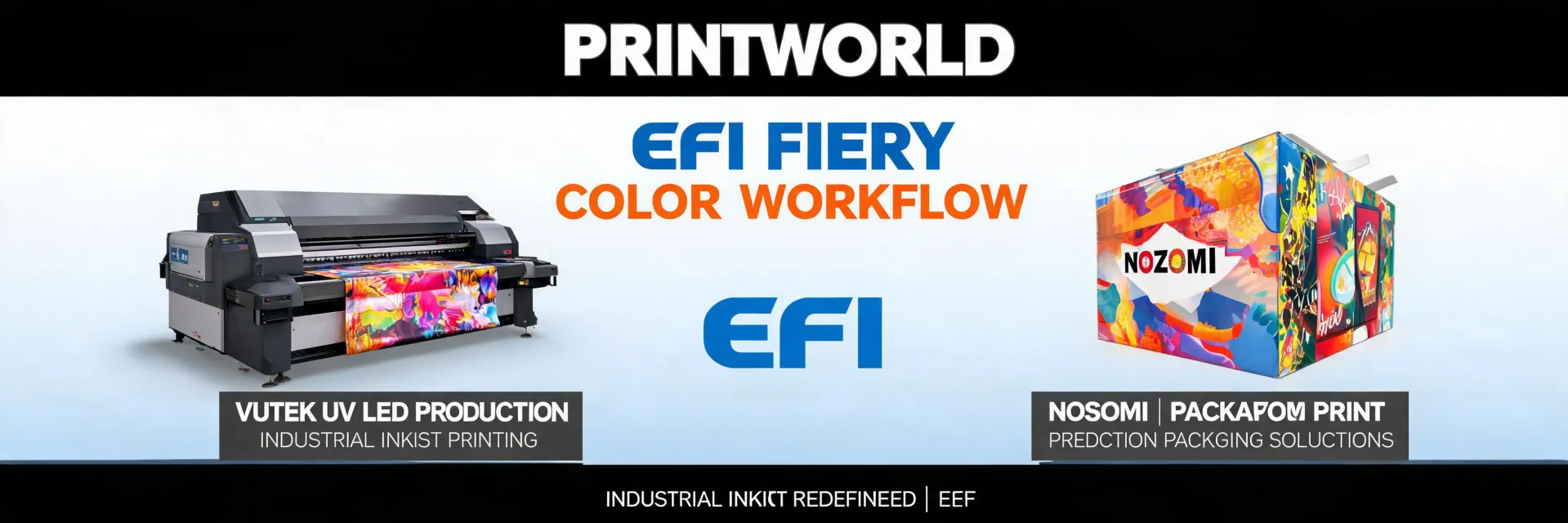
That's when I started following EFI printing news and began to understand why a lot of commercial shops use EFI equipment. Their VUTEk and H1625 flatbed printers, for example, are built around continuous production, not occasional oversized prints. They handle different thicknesses, which means we could move between roll-to-roll banner work and rigid boards without a different machine. The EFI digital printer category isn't really about one device—it's about a family of production tools that connect with front-end software and workflow management.
I'm not saying every company needs an industrial press. That would be absurd. But for organizations that print every day, it's worth realizing that the right selection process is closer to choosing a production line than choosing a photocopier.
One thing that sealed it for me was total cost of ownership. A high-speed machine sounds expensive. But if it eliminates outsourcing, reduces reprints, and holds its value in a production workflow, the total cost can be lower than a "cheap" machine that creates bottlenecks. That's not a pitch. That's just arithmetic.
The Weird Aftermath: I Still Second-Guessed Myself
Even after we settled on an EFI approach, I kept second-guessing. What if the team resisted the learning curve? What if our volume didn't justify it? The two weeks between ordering and installation were stressful. I don't remember exactly what I expected, but I remember thinking "this will probably work—unless I'm wrong." That doubt is normal, I think. It doesn't mean the decision was wrong. It means you're taking it seriously.
What I'd Tell Someone Starting the Same Search
Start with "what does our printing actually need to do this year—and next year?" before you ask "what paper sizes can it handle?" Printer paper sizes will be the answer to a question you already understand. The real question is about production capacity, media flexibility, software, support, and total cost.
If you're evaluating industrial options, don't just look at the printer. Ask what happens when an operator calls for support. Ask how long parts take to arrive. Ask about training. And don't let anyone sell you a machine based on a single oversized sheet that will never become a profitable job.
And if you do look at an EFI digital printer, at least you'll be looking for the right reasons. The market has moved. Your decision-making should too.
What was best practice in 2020 may not apply in 2025. The fundamentals haven't changed—paper is still paper, and a printed sign is still a printed sign—but the execution has transformed. Don't get stuck comparing yesterday's specs while the industry moves forward.

Elise Marceau is an LED display and digital-signage systems analyst covering LED video walls, modular screens, transparent LED, control processors, and indoor or outdoor signage. She applies IEC 62368-1 safety principles while comparing pixel pitch, luminance, contrast, refresh rate, colour uniformity, viewing angle, ingress protection, power density, module serviceability, and signal redundancy. Her specification guides help integrators, venue operators, retailers, and procurement teams align viewing distance, ambient light, content format, installation access, electrical load, and lifecycle support.