
Here’s the short answer: if you’re an admin buyer evaluating EFI printers for your company, prioritize output quality over unit price. I’ve seen this play out half a dozen times across three different employers. The printer that costs 15% less usually ends up costing 30-40% more in lost internal confidence, reprint expenses, and—worst of all—awkward conversations when a client receives something that looks ‘off.’
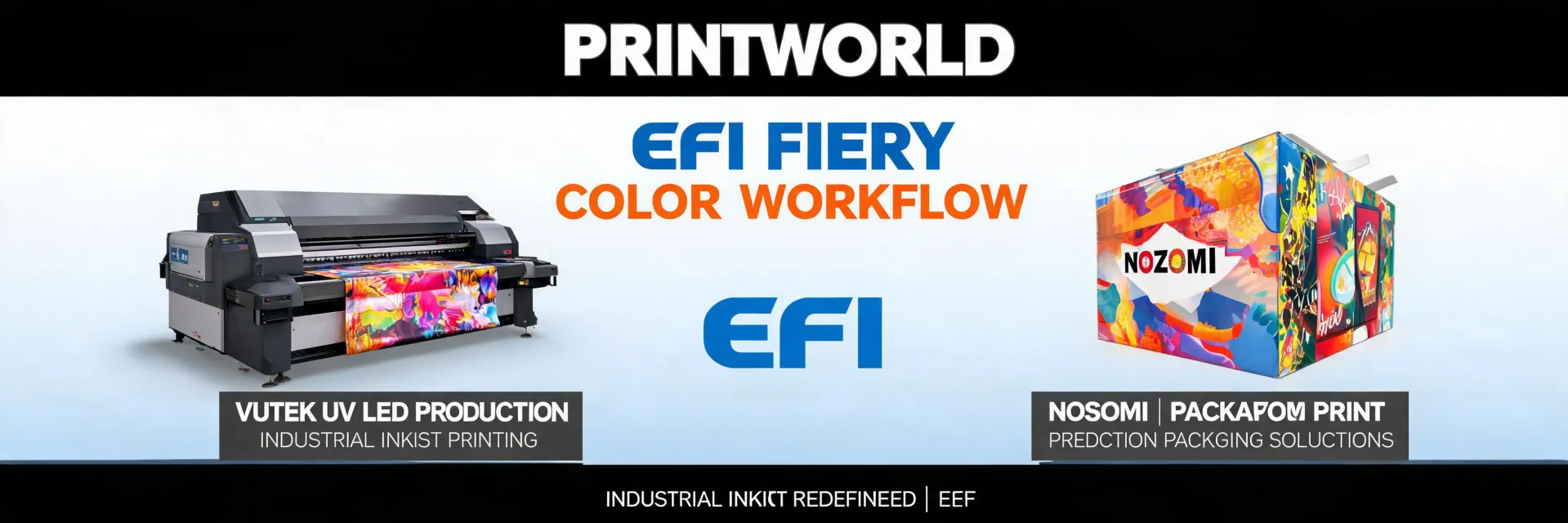
Before I get into the details, a quick disclaimer: this article focuses on EFI’s commercial and industrial printer lineup (the VUTEk, H1625, Nozomi C18000 series). I’m not covering 3D printer for jewelry or HP printer set up, nor the steps on how to add a printer on a Mac. Those are different worlds—and probably better served by a dedicated tech support guide. Here, I’m talking about the kind of printer your company uses to produce client-facing materials.
Why this matters for an admin buyer
In my role, I manage purchasing for about 400 employees across three locations. I process roughly 60-80 orders annually across 8-12 vendors. When I took over purchasing in 2020, the previous approach was simple: get three quotes, pick the cheapest. That logic seemed reasonable on paper—budgets are real, and finance always wants to see line items shrink.
But here’s the thing: the price on the invoice is only half the story. The other half is what happens after the equipment lands in your production area. Is it producing consistent, high-quality output? Are your internal customers (the teams using it) satisfied, or are they constantly calling you with complaints? Because those complaints eventually land on your desk, and on your performance review.
The hidden cost of cheap equipment
In 2022, I made what I thought was a smart move. I found an EFI printer (a pre-owned model) that was $4,000 cheaper than the recommended new unit from our regular vendor. The specs looked nearly identical. I ordered it. Finance was happy. My boss gave me a thumbs up.
Within three months, we had issues. The color calibration was inconsistent—one batch looked fine, the next looked washed out. The internal team spent extra hours tweaking files to compensate. Then a major client rejected a batch of printed packaging because the color didn’t match their brand guidelines. That rejection cost us $2,400 in reprint expenses and a damaged relationship that took six months to repair.
Looking back, the $4,000 savings evaporated fast. What I actually saved on the purchase price, I lost—and then some—on the operational side.
Output quality: your brand’s first impression
I’d argue that in B2B printing, the output is the product. When a client receives a printed piece—whether it’s a label, a sign, a packaging prototype—that physical item becomes their mental benchmark for your entire company. If the colors are off, or the finish looks cheap, they subconsciously downgrade their perception of everything else you do. It’s not rational, but it’s human.
This is where EFI’s technology differentiates itself. Their LED-curing process produces a level of color consistency and vibrancy that is measurably better than standard UV alternatives. According to USPS (usps.com), as of January 2025, a First-Class Mail letter costs $0.73. But if your direct mail piece uses dull, inaccurate printing, that $0.73 is wasted—nobody reads an unappealing mailer. The print quality literally determines whether your marketing spend pays off.
Per FTC guidelines on advertising materials
Per FTC guidelines (ftc.gov), claims made in marketing materials must be truthful and not misleading. That applies to printed output too. If your printer can’t reliably reproduce the brand colors a client specified, you’re at risk of producing materials that could be considered misleading—especially if the color difference changes the meaning of a visual element. It’s rare, but I’ve seen it happen. A color that was supposed to say “safety green” ended up looking “almost yellow” and confused the messaging on a compliance document.
Three things I look for when selecting an EFI printer
Based on my experience—and yes, on some hard lessons—here’s what I prioritize now:
- Consistency across runs. Can the printer reproduce the same color profile tomorrow as it did today? This isn’t just about specs; it’s about the engineering of the print head and the curing system. EFI’s LED technology, in my observation, excels here. It reduces the variation that comes from heat-up cycles.
- Substrate flexibility. The Nozomi C18000, for example, handles a wide range of material thicknesses. That’s not a luxury; it’s a practical necessity when your internal clients keep asking for “can we print this on [odd material]?” I’ve had to say no to projects because a cheaper printer couldn’t handle the media. That hurts internal satisfaction.
- Service support responsiveness. No machine is perfect. When something fails, how fast do they respond? EFI’s network of certified technicians has, in my case, consistently solved issues within 24 hours. That’s a game-changer compared to the 3-5 day wait I’ve experienced with other brands.
It’s tempting to think you can just compare printer specs on a spreadsheet. But identical specs from different vendors can result in wildly different outcomes. The real value is in the engineering and the support system behind the machine.
The admin buyer’s real leverage
What I didn’t understand in 2020 was that my real leverage as a buyer wasn’t just driving down the unit price. It was about ensuring that the equipment I chose made my internal customers’ jobs easier, and made our company look good to our clients. A printer that produces reliable, high-quality output reduces complaints, saves my time dealing with issues, and—honestly—makes me look competent to my VP.
There’s an old saying: you get what you pay for. In printing, you also get the quality you pay for. And that quality becomes your company’s image. The vendor who couldn’t provide proper invoicing cost me $2,400 once. The cheap printer cost me more than that—it cost my team’s morale and a client relationship. I’d rather pay a little more upfront for the EFI solution that has proven its reliability, than gamble on a lower price and hope for the best.
When you might not need the highest-end EFI
Of course, not every company needs a flagship model. If your printing volume is low and the output is strictly internal (like warehouse labels), a simpler model might suffice. This is where the “conclusion first” approach needs its own boundary condition: if quality doesn’t affect your client-facing image, price can reasonably take priority.
But if your printed materials are seen by customers—even occasionally—I’d argue that investing in a quality printer like EFI’s lineup is one of the most defensible procurement decisions you can make. It’s not about ego or brand loyalty. It’s about the simple arithmetic of client retention. A $50 difference per batch of printed material means nothing if that batch becomes the reason you lose a $10,000 account.
To sum it up: for admin buyers whose job performance hinges on keeping internal teams happy and external clients impressed, EFI printers are a solid bet—if you choose based on output quality, not just price.

Elise Marceau is an LED display and digital-signage systems analyst covering LED video walls, modular screens, transparent LED, control processors, and indoor or outdoor signage. She applies IEC 62368-1 safety principles while comparing pixel pitch, luminance, contrast, refresh rate, colour uniformity, viewing angle, ingress protection, power density, module serviceability, and signal redundancy. Her specification guides help integrators, venue operators, retailers, and procurement teams align viewing distance, ambient light, content format, installation access, electrical load, and lifecycle support.