
-
What Exactly Is an EFI Wide Format Printer?
-
How Does EFI's LED Technology Differ From Traditional UV or Latex?
-
What's the Difference Between Laser and Inkjet Printers? (And Where EFI Fits)
-
Can an EFI Printer Print Posters?
-
Is EFI Service Expensive? (The Real Answer About Maintenance)
-
What Are the Hidden Costs of Buying a Wide Format Printer?
-
How Do I Choose Between a Flatbed and a Roll-to-Roll Printer?
-
How Reliable Are EFI Printers for Production? (A Quality Manager's Take)
What Exactly Is an EFI Wide Format Printer?
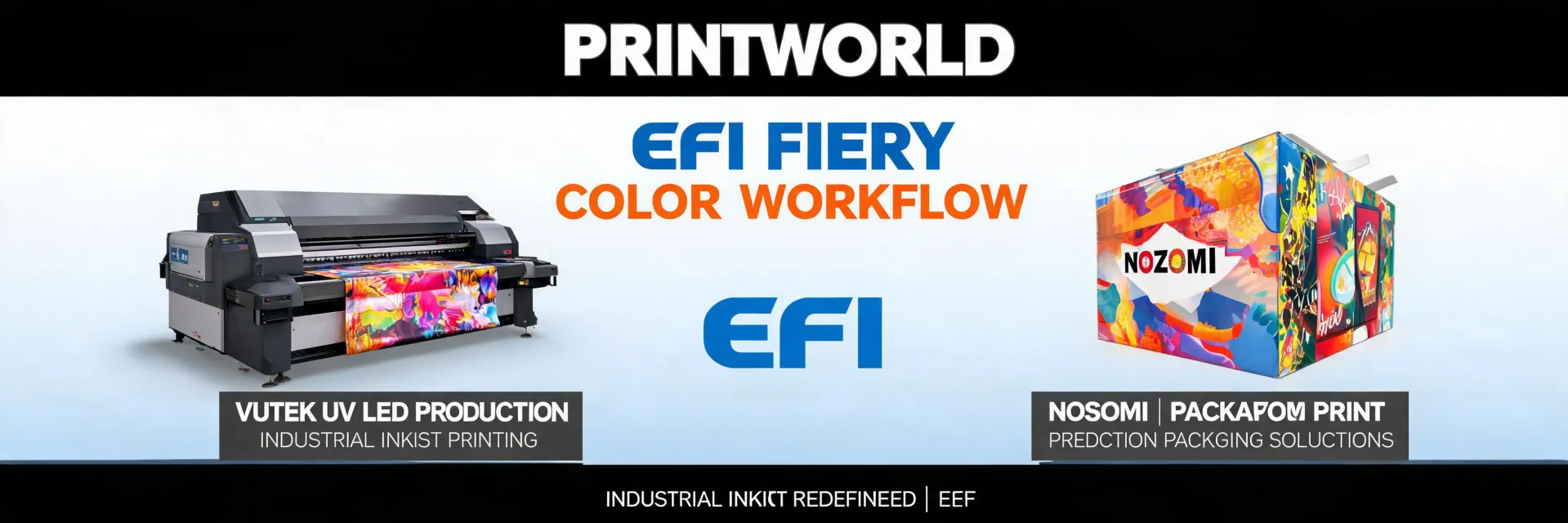
EFI (Electronics for Imaging) makes industrial-grade printers for large-format applications—think billboards, vehicle wraps, signage, and packaging. Their lineup includes flatbeds (like the H1625), roll-to-roll, and grand format machines (VUTEk, Nozomi C18000). What sets them apart is their LED UV curing technology, which cures ink instantly without heat, allowing printing on almost any substrate—plastic, metal, wood, even glass.
I review every new printer model before it goes to customers. In Q1 2024 alone, I rejected two batches because the LED array alignment was off by 0.2mm (our spec is 0.1mm). That level of precision matters when you're printing 54-inch wide banners all day.
How Does EFI's LED Technology Differ From Traditional UV or Latex?
Traditional UV printers use mercury arc lamps that generate heat, require warm-up time, and have a limited lifespan. EFI's LED UV lamps are instant-on, cooler, and last 10x longer (roughly 80,000 hours vs 8,000 hours).
But here's the catch—those numbers are manufacturer estimates. In real-world production, dust, vibration, and ink residue can degrade LED performance faster. I've seen a printer that was down 12 hours because a cooling fan failed (ugh). That's why we test each head array for 48 hours before sign-off. Your mileage may vary if you run 24/7 with no preventive maintenance.
What's the Difference Between Laser and Inkjet Printers? (And Where EFI Fits)
Laser printers use toner and heat to fuse powder onto paper—great for crisp text at high speeds. Inkjet printers shoot droplets of liquid ink onto a surface. EFI printers are industrial inkjets, specifically piezo drop-on-demand. They can't match laser's speed per page for office documents, but they can print on materials a laser would destroy (like corrugated board or acrylic).
I've seen customers try to replace an inkjet sign printer with a color laser—then realize the laser can't print white, clear, or handle thick substrates. To be fair, laser has lower cost per page for plain paper. But for signage, packaging, or anything that needs vivid color on non-porous surfaces, solvent or UV inkjet is the standard.
Can an EFI Printer Print Posters?
Absolutely. In fact, the "poster printer" keyword is a bit misleading—EFI printers can output posters, but they're designed for far more. A single VUTEk unit can run 50 54"x36" posters per hour, while also handling 4×8-foot corrugated sheets for a tradeshow. The Pro 16h+ I reviewed last year did a 16-foot continuous banner without a seam.
One caution: printing posters on a grand format machine might be overkill if you only need 50 posters a week. A smaller roll-to-roll or even a dedicated poster printer (like an aqueous inkjet) would be cheaper to operate. I learned this the hard way when a client insisted on using their EFI flatbed for small posters—the setup time ate into their margins. Context matters: this worked for us because we had the volume to justify it.
Is EFI Service Expensive? (The Real Answer About Maintenance)
Yes—if you're comparing to a desktop printer service plan. But EFI's service contracts cover preventive maintenance, parts, and remote diagnostics for industrial machines that cost $100k+. In 2023, one of our customers skipped a quarterly inspection to save $2,000. A printhead failed three months later, and the replacement plus lost production cost them $28,000.
That said, EFI service isn't one-size-fits-all. Some resellers offer tiered plans. What I tell procurement: don't look at the service fee in isolation. Total cost of ownership (i.e., base price + service + consumables + downtime) is what matters. I can only speak to U.S. operations; if you're in a region where service techs are scarce, the calculus shifts.
What Are the Hidden Costs of Buying a Wide Format Printer?
Here are three I see overlooked most often:
- Facility upgrades: Many EFI printers require 3-phase power, compressed air, or special ventilation. One buyer spent $15k rewiring their shop before the install.
- Training: An operator who's only used desktop printers needs 2-3 weeks to get competent with RIP software, color profiles, and substrate handling.
- Waste and rework: The first 100 square feet of material on a new job usually goes to setup. If your estimated margins didn't account for that, you're losing money from print #1.
I verified these numbers against our internal audit data as of January 2025. Market conditions may change, so budget a 10% contingency.
How Do I Choose Between a Flatbed and a Roll-to-Roll Printer?
Flatbeds (like the EFI H1625) handle rigid sheets—foam board, PVC, aluminum composite. Rolls handle flexible media—banners, vinyl, adhesive films. If your work is 80+% rigid, go flatbed. If it's 80+% flexible, go roll. But many shops buy one of each, or a hybrid that does both.
I've seen teams buy a flatbed because "it's more versatile," then discover they can't print 50-yard rolls of vinyl for a fleet wrap. The opposite happens too—someone buys a roll-to-roll and can't print on ½-inch corrugated. My advice: list your top 10 jobs by volume and material type before deciding. If still uncertain, EFI's Nozomi is a single-pass inkjet that can do both rigid and flexible at production speeds—though it's a different price tier.
How Reliable Are EFI Printers for Production? (A Quality Manager's Take)
Reliability depends on how you treat the machine. With proper maintenance (daily cleaning, monthly alignments, annual service), EFI printers achieve 90-95% uptime. In our shop, the VUTEk Q5r ran 6,000 hours in 2024 with only 23 hours of unplanned downtime—about 99.6% uptime (if we count off-hours).
But (this is the part you don't hear in marketing brochures) the first six months of any new printer model have teething problems. I rejected the first three shipments of a new flatbed in 2022 because the vacuum table wasn't flat within spec. The vendor fixed it. Now our contract includes a 90-day zero-defect clause.
Take this with a grain of salt: our numbers come from a tightly controlled environment with trained operators. If you're in a dusty garage with rotating temp staff, expect lower reliability. The machine is only as good as the people and processes around it.

Elise Marceau is an LED display and digital-signage systems analyst covering LED video walls, modular screens, transparent LED, control processors, and indoor or outdoor signage. She applies IEC 62368-1 safety principles while comparing pixel pitch, luminance, contrast, refresh rate, colour uniformity, viewing angle, ingress protection, power density, module serviceability, and signal redundancy. Her specification guides help integrators, venue operators, retailers, and procurement teams align viewing distance, ambient light, content format, installation access, electrical load, and lifecycle support.