
-
Step 1: When the printer is not printing correctly, don’t start replacing parts
-
Step 2: A “3d printer controller board” is not what you need
-
Step 3: If you are buying, evaluate EFI VUTEk printers by TCO
-
Step 4: What is a DTF printer and how does it work?
-
Step 5: Reveal hidden costs before you sign
-
Final warnings: common mistakes
If your search for “EFI fuel injector cleaning service” brought you here, hold on. In the printing industry, EFI stands for Electronics For Imaging, the company behind VUTEk and Nozomi printers. If you run a sign shop, a commercial print shop, or a packaging facility, and you have typed “printer not printing correctly” into a search bar at least once this month, this checklist is for you.
It’s five steps, in the order I would run them. No theory at the front, just the next action.
Step 1: When the printer is not printing correctly, don’t start replacing parts
My first instinct, six years ago, was to order a new printhead or controller board. That was expensive and usually wrong. Now I spend twenty minutes checking the boring stuff first:
- Run a nozzle check. If lines are missing, run a cleaning cycle and wait. Repeat twice maximum.
- Check color profiles. I once watched another shop replace a complete printhead stack because every print came out blue. The problem was a corrupted ICC profile, not a mechanical failure. The fix took two minutes.
- Verify media settings. For UV printers, a wrong cure level can cause smearing or poor adhesion. That is not a hardware problem.
If you are working on brand-critical color, aim for a Delta E of less than 2. That is a practical industry standard; if your colors are visibly off but nozzles and media are fine, move to the controller board side.
Step 2: A “3d printer controller board” is not what you need
When a printer behaves like it is brain-damaged, the controller board is a likely suspect. The board rasterizes the file and sends signals to the printheads. If it is failing, the print may pause, band, or show random blank areas.
One caution from experience: a “3d printer controller board” used in desktop hobby machines is a completely different product. A 3D printer controller board manages stepper motors and a heated nozzle. An EFI control board manages high-speed piezo printheads, vacuum tables, and color data. They are not interchangeable. Don’t cross-buy.
The event that changed how I think about this was a March 2023 service call. The machine passed all self-diagnostics but still printed horizontal streaks. We replaced printheads first, then checked encoders—no dice. It was the controller board. Looking back, I should have pulled the event logs before ordering anything. But that was a first-time mistake.
Before replacing a board, update firmware, reseat cables, and check the power supply. If you still need a replacement, ask the EFI dealer whether the replacement board is the latest revision—older firmware can cause recurring faults.
Step 3: If you are buying, evaluate EFI VUTEk printers by TCO
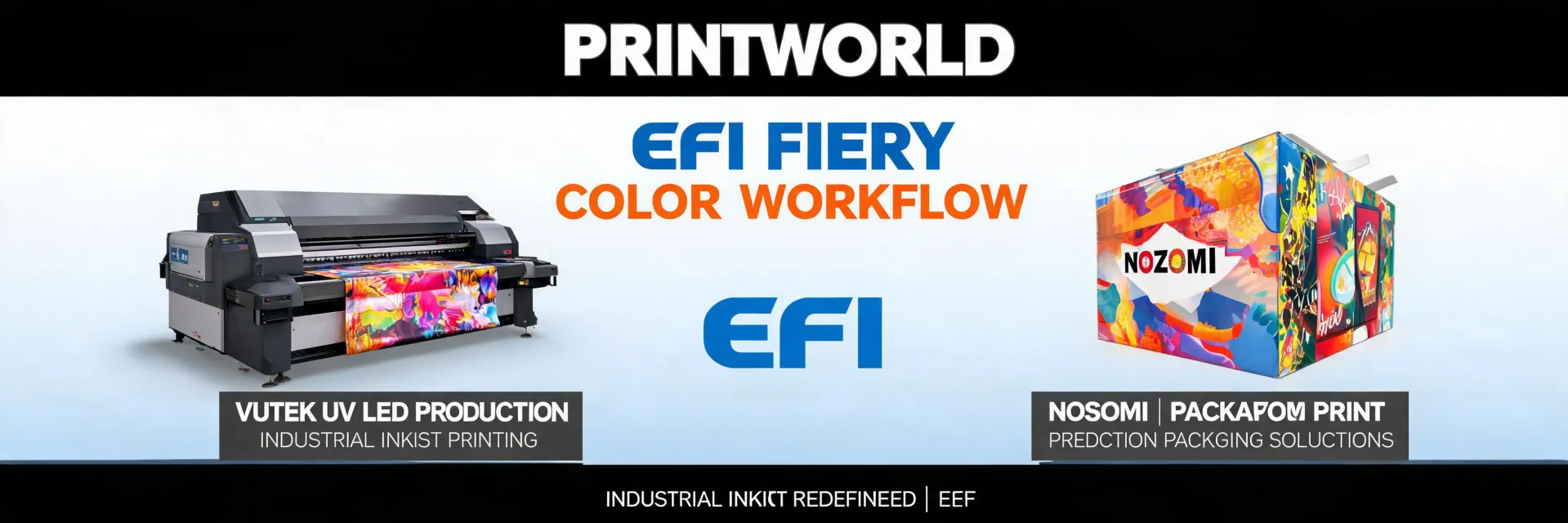
If you are in the market for production wide-format printing, “EFI VUTEk printers” will come up. The VUTEk line is engineered for high-volume superwide output—banners, wraps, backlit film, and POS graphics.
Here is what I care about as a cost controller, in order:
- Total cost of ownership, not sticker price. A lower-priced model often has more expensive inks or smaller printheads. Run the same file through the vendor’s cost calculator and ask for the cost per square foot.
- LED curing. LEDs use less power, but they don’t eliminate solvent smell. The room still needs ventilation. I mistakenly assumed LED meant no venting when we first looked at a VUTEk; the technician politely corrected that.
- Service response. Ask how many technicians are in your region. A 5-hour response advantage is worth more than a print speed that is 10% faster but leaves you down for days.
After tracking roughly $180,000 in print spend over six years, I can tell you that the most profitable printer is not the fastest or the cheapest. It is the one with the least unplanned downtime when you need it.
Step 4: What is a DTF printer and how does it work?
If you landed here with the search phrase “what is a dtf printer and how does it work,” here is the practical explanation. DTF stands for direct-to-film. You print your design onto a PET film with white ink, then apply adhesive powder to the still-wet ink, heat it to melt the adhesive, and press the film onto a shirt or other fabric. The result is a transfer that feels close to a screen print.
DTF is popular for custom apparel because it has low minimum order quantities. You can print one shirt for a client without setting up screens. That matches my belief that small orders are not a reason to give second-class service. Today’s one-off order can become a regular repeat job.
But DTF is not a replacement for a UV flatbed or roll-to-roll printer. A VUTEk is for rigid and flexible media, not garments. DTF is best for a garment shop or a print shop adding apparel as a service. If your core work is signage, do not buy a DTF machine because you saw a viral video; the workflow is different.
One specification to question is print resolution. DTF printers often claim 1200 DPI, but the visible quality depends on the white ink layer, the PET film quality, and the press process. Ask for a sample set of films with different adhesive powder densities.
Step 5: Reveal hidden costs before you sign
By now you have a shortlist. Before you sign, compare total ownership costs, not just the machine price. I once compared two vendors: Vendor A at $42,000 and Vendor B at $38,500. B looked like the winner until I listed the extras: $1,800 installation, $950 training, and a higher service contract premium. Over three years, B was about 17% more expensive. The “lowest bid” lost.
- Installation and setup – which parts are included, and what happens if installation exceeds the quoted hours?
- Training – is it one day or three? Is on-site training included?
- Consumables – ink cost per square foot, printhead replacement intervals, and whether cleaning fluid is included.
- Warranty and environmental claims – if a vendor markets “eco-friendly” ink, ask for written substantiation. Environmental marketing claims fall under FTC Green Guides (ftc.gov), and as a buyer you should verify them rather than assume.
(Side note: that “free setup” story? We ended up paying $450 in overtime because the crew arrived at 4:00 p.m. and the machine was still in a crate. Now I put setup hours into the contract.)
Final warnings: common mistakes
Finally, do not skip a test run. And I don’t mean a quick sample. Run your actual file, on your exact substrate, at the speed you want to produce. Check the output after 2,000 prints, not just number one.
If the vendor says the printer can handle a particular media, ask for a reference with the same substrate. Salespeople are not lying; they just don’t know every variable. Put a documented acceptance test into the purchase order.
And one more time, because search intent matters: “efi fuel injector cleaning service” is not a printing term. EFI as a digital printing brand specializes in high-end VUTEk grand-format machines and industrial solutions. If you are actually trying to fix a fuel-injected vehicle, close this tab and find a mechanic. If you are trying to fix a print business, start with Step 1 and work through the list.

Elise Marceau is an LED display and digital-signage systems analyst covering LED video walls, modular screens, transparent LED, control processors, and indoor or outdoor signage. She applies IEC 62368-1 safety principles while comparing pixel pitch, luminance, contrast, refresh rate, colour uniformity, viewing angle, ingress protection, power density, module serviceability, and signal redundancy. Her specification guides help integrators, venue operators, retailers, and procurement teams align viewing distance, ambient light, content format, installation access, electrical load, and lifecycle support.