-
What Is an EFI Inkjet Printer?
-
How Much Should I Budget for an EFI Digital Printer?
-
Are EFI Printers Only for Large Shops?
-
Can You Use an EFI Digital Printer as a Shirt Printer Machine?
-
Why Does the Term 'Stencil Printer' Keep Coming Up?
-
Where Do I Buy an EFI Printer or a Laser Engraving Machine?
-
What Hidden Costs Should I Plan For?
If you landed here because you've been searching EFI inkjet printers, then EFI digital printer, and somehow ended up comparing a shirt printer machine or a stencil printer, you're not alone. I've been a procurement manager for a 40-person industrial print shop for six years, and I've logged roughly $180,000 in equipment purchases in our cost tracking system. The biggest lesson I've learned is that buyers search for capabilities, not brands.
This FAQ covers the questions I get from buyers trying to decide whether an EFI printer is really the right tool. It's written from a purchasing perspective, not a sales perspective.
Here's what we'll answer:
- What is an EFI inkjet printer?
- How much should you budget for an EFI digital printer?
- Are EFI printers only for large operations?
- Can you use one as a shirt printer machine?
- Why does 'stencil printer' keep showing up in the same searches?
- Where do you buy an EFI printer or a laser engraving machine?
- What hidden costs should you plan for?
What Is an EFI Inkjet Printer?
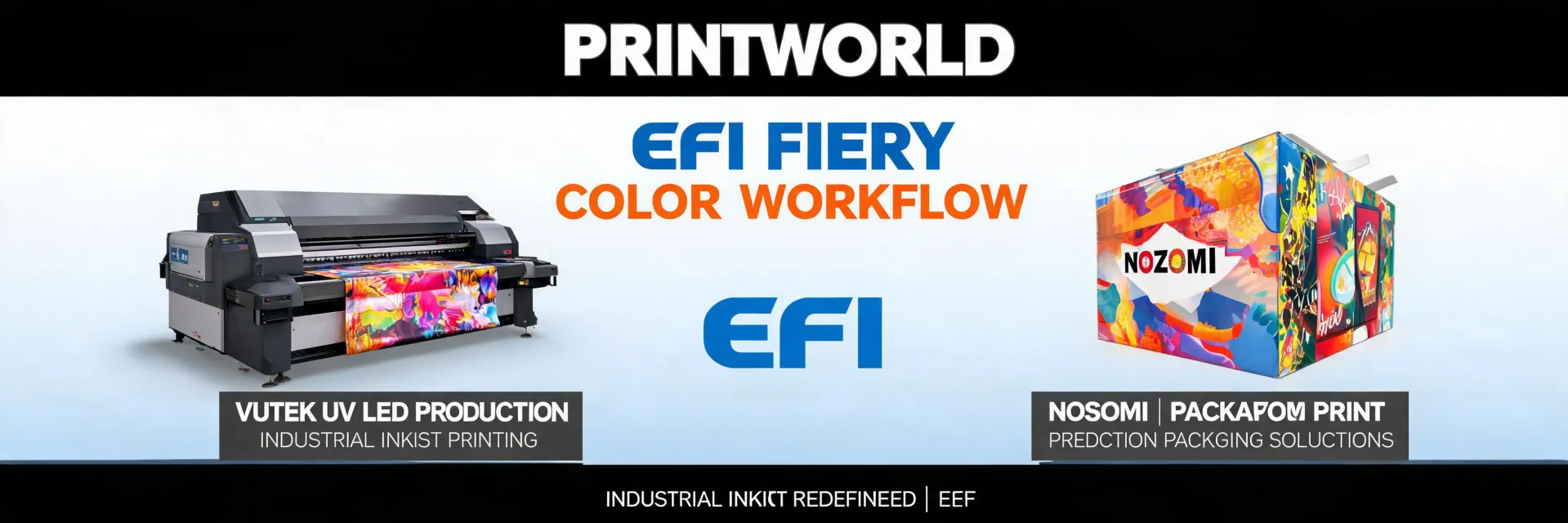
EFI stands for Electronics For Imaging. In most conversations, an EFI inkjet printer is an industrial digital inkjet machine: a LED-cured UV flatbed, a roll-to-roll printer, a hybrid, a grand-format VUTEk, or one of the single-pass Nozomi presses for corrugated packaging. You'll also hear 'Fiery' mentioned in the same sentence, but that's EFI's digital front end technology, which is a different piece of the puzzle.
From my seat, the important part is that these are production tools. They're built to print onto rigid sheets, flexible media, and packaging materials with LED UV curing instead of traditional heat. That means lower energy use and less heat warping, but it also means the decision should be based on your substrate mix and volume, not on the brand name alone.
How Much Should I Budget for an EFI Digital Printer?
Honestly, there's no single answer. I get suspicious when someone quotes 'the average price' for a machine like this. In Q4 2024, I tracked pricing from a handful of public listings and quotes for a used roll-to-roll EFI printer in the $50,000 to $120,000 range. A new grand-format system can easily push into the hundreds of thousands. The Nozomi C18000 is in its own investment class (not that you needed me to tell you that).
Seriously, use a spreadsheet. Total Cost of Ownership is what matters. When I built our standard equipment quote template, I added lines for delivery, rigging, installation, training, first-year service, extra printheads, and site prep. That's how we caught an $18,000 difference between two quotes for machines that had the same sticker price. The 'cheaper' one didn't include installation or a service contract.
Are EFI Printers Only for Large Shops?
Not only, but I wouldn't buy one just because you're planning to grow into it. The break-even point has more to do with your current outsourcing, not your ambition. If you're already sending a lot of rigid or roll-to-roll work to a trade finisher, an EFI digital printer can make sense for a 10-person shop. If you have modest volume, the monthly costs will sit there whether you run it or not.
I'm not a production engineer, so I can't tell you exactly which model fits your floor. What I can tell you from a procurement perspective is to total your last 12 months of outsourced printing costs. If that total doesn't cover the financing, lease payment, and consumables on an EFI machine, it's basically a very expensive bet on future demand.
Can You Use an EFI Digital Printer as a Shirt Printer Machine?
This is where search terms get tricky. An EFI wide-format inkjet printer is not a shirt printer machine. It's designed for flat sheets, roll media, and rigid panels, not garments. EFI does have textile solutions through its Reggiani line, but that's different from a direct-to-garment (DTG) printer that puts designs onto individual shirts.
If custom T-shirts are the goal, look for a DTG printer or screen printing equipment. And I won't pretend screen printing is dead; it's still cost-effective for high volumes of the same design. So before you go down the EFI path, decide whether shirts are your main product or a side project. That simple answer changes the equipment list completely.
Why Does the Term 'Stencil Printer' Keep Coming Up?
Because 'stencil printer' means different things in different industries. In PCB assembly, a stencil printer is used to apply solder paste through a metal stencil onto circuit boards. In screen printing, a stencil is the mesh screen with a pattern blocked out. Neither one is what an EFI inkjet printer does.
I'll be honest, this one confused me too. A supplier of ours runs a stencil printer for electronics, and it looks nothing like our production floor. It's about precise registration and squeegee pressure, not inkjet nozzles. If you're looking to make screen printing stencils, you'd normally use a film positive, emulsion, and a light exposure unit, not a UV flatbed. So if 'stencil printer' was part of your search because you're doing screen printing, keep looking.
Where Do I Buy an EFI Printer or a Laser Engraving Machine?
As of early 2025, EFI sells through authorized industrial distributors. There's no 'add to cart' button for a VUTEk. Start with EFI's authorized reseller list, get two or three quotes, and ask for references from shops that installed the same model. A good distributor will set up a demo with your own media.
And if the search 'where to buy laser engraving machine' brought you here, I'll save you some time: EFI doesn't make laser engravers. Laser engraving machines come from a different set of manufacturers and specialty distributors. Use the same TCO approach, though. A cheap engraving machine can become expensive when you replace the laser tube, upgrade ventilation, or wait days for a service tech. Buy from someone who can prove local support, not just a low freight quote.
What Hidden Costs Should I Plan For?
Here's something vendors won't tell you in the first meeting: the base quote almost never includes everything. For one install, we added electrical upgrades ($4,800), reinforced flooring ($2,700), a lift gate rental ($850), and training for two operators ($3,200). The original price looked good until those numbers showed up in the total. That's not a one-time thing; it's the norm.
Since then, I've built a standard checklist in our procurement system. Every purchase gets a line item for installation, consumables, service, and site prep. That little habit has saved us from surprises more than once. I'd recommend adding the same checklist to your negotiation before you sign anything. If a sales rep avoids your questions about installation costs, that's a red flag.
This was accurate as of Q1 2025. The market changes fast, so verify current pricing and distributor availability before making a decision.

Elise Marceau is an LED display and digital-signage systems analyst covering LED video walls, modular screens, transparent LED, control processors, and indoor or outdoor signage. She applies IEC 62368-1 safety principles while comparing pixel pitch, luminance, contrast, refresh rate, colour uniformity, viewing angle, ingress protection, power density, module serviceability, and signal redundancy. Her specification guides help integrators, venue operators, retailers, and procurement teams align viewing distance, ambient light, content format, installation access, electrical load, and lifecycle support.