
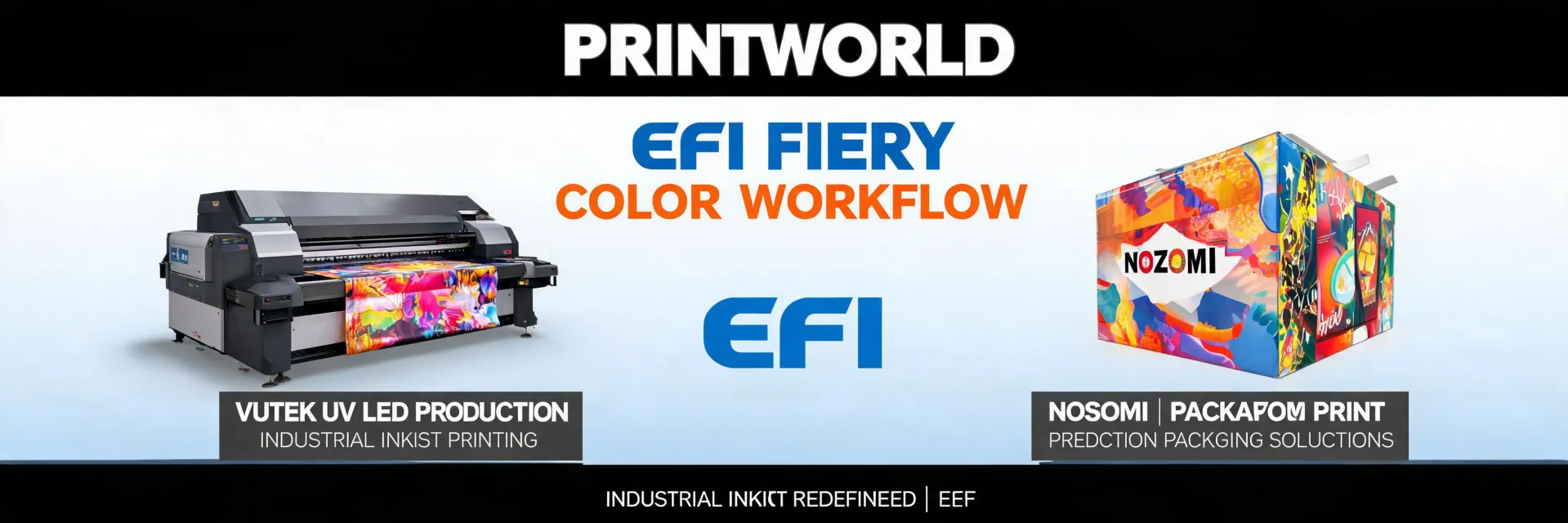
It was a Tuesday afternoon in early 2023. I was staring at a repair invoice for our old flatbed printer—the third one that quarter. The total? $4,300. I remember thinking, this thing is costing us more to keep alive than to replace. But that's the kind of decision you put off, right? Until you can't.
I'm the procurement manager at a mid-size commercial print shop. We do everything from signage to packaging prototypes. Our annual print equipment budget is about $180,000. I've been tracking every dollar for six years, and I've learned that the cheapest option up front is almost never the cheapest in the end.
Here's what happened when I finally decided to stop patching up our old workhorse and look for something new.
The Problem Nobody Wanted to Name
Our old printer was a solid machine in its day. But after five years, it was showing its age. Downtime was creeping up. Print quality was inconsistent. The operator, Mike, was spending half his shift cleaning nozzles and recalibrating. That's time he wasn't running jobs.
I pulled the numbers for our Q1 2023 review. The cost per square foot on that machine was 40% higher than our newer LED printer. But nobody wanted to be the person who said, we need to spend $200,000 on a new machine. So we kept kicking the can down the road.
It's tempting to think you can just compare purchase prices. But identical specs from different vendors can result in wildly different outcomes. That old printer had a low price tag when we bought it. But the total cost of ownership? Ouch.
The Breakdown That Broke Me
In March 2023, the printer went down again. This time it was the printhead carriage assembly. The repair quote was $12,000. Plus three days of lost production. I sat down with our CFO and showed him our spreadsheet (I track everything in a shared Drive doc—boring but necessary).
Over the previous 12 months, we'd spent $27,000 on repairs and lost 18 production days to downtime. That's not counting the overtime for Mike to catch up on orders. When I added it all up, the old machine was costing us about $43,000 a year in repair bills and lost capacity. More than the replacement cost of some newer machines.
Our CFO looked at the spreadsheet and said, "So you're telling me we could buy a new printer and it would pay for itself in about five years?" I said, "Closer to four, if we factor in the efficiency gains." That was the moment the conversation changed.
The Hunt: Not Just Price, But Total Cost
I spent two months evaluating options. I compared six vendors, including EFI, and looked at more than just the base price. Here's what I put on my checklist:
- Base machine cost — obvious
- Installation and setup fees — some vendors charge thousands for this
- Training costs — how many days? Included or extra?
- Ink cost per square foot — this is where the real money lives
- Service contract options — and what's actually covered
- Warranty terms — length, exclusions, travel time for repairs
- Expected throughput — more speed = more capacity = better ROI
Like most beginners, I used to only compare the base price. Learned that lesson the hard way when a "cheap" machine cost us double in ink and service over three years.
Why EFI Made the Shortlist (and Eventually Won)
I'd heard of EFI VUTEk printers for years but always thought of them as a premium option. Then I did the math. Their LED curing technology uses less energy. Their ink cost per square foot is competitive. And the uptime numbers I got from other users (not just from sales reps) were solid.
I called three other print shops that had bought VUTEk printers in the last two years. Not exactly a scientific survey, but real-world experience matters more than any brochure. The feedback was consistent: reliable, fast, and the ink costs were as advertised. One owner told me his ROI was under three years because he could run jobs overnight unattended. That got my attention.
I also considered a couple of direct competitors (I won't name them — they're good machines, just not right for us). But the total cost of ownership for the EFI unit came out lower when I factored in everything. The base price wasn't the lowest, but the total cost over five years was.
The Decision: Two Weeks of Second-Guessing
I went back and forth between the EFI and another vendor for two weeks. EFI offered better through put and lower ink costs. The other vendor had a slightly lower base price. On paper, the other option made sense. But my gut said the EFI was the better long-term bet.
Approved the PO for a VUTEk H1625 and immediately thought: "Did I just make a $200,000 mistake?" Didn't relax until the installation was complete and we ran the first test print. The quality was better than our old machine on day one. Mike was smiling. That helped.
What Actually Happened After We Switched
We took delivery in Q2 2024. Installation took two days (much faster than I expected). Training was another two days, but Mike was up to speed quickly. The interface is intuitive — which sounds like marketing speak, but it genuinely cut the learning curve.
Here's a quick look at the first six months vs. the same period before:
- Production volume: Up 35% (the speed difference is real)
- Downtime: 3 hours total in 6 months, vs. 9 days with the old machine
- Ink cost per square foot: Down 28%
- Overtime for Mike: Essentially eliminated (he now runs jobs during normal hours)
Switching vendors saved us an estimated $38,000 annually in reduced ink costs and lost capacity. Not bad for a machine I worried about for two weeks.
The Lessons I Won't Forget
Looking back, the biggest mistake wasn't buying the old machine years ago. It was holding onto it too long because the upfront cost of replacing it seemed painful. The $4,300 repair bill that finally pushed me over the edge? It wasn't even the most expensive one. But it was the one that made me stop and do the math.
If you're staring at your own repair invoices and wondering if it's time — do the spreadsheet. Calculate the total cost of your current setup over 12 months. Include downtime, overtime, reprints, every hidden cost you can find. Then compare that to a new machine's total cost of ownership.
You might find (like I did) that the expensive option isn't actually the expensive option. It's just the one with a higher upfront number. The real cost was in the downtime and repairs I'd been ignoring for years.
If you've ever had a repair bill that made you wince, you know the feeling. Sometimes the best move is to stop fixing and start replacing.

Elise Marceau is an LED display and digital-signage systems analyst covering LED video walls, modular screens, transparent LED, control processors, and indoor or outdoor signage. She applies IEC 62368-1 safety principles while comparing pixel pitch, luminance, contrast, refresh rate, colour uniformity, viewing angle, ingress protection, power density, module serviceability, and signal redundancy. Her specification guides help integrators, venue operators, retailers, and procurement teams align viewing distance, ambient light, content format, installation access, electrical load, and lifecycle support.