
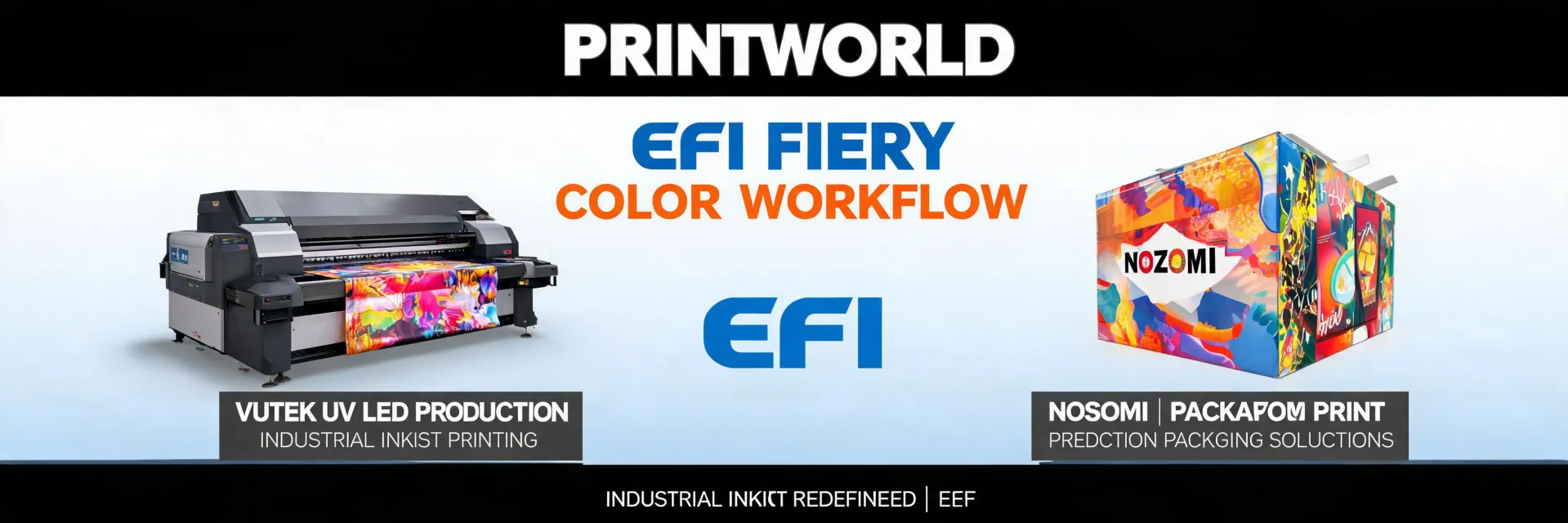
If you're pricing an EFI H1625 LED printer, plan on the purchase price, then add at least two times that amount for maintenance, cleaning, and downtime. That sounds dramatic, but it's the conclusion I've reached after six years of tracking every order, invoice, and service call in our print shop's cost system. This isn't a sales pitch. It's a total cost of ownership warning.
I'm a procurement manager at a 42-person packaging and sign shop. I've managed our printing budget—roughly $1.1 million annually—for six years, negotiated with more than 20 vendors, and documented every failure in our maintenance log. So when someone says the H1625 is a great printer, I don't argue. When they say it's just an inkjet, I reach for my spreadsheet.
The TCO math: purchase price vs. lifecycle cost
When we compared quotes for the H1625, one vendor came in about 12% lower on the base system. I almost went with them until I calculated the total cost. The lower quote charged extra for after-hours service response, had a longer parts lead time, and didn't include operator training. The higher quote included all of that. What I mean is that 'cheap' isn't just the sticker price—it's the service response time, the hidden fees, the training, and the cost of one day of dead production.
I don't have hard data on what other shops pay for service contracts, but based on our quotes, my sense is the range varies by 30% depending on whether parts are included. If I remember correctly, our comprehensive service plan was around $22,000 a year—don't quote me on that, because we renegotiated after year one. Should mention: our shop runs two shifts, so the printer gets a lot of hours. That changes the math.
The first year, we tried to get by with a third-party maintenance provider. It took about three months—or rather, four if you count the re-bidding—to realize the low rate didn't cover what our operator could actually break. We went back to an EFI-certified service plan. Oh, and the 'free setup' from the third party? That cost us $450 in crating and disposal fees.
So glad I pushed for the extended service contract when we got the H1625. I almost skipped it to save $9,000. Dodged a bullet there.
The most frustrating part of managing the H1625: the same issues recur despite clear documentation. You'd think a written schedule would prevent clogs, but in a busy shop, cleaning is the first thing to go when a deadline hits.
EFI injector cleaning: the budget line you can't skip
Here's the thing: the most underrated line in a production inkjet budget is EFI injector cleaning. When a printhead nozzle starts dropping, every piece of media that leaves the machine is either waste or a redo. If nobody checks the test print, you can burn $1,000 in ink and media before sunrise.
I'm not a service engineer, so I can't tell you which nozzle tends to fail first or how to reseat a printhead. What I can tell you from a procurement perspective is that a lost production shift costs far more than the cleaning product you skipped. The printer will run automatic cleaning cycles, but that's not a replacement for a daily nozzle check. Our rule: two minutes of verification at shift start beats two hours of correction at shift end.
We didn't have a formal shift-change checklist for the first year. Cost us when a head failure went unnoticed through an entire run. The third time we found a clogged nozzle halfway into a job, I finally created a 12-point startup checklist. A lesson learned the hard way. The checklist has saved us an estimated $8,000 in potential rework.
Why an HP OfficeJet or Epson EcoTank mindset doesn't apply
Look, I'm not saying the H1625 is fragile. But if you're used to an HP OfficeJet printer or an Epson EcoTank photo printer, you're thinking about inkjet at the wrong scale. An OfficeJet is fairly forgiving. Let it sit for two weeks, run a cleaning cycle, and you're probably fine. An EcoTank is designed for low-cost refills and light home photo use. The H1625 is a different animal. It runs faster, uses bigger printheads, and has a much higher ink volume. When something clogs, you're not replacing a cartridge—you're losing production time. Not ideal, but workable if your schedule has slack. When you're running a deadline, it's a disaster.
I think that distinction matters more than any spec sheet. The technology family is the same. The cost of failure is not.
Who invented inkjet printer? And why you should care
Since we're on the topic of inkjet assumptions, let's answer the search question: who invented inkjet printer? According to Canon and HP historical accounts, the practical thermal inkjet printhead was independently developed in the late 1970s—usually credited to Ichiro Endo at Canon and John Vaught at HP. That parallel invention is why inkjet history has two branches. For a buyer, the important part isn't the patent trivia. It's that inkjet has always been a maintenance technology. Forcing ink through microscopic nozzles is not a hands-off process. Scale changes the cost of failure, not the need for care.
The mailer spec trap I almost missed
While we're on overlooked costs: if you use a production printer for mailers, check the piece dimensions before you run. According to USPS pricing effective January 2025 (usps.com), a First-Class Mail letter costs $0.73 and a large envelope costs $1.50. One of our jobs was 0.25 inches too big on one dimension. The printer ran flawlessly, but the mailing cost for 50,000 pieces jumped from $36,500 to $75,000. That's not a printer problem. It's a spec problem. The H1625 did exactly what it was told. Prices as of January 2025; verify current rates.
When this advice doesn't apply
Not every shop needs the same maintenance intensity. If you're using the H1625 for short runs twice a week, a daily nozzle check is probably overkill. If you're running three shifts, a strict preventive maintenance schedule isn't optional. The right answer depends on your volume, your staff, and your tolerance for surprises. And if you're a small shop with one printer, treat the service contract like insurance—because one unscheduled service visit will justify it.
I'm not a financial advisor or a technical expert. I'm a buyer who's been burned, and who finally learned to count the cost of ignoring small maintenance steps. In my experience, the printer isn't the problem. The skipped cleanings are. But your mileage may vary—that's the honest boundary.

Elise Marceau is an LED display and digital-signage systems analyst covering LED video walls, modular screens, transparent LED, control processors, and indoor or outdoor signage. She applies IEC 62368-1 safety principles while comparing pixel pitch, luminance, contrast, refresh rate, colour uniformity, viewing angle, ingress protection, power density, module serviceability, and signal redundancy. Her specification guides help integrators, venue operators, retailers, and procurement teams align viewing distance, ambient light, content format, installation access, electrical load, and lifecycle support.