At a small book fair in Smithers, British Columbia, a kid pointed at a chunky board book with a red cover and asked, 'Why is your name on it? There are A's everywhere.'
The book was called A is for Amy. It was one of 60 children's books I'd printed for the World of Wonders event in 2024. Every single book had a different name printed on every page — Amy, Ava, Liam, Noah, you name it. No two copies were the same. And each cover was printed directly onto cardboard board, not glued on, not laminated, and not a sticker.
Most people don't believe that at first. They think children's books are only printed in huge quantities. They think you need an offset press and a 3,000-copy minimum. In this post, I'll show you how I used an EFI flatbed printer to make real, low-cost, short-run children's books — and why direct print became my favorite creative superpower.
The 3D Printer Detour
My first instinct wasn't a flatbed printer. Like many makers, I spent years searching for 'cool things 3D printer ideas.' I owned a small 3D printer, and I loved making custom parts and prototypes. But when I tried to create a physical book with it, the results were terrible.
A 3D printer can't print full-color graphics on a page. It extrudes plastic in layers. You can use it for lithophanes — those cool backlit panels — but you can't make a flexible, foldable children's book with text and illustrations.
So I tried my home inkjet printer. People often ask me, 'Is the Epson EcoTank a inkjet printer?' Yes, the EcoTank is an inkjet printer, and it's a great little home printer for paper documents and photos. But it's not built for printing on rigid book board. It can't handle a 2-mm thick sheet of cardboard. It also can't print variable data on every page without jamming or smearing.
The EFI Flatbed Printer Discovery
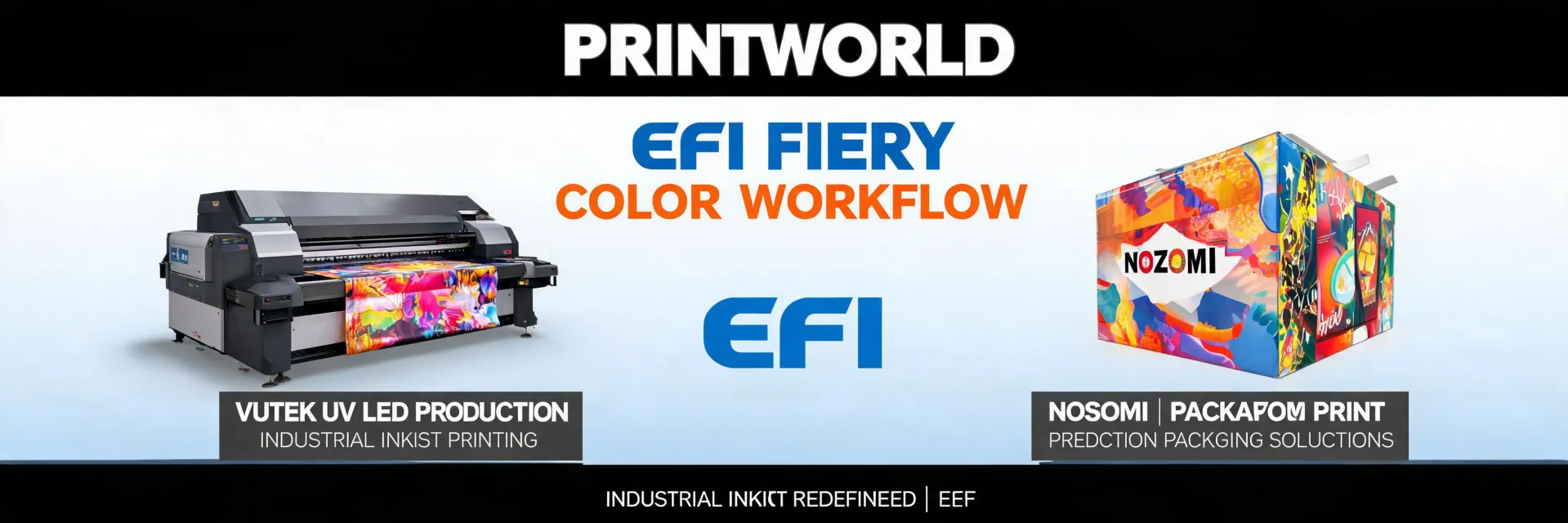
Last fall, I reached out to a small print shop in Smithers that runs an EFI flatbed printer. I walked in expecting to see a standard digital press. Instead, I saw a massive EFI VUTEk flatbed printer with a vacuum table and a carriage that moved back and forth over rigid sheets of material.
The operator — I'll call him Jim — noticed me staring. 'You can put almost anything on that bed,' he said, 'and it prints directly onto it. Book board, cardboard, wood, foam, even metal.'
He had been using the printer for signs and packaging, but when he heard about my children's book project, he said something that changed my thinking: 'Why don't you print the book cover directly on book board?'
I didn't understand what that meant at first. But then he explained the process.
First, you need a solid connection between your computer and the printer. The shop had a thick USB A to B printer cable running from the workstation to the EFI printer. It looked like an old-style printer cable, the one with the wide, square connector. For small files, it works fine, but for large book files, use a network connection or a good-quality USB A to B cable. The printer itself is inkjet-based, and the software 'rips' the file before sending it to the printheads.
Then you set the media on the vacuum table. For my book covers, we used white-coated book board. The vacuum held it flat, and the print carriage fired drops of CMYK ink onto the surface. The result was a vibrant, durable cover printed directly onto the card stock.
The best part? There are no plates. No minimum order. And every page can be different for the same cost as a job with one design.
The 'A is for Amy' Project
The first time I tested the idea was for a Christmas market in 2023. I printed 500 greeting cards. Each card had the same artwork, but every single one had a unique inside message. Then, to match each greeting card, I printed 500 small gift boxes directly onto cardboard. It felt like magic: 500 cards and 500 boxes, but no two pieces were the same.
The next step was obvious: children's books.
For the World of Wonders event in 2024, I made 60 books. Each book was a square-ish board book. The cover was printed on book board. The pages were printed on a heavier card stock, folded, bound, and trimmed. And because I was using a variable data system, every page inside the book was unique. In one copy, the character was named Amy. In another copy, the same character was named Jack, Mia, or Noah. The text, the illustrations, and the name repeated on each page.
This is completely impractical with traditional printing. With offset, each unique page would need its own plate. With direct print on an EFI flatbed printer, each page was just another file sent from the computer.
The production wasn't without hurdles. Before the event, I ran a few test prints and noticed some banding. It wasn't the printer's fault; the nozzles had been sitting unused for a couple of days. The technician ran an EFI injector cleaning cycle — a maintenance routine that pushes ink through the printheads to clear clogs and keep nozzles consistent. After the cleaning, the test print looked perfect. I learned that lesson early: don't skip maintenance before a long run.
Another lesson: check your cables. One afternoon, a print job slowed to a crawl. It turned out that the old USB A to B printer cable was loose. It's a seemingly minor detail, but in a direct-to-substrate workflow, the data transfer speed can make or break a deadline.
What I Learned About Print Pricing
I should mention pricing, because everyone asks. Printing 60 books with personalized pages sounds expensive. It was actually affordable, because each book consumed a similar amount of ink regardless of the name printed. The setup cost was basically zero: I just prepared the template, set up the variable fields, and printed.
This experience changed how I think about print. The printing company quoted a flat per-book cost with no hidden setup fee. The transparency was a breath of fresh air. As I've learned, the smart question to ask isn't 'what's the price?' but 'what's not included?' With direct print, the quote was the final price. There were no plate charges, no minimum quantity add-ons, and no 'you have to order 1,000 copies' surprises.
Don't get me wrong: offset printing still wins on very large runs. If you need 100,000 copies of a boxed set, go offset. But for short-run, personalized, or rapidly changing projects, direct-to-substrate printing is a serious shortcut.
Why I Keep Using a Flatbed Printer
If you search online for 'cool things 3D printer ideas,' you'll find hundreds of articles about 3D-printed toys and organizers. I've made a few of those too. But for my creative practice, the EFI flatbed printer has been far more valuable.
Here are a few projects I've used it for:
- Personalized children's books like A is for Amy with a different name on every page
- 500 uniquely printed greeting cards with matching gift boxes
- Custom book covers printed directly on thick cardboard
- Prototypes for packaging, printed on the actual material before committing to a larger run
- Short-run art prints on 100 lb text, card stock, and even wood panels
The common thread is variety. A flatbed printer doesn't force me to choose between quantity and uniqueness. I can make 10 copies, 60 copies, or 1,000 copies, and every copy can be different.
A Simple Guide If You Want to Do This
If you're thinking about printing your own children's book or packaging, here's what I'd do:
- Find a print shop with an EFI flatbed printer or a similar direct-to-substrate capability. Ask to see samples printed directly on book board.
- Bring a print-ready PDF with your book art. Use high-resolution images (300 DPI for print) and include a 1/8-inch bleed for trimming.
- Ask about maintenance checks. If you see banding, ask the operator to run a nozzle check and, if needed, an injector cleaning cycle.
- Test first on the same material you plan to use. A book cover printed on card stock can look different from one printed on kraft board.
- Request an all-in quote. Make sure it includes the material, the printing time, and any finishing like cutting, folding, or binding.
Is the EcoTank Enough?
Let me answer the question directly one more time: is the Epson EcoTank a inkjet printer? Yes, it is. It's a wonderful inkjet printer for everyday documents and even photo prints. But it is not a production flatbed printer. It can't print on rigid book board, it doesn't have a flatbed path, and it can't cost-effectively print 60 personalized versions of the same page.
That distinction matters more than any specific brand. A home inkjet is designed for one-sheet-at-a-time flexibility. An EFI flatbed printer is designed for real materials, small production runs, and variable data. They are both capable machines — but they solve different problems.
Final Thought
The most exciting part of the A is for Amy project wasn't the printing itself. It was the reaction. Watching a child find their name on a page they'd never seen before — that's something mass printing can't offer.
Direct print turned a one-off idea into a real product in a way that 3D printing never could. The EFI flatbed printer gave me a new way to think about print: not as a giant manufacturing step, but as a flexible, personal, almost magical medium.
So if you have a crazy book idea, don't immediately think about minimum order quantities. Look for a shop with a flatbed printer. Print directly on the cover. And don't be afraid to make every single copy different.
That's what A is for Amy taught me. And that's why, if you say it quickly, 'A is for Amy' really does sound like 'AIs for Amy' — a happy accident, a pun, and a little piece of the future.

I’m Jane Smith, a senior content writer with over 15 years of experience in the packaging and printing industry. I specialize in writing about the latest trends, technologies, and best practices in packaging design, sustainability, and printing techniques. My goal is to help businesses understand complex printing processes and design solutions that enhance both product packaging and brand visibility.