-
Start with four questions, not a Google search
-
Scenario A: Big, durable, UV-cured production work
-
Scenario B: One versatile machine for a sign and display shop
-
Scenario C: You need a printer for shirts
-
Scenario D: Food grade 3d printer filament—and why you ended up in the wrong search
-
How to tell which branch you're in
I manage procurement for a commercial print shop. For the last six years, I've tracked roughly $180,000 in printer-related spending, and I still can't tell you a single 'best printer' for everyone. There isn't one. If you search for 'where to find a printer' without first defining the job, you'll end up comparing machines that were never supposed to compete.
The same logic applies if you're looking for an EFI UV printer, a printer for shirts, or even a food grade 3d printer filament. Different materials, different volumes, different risks. The machine is only part of the cost.
Start with four questions, not a Google search
Before you call a sales rep, answer these four. They are the reason I haven't made the same mistake twice.
- What are you actually producing? Durable signage, packaging, garments, or 3D-printed parts all need different equipment.
- What volume matters? One a day is not the same as one a minute.
- What materials or compliance constraints exist? UV ink, garment safety standards, food-contact rules—these change the whole supplier list.
- What happens if the output fails? A cracked shirt after one wash or a packaging run that delaminates can wipe out any short-term savings.
Scenario A: Big, durable, UV-cured production work
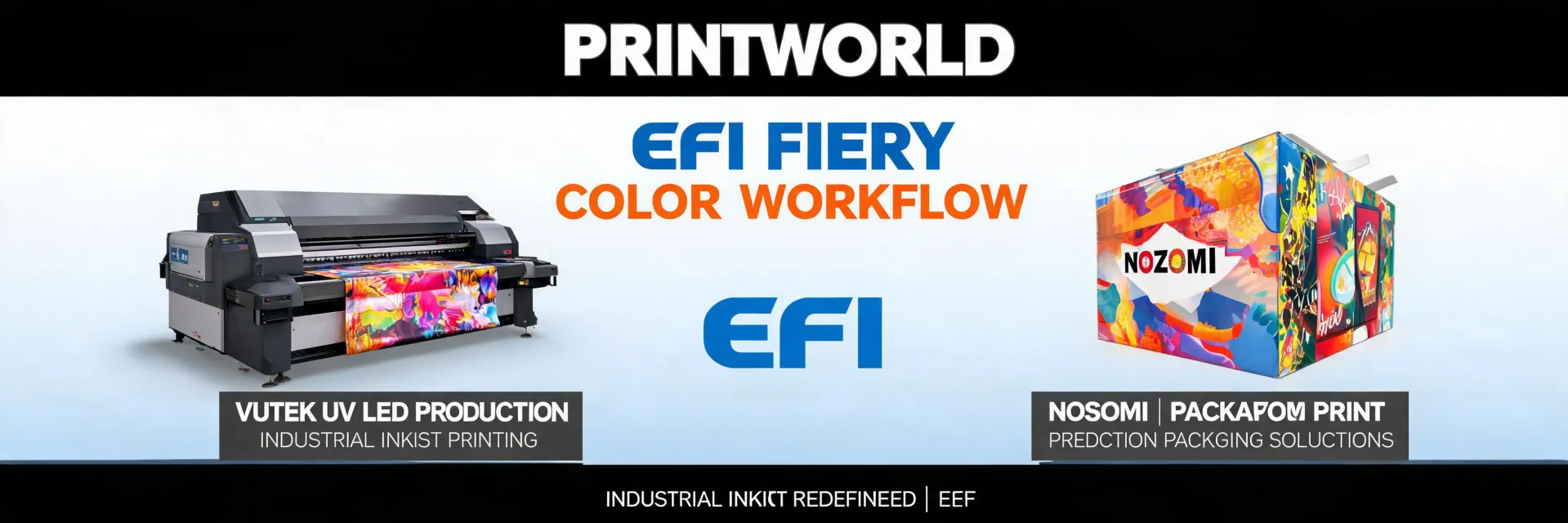
If your shop is doing POP displays, vehicle graphics, packaging, or durable signage, the category is industrial UV inkjet. That's where EFI enters. One EFI UV printer line, the VUTEk series, is designed for large-format and display graphics. The Nozomi C18000 line is a single-pass press for corrugated packaging. According to EFI's product pages (efi.com, accessed February 2025), these are LED-UV inkjet systems for high-production environments. They are not office printers, and they are priced accordingly.
The lowest quoted printer is rarely the lowest-cost printer. The fine print is where the budget goes.
In Q2 2024, I compared six quotes for a UV flatbed. One was $24,000 lower than the nearest competitor. Then I added installation, first-year maintenance, training, shipping, and a spare printhead. The difference shrank to $2,300. Another machine with a higher base price actually cost less per usable square foot because it wasted less ink in the fill cycle. I almost chose based on price alone. That would have been a mistake.
Looking back, I should have spent more time on the total cost checklist before I got to the quote stage. At the time, I was under pressure from the owner to lock in a number before the annual budget reset. It worked out, but only because a vendor's final add-on list forced me to recalculate.
For EFI inkjet printers, use EFI's authorized dealer channel. Start on efi.com, then ask to visit a working installation. Do not buy a used production UV printer without a service contract. The repair history matters more than the price.
Scenario B: One versatile machine for a sign and display shop
The EFI VUTEk h1625 LED is a common answer for this branch. It is a hybrid flatbed and roll-to-roll printer, so you can print on rigid boards and flexible media in one machine. I have seen shops run it for white ink, textured effects, and a wide mix of media weights.
The quality of the finished print becomes the quality of the sign shop. A scratchy or faded panel says more than any sales pitch. If the final output looks like it was produced on a cheap rental machine, the client remembers that—not the quote.
My experience here is based on sign and display work, not precise industrial parts. If your customer needs tight dimensional repeatability, you need a different test. But for the normal range of POP, acrylic, foam board, banner, and vinyl, the h1625 branch is worth a serious demo.
Ask EFI or a certified reseller for a demo with your own files. Run twenty pieces, not one. Check the cost of qualified inks, media, and labor. The h1625 is not a no-brainer for every shop, but it makes sense when you already have enough daily volume to keep it busy.
Scenario C: You need a printer for shirts
This is a separate branch. For individual shirts, a UV flatbed is usually the wrong tool. You need direct-to-garment for small runs and flexible designs, or screen printing when the same design gets printed dozens or hundreds of times. Screen printing is not old-fashioned; its cost curve changes with volume. And plain heat transfer has its own pros and cons.
If you are a garment manufacturer making fabric rolls, EFI's Reggiani line of industrial textile printers is relevant. If you are a shop printing single shirts, compare dedicated DTG options and pretreat/curing systems. The shirt printer is only part of the process. Pretreatment, flash curing, and wash testing are usually the difference between a shirt that lasts and one that looks like a garage experiment.
Before buying, do this: print six identical shirts, wash them five times, and inspect them. I've seen budgets suffer because the 'cheap' option failed after one wash. The customer did not ask for a refund; they just never ordered again. That is the real cost.
For where to find a shirt printer, start with established DTG manufacturers and specialized garment printing suppliers. Ask for service response times and consumable availability. A printer with no local support is a red flag, no matter how low the quote.
Scenario D: Food grade 3d printer filament—and why you ended up in the wrong search
If your search history includes food grade 3d printer filament, stop looking for 'a printer' first. Your constraint is material safety, not machine speed.
I do not make food-contact parts, and I do not pretend to be an FDA or EU regulatory advisor. What I know from buying regulated supplies is that paperwork matters. Ask for a food-contact declaration, a technical data sheet, and a traceable batch number from the filament maker. Avoid repackaged filament with no source materials listed. If a supplier cannot show you the documents, that is a deal-breaker.
EFI does not make food grade 3d printer filament, and this article should not be read as a recommendation for any 3D filament brand. I bring it up because it shows why 'where to find a printer' has to start with the material and the regulatory requirement, not with a brand name.
How to tell which branch you're in
Use this quick filter:
- If your production surface is rigid or roll media and you need fast, durable, UV-cured output, explore EFI UV inkjet. Start at efi.com.
- If your product is a garment and your order sizes are small or varied, DTG is the branch. Test wash results first.
- If your purchase is driven by a food-contact requirement, your real product is the filament material, not the printer.
Bottom line: don't ask 'which printer should I buy?' Ask 'which printer costs the least over three years with my real jobs, my real media, and my real mistakes?' That is the total cost answer. It is less romantic than a demo video, but it keeps shops solvent.
If you still want the literal answer to 'where to find a printer': for EFI production printers, go to efi.com and use the contact/reseller path. For a printer for shirts, choose a specialized DTG vendor with wash-tested samples. For food grade 3d printer filament, find a manufacturer or distributor who will send you compliance documents. The right printer is out there. The search term is not 'printer'—it's the job you need it to do.

I’m Jane Smith, a senior content writer with over 15 years of experience in the packaging and printing industry. I specialize in writing about the latest trends, technologies, and best practices in packaging design, sustainability, and printing techniques. My goal is to help businesses understand complex printing processes and design solutions that enhance both product packaging and brand visibility.