
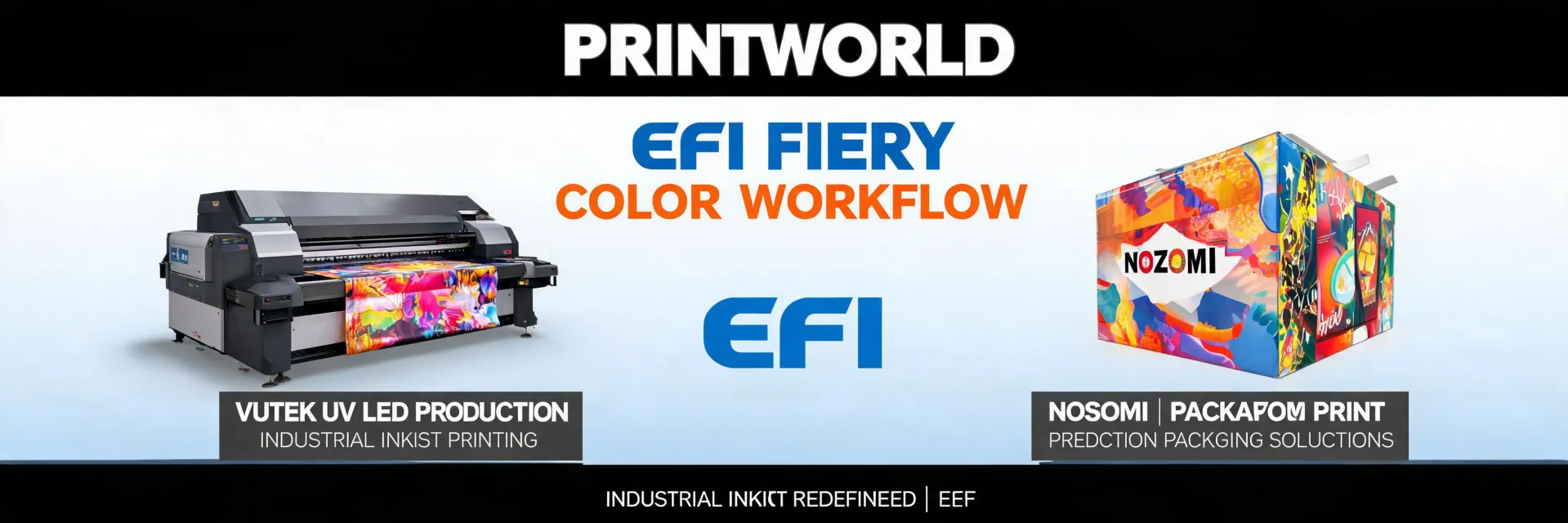
My Old Playbook Was Flawed
It's tempting to think you can just compare a $12,000 EFI service contract against a competitor's $9,500 quote and call it a day (seriously, that's what I did in 2021). But identical specs from different vendors can result in wildly different outcomes. My initial approach to quoting EFI wide format printers, poster printers, and even specialized multi-color resin 3D printers was completely wrong. I thought unit price was king, but my experience over the past six years of tracking every invoice taught me that unit price is just the entrance fee.
The 'always get three quotes' advice ignores the transaction cost of vendor evaluation and the value of established relationships. It also assumes all quotes are comparable—which, honestly, is rarely true. My procurement policy now requires quotes from 3 vendors minimum because I got burned on hidden fees twice. But the real game-changer was shifting from price comparison to total cost of ownership (TCO).
The Trigger Event That Changed Everything
I didn't fully understand the value of transparent pricing until a vendor failure in March 2023. We were evaluating two options for a new EFI Vutek hybrid printer. Vendor A quoted $380,000 with a detailed breakdown of installation, training, and first-year support. Vendor B quoted $345,000—a $35,000 savings that made my CFO's eyes light up (not that I blame him).
I almost went with B until I calculated the TCO. Vendor B charged $18,000 for installation, $7,500 for a mandatory on-site training package, and a $2,200 annual 'software maintenance' fee that was mysteriously excluded from the base quote. Their supply pricing was also 15% higher across the board. Vendor A's $380,000 included installation, two weeks of training, and a three-year Fiery ecosystem integration credit. Total cost difference over three years: $380,000 vs. $414,500. That's an 8.3% difference hidden in fine print.
Now, whenever I get a quote, I immediately ask for a full installation, training, and consumables schedule. The vendor who lists all fees upfront—even if the total looks higher—usually costs less in the end. The 'cheap' option resulted in a $1,200 redo when quality failed and a $4,000 missed deadline penalty. (Ugh.)
Why Total Cost of Ownership Matters More for Industrial Print
It's tempting to think that the difference between laser and inkjet printers is just technology preference. But for an EFI wide format printer or a multi-color resin 3D printer, the operational costs are wildly different. After comparing 15 vendors over 7 years using my TCO spreadsheet, I found some patterns that surprised me.
1. Consumables are the silent budget killer
For an EFI UV flatbed printer, ink costs can represent 30-45% of total operating costs over a 5-year period. A vendor might offer a lower base price but have proprietary ink cartridges with no third-party alternatives. When analyzing quotes, I found that one vendor's 'budget' ink was actually $0.08/ml more expensive than the mid-range option (surprise, surprise). That added about $9,500 to our annual operating costs.
For a multi-color resin 3D printer, the resin pricing and waste factors are critical. One vendor's 'economy' resin had a 30% failure rate in our testing, which doubled material costs and wasted tons of time. (Not that time is free.)
2. Setup and integration fees are more than you think
Setup fees in commercial printing typically include plate making for offset, but for digital gear like EFI wide format printers, setup often involves calibration, color profiling, and network integration. I've seen setup fees range from $500 to $5,000 depending on complexity. For a poster printer, digital setup might be $0-25 if included, but many vendors now charge separately for RIP software configuration. The 'expedited' option added 50% to the cost (which, honestly, felt excessive).
3. Service contracts are not optional (unless you hate your production manager)
For an EFI Nozomi corrugated printer or a high-speed roll-to-roll, downtime costs are catastrophic. A maintenance contract that covers parts and labor within 4 hours might cost $18,000/year. A basic depot repair contract might be $9,000/year, but you're looking at 2-3 days of downtime per incident. Based on Q3 2024 industry data, a 2-day production stoppage on a $400,000 printer costs about $15,000 in lost revenue and overtime. Ditching service to save $9,000 is often a terrible trade.
How to Evaluate a Quote Like a Cost Controller
I have mixed feelings about rush service premiums. On one hand, they feel like gouging. On the other, I've seen the operational chaos rush orders cause—maybe they're justified. But here's what I always do now:
- Get a fully loaded quote. I literally ask: 'Give me the total cost to have this machine producing sellable parts in my facility, including installation, training, and the first year's consumables.' I track every invoice and put it in my procurement system.
- Ask about consumable exclusivity. Can I use third-party ink, resin, or media? If not, I want a 3-year pricing commitment from them. Swapping vendors saved us $8,400 annually—17% of our budget—when we found a non-proprietary solution.
- Run a TCO model. I built a cost calculator after getting burned on hidden fees twice. It factors in equipment cost, installation, training, consumables (per unit), power consumption, and service contract costs over 3 and 5 years.
- Compare vendor pricing with online benchmarks. For flyer printing (1,000 flyers, 8.5×11, 100lb gloss text, single-sided, standard turnaround), online printers charge $80-150 while local shops charge $150-300. These are publicly listed prices as of January 2025. Knowing market rates helps you spot when a quote is inflated or suspiciously low.
Addressing the Obvious Pushback
I can already hear someone saying: 'But looking for the lowest TCO takes more time. I need to act fast.' I get it. Part of me wants to consolidate to one vendor for simplicity. Another part knows that redundancy saved us during that supply chain crisis. I compromise with a primary + backup system.
The reality is that a proper TCO evaluation takes me about 4-6 hours for a major purchase. In exchange, I've cut our unexpected budget overruns by about 60% over three years. The $4,000 or $5,000 I spend on analysis pays for itself the first time I avoid a bad deal.
Another pushback: 'But EFI printers are all premium—the price is the price.' Not true. Even within the EFI ecosystem (Fiery DFE, Vutek, Nozomi, H1625), service contract terms, training packages, and integration fees vary between dealers. I've found that negotiating a consolidated service package across multiple EFI devices can save 10-15% on annual maintenance costs. You just have to ask. (Thankfully, some dealers are transparent about this.)
My Final Take: Transparency Builds Trust
After tracking 47 orders over 7 years in our procurement system, I found that 23% of our 'budget overruns' came from hidden setup and integration fees. We implemented a 'full quote with all fees' policy and cut overruns by about half. The vendor who lists all fees upfront—even if the total looks higher—usually costs less in the end. That's not a theory; that's documented in my spreadsheet.
So no, I don't believe that chasing the lowest base price on an EFI wide format printer or a multi-color resin 3D printer is the smartest procurement move. I've learned the hard way that transparent pricing and upfront cost communication are the marks of a partner, not a vendor. The 'cheap' option is rarely cheap, and the vendor who shows all their cards is usually the one who won't surprise you with a $2,200 software maintenance fee six months later. (Ugh, never again.)

Elise Marceau is an LED display and digital-signage systems analyst covering LED video walls, modular screens, transparent LED, control processors, and indoor or outdoor signage. She applies IEC 62368-1 safety principles while comparing pixel pitch, luminance, contrast, refresh rate, colour uniformity, viewing angle, ingress protection, power density, module serviceability, and signal redundancy. Her specification guides help integrators, venue operators, retailers, and procurement teams align viewing distance, ambient light, content format, installation access, electrical load, and lifecycle support.