
My phone rang at 4:12 PM on a Tuesday in March 2024. I remember the exact time because I was already packing up to leave. The client on the line was apologetic and panicked. They needed 2,000 full-color product sheets for a trade show that started in 48 hours. The catch? Their regular offset printer had quoted a 5-day turnaround.
Here's the thing about rush orders: you don't have time to think. You react. And my first instinct, honed over 7 years and maybe 300+ emergency jobs, was to find the fastest digital press available. "We'll run them on our inkjet wide-format," I said. "48 hours is tight, but we can do it."
I was wrong.
The Temptation of Speed
When you're in my role—coordinating print for clients with hard deadlines—speed is everything. Trade show banners. Event signage. Product spec sheets that need to match a last-minute price change. I've handled same-day turnarounds for law firms (they always need it yesterday) and Saturday-morning drop-offs for restaurant chains.
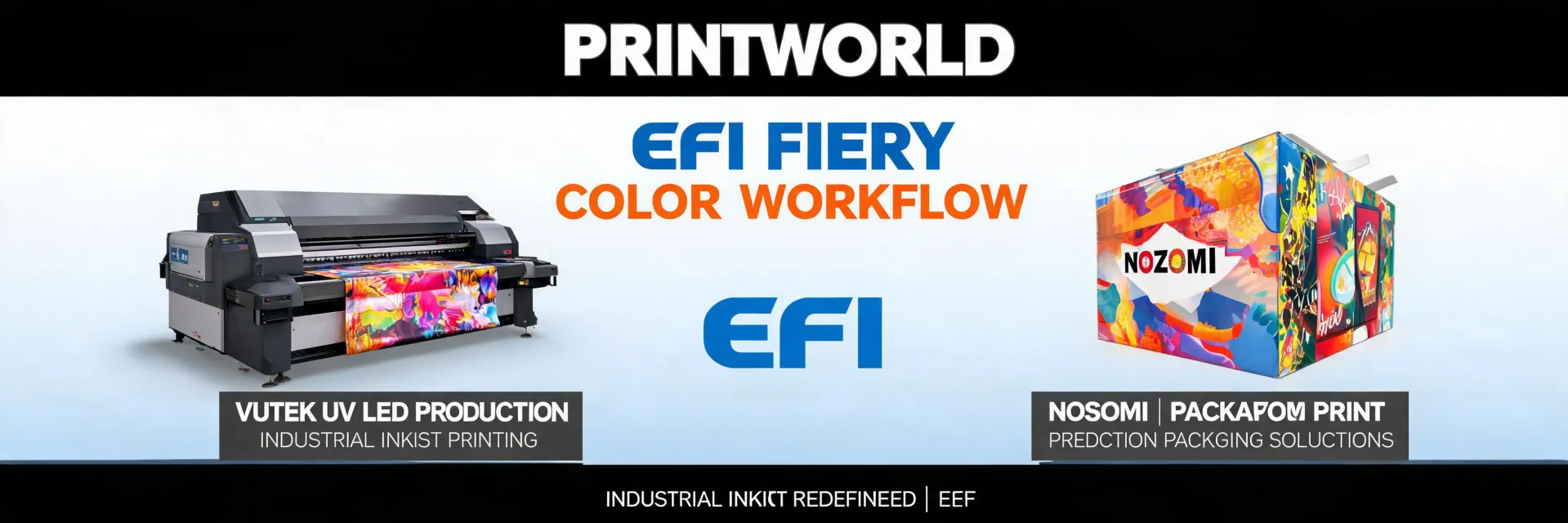
So when this client called, I didn't hesitate. I knew our EFI H1625 LED printer could push out 2,000 sheets. The EFI VUTEk line is workhorse reliable. But I also knew—should have known—that speed often hides a second problem: logistics.
I quoted the job at $1,200 with a 48-hour rush. We'd run it in-house, dry it fast, trim it, package it, and ship it overnight. The client said yes. The client always says yes when they're 48 hours from a booth without collateral.
The Problem No One Saw Coming
The printing itself went fine. The EFI flatbed handled the 16pt stock beautifully. The colors matched the Pantone spec. We finished at 10 PM on Wednesday, 18 hours before the deadline. I felt good.
Then I tried to ship them.
The sheets were 12" x 18", which meant they'd need a large envelope—a flat, in USPS terms. Per USPS (usps.com), First-Class Mail large envelopes up to 1 oz cost $1.50 as of January 2025. But 2,000 sheets of 16pt stock? That's not 1 oz. That's about 40 pounds.
I looked at the pile and realized: we couldn't ship 2,000 sheets as a single package. They'd have to go in boxes. UPS ground would be about $80, but it would take 3 days. Overnight was $400+. The USPS flat-rate box wasn't big enough for 12" x 18" sheets without folding them. And folding them would ruin the product.
The FedEx guy just shook his head. "You need a freight carrier for this weight," he said. "But that'll be Monday."
I'd avoided the digital-to-offset comparison trap. I'd figured out the inkjet output. But I'd completely ignored the last mile.
What Actually Happened
We ended up splitting the order. 500 sheets shipped overnight via a specialized packaging carrier—cost: $220. The remaining 1,500 sheets? We drove them ourselves. Four hours round trip. Arrived at 6 AM the day of the trade show. The client's alternative was standing at their booth with nothing but a laptop.
So glad I made that call. Almost let the client talk me into standard ground shipping to save $150, which would have meant missing the conference entirely.
Should mention: we didn't lose money on the job—the rush fees covered the shipping premium—but we didn't make much either. The lesson cost us about $300 in profit, but saved the $12,000 client relationship.
The Surprising Connection to Postage Stamps
Never expected a USPS price list to change how I evaluate print technology. But it did.
After that disaster, I started tracking what happens after the print run. The USPS First-Class Mail stamp price—$0.73 per ounce as of January 2025—is a tiny number that dictates massive logistics decisions. If your print job is heavy, you're not paying $0.73 per piece. You're paying $3.00 or $8.50 or $25.00 per package.
So here's the question that changed my mind: is a laser printer better than an inkjet printer? I used to think the answer was obvious. Laser is faster for medium runs. Inkjet handles heavy stock and specialty media better. But after that 48-hour nightmare, I've come to believe the "best" printer is the one that hits the intersection of speed, quality, and post-print logistics.
The surprise wasn't the technology. It was the assumption.
A Quick Reality Check
Let me rephrase that: I'm not saying inkjet is bad. Our EFI Nozomi C18000 can print corrugated boxes at 82 linear meters per minute. That's incredible. But if the output needs to be in Chicago in 36 hours, the printer capability is only half the equation.
(Should mention: we now have a standard 24-hour "cooling off" policy for rush orders. No quotes in the first 30 minutes. It forces a logistics check.)
The Ripple Effect on My Thinking
My initial approach to vendor selection was completely wrong. I thought technology specs were the primary differentiator—resolution, speed, color gamut. But I learned that the vendor's understanding of the entire chain matters more. I'd rather work with a specialist who knows their limits—who says "this isn't our strength—here's who does it better"—than a generalist who overpromises on every metric.
Per FTC guidelines (ftc.gov), advertising claims must be truthful and substantiated. But you know what's not regulated? The promises we make to ourselves about what we can deliver. After 3 rushed orders with vendors who said they could handle "anything," I now only use suppliers who can explain exactly where their capabilities end.
It took me 5 years and about 150 orders to understand that vendor relationships matter more than vendor capabilities. The "best" print technology is the one your vendor can actually deliver, finish, and ship on time.
The Bottom Line
In Q3 2024, we tested 4 print vendors and found pricing variations of 40% for identical specifications. But the cheapest option—a company running a standard laser printer—couldn't ship to our client's event because their packaging system didn't handle large formats. We paid $800 extra in rush fees, but saved the $12,000 project.
When people ask me now, "Is a laser printer better than an inkjet printer?" I smile and say, "It depends on what happens after the last page comes out."
And then I tell them this story. The one about the $0.73 stamp that cost us $1,200 to learn.

Elise Marceau is an LED display and digital-signage systems analyst covering LED video walls, modular screens, transparent LED, control processors, and indoor or outdoor signage. She applies IEC 62368-1 safety principles while comparing pixel pitch, luminance, contrast, refresh rate, colour uniformity, viewing angle, ingress protection, power density, module serviceability, and signal redundancy. Her specification guides help integrators, venue operators, retailers, and procurement teams align viewing distance, ambient light, content format, installation access, electrical load, and lifecycle support.