
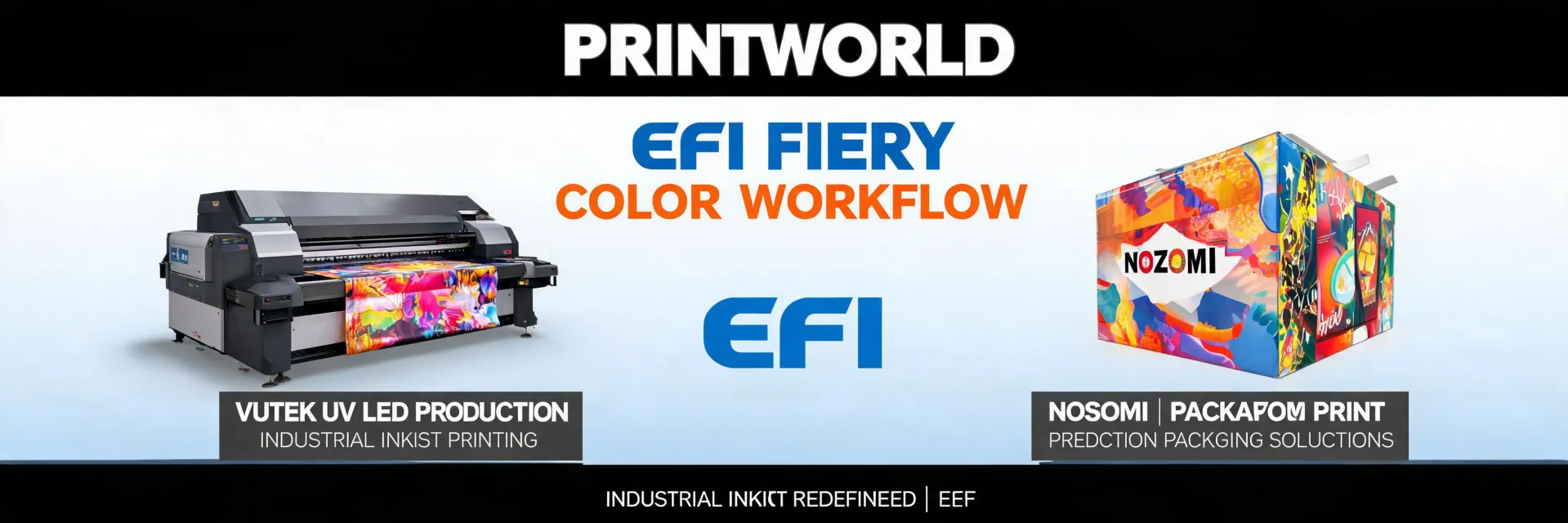
A flatbed printer is a digital printer that prints directly onto rigid sheets—acrylic, aluminum, foam board, even 1-inch-thick material—without feeding it through a roller path. If you are an admin buyer trying to decide if production printing belongs in-house, the EFI Pro 16h+ hybrid LED printer is one of the most practical places to start because it handles both flat sheets and roll-to-roll media in one machine.
Quick background: I am the office administrator for a 140-person company. I manage roughly $80,000 a year in print and equipment purchases across seven vendors. I report to both operations and finance. I have been doing this since 2020, and I am the person who gets blamed when signage arrives late.
The Short Answer: What Is a Flatbed Printer?
Flatbed printers are industrial inkjet systems. The material lies flat on a bed, and the print carriage moves over it. Because there is no feed path, you can print on rigid boards, acrylic, PVC, foam core, and composite panels. That makes them useful for signs, retail displays, packaging prototypes, and interior graphics.
From the outside, it looks like a wide printer with a heavy table. The reality is that the table is the printing surface. Simple.
To put it in office terms: an HP printer scanner copier is for documents. A Square receipt printer is for point-of-sale receipts. A flatbed printer is a production tool for rigid materials. Different category, different budget, different service model.
Why the EFI Pro 16h+ Hybrid LED Printer Came Up
Five years ago, a buyer like me would not be in the market for a flatbed. We would call a trade shop, get a quote, and wait. The “flatbeds are only for huge sign shops” thinking comes from an era when machines required separate venting, long warm-ups, and solvent ink systems that needed external drying. That changed with LED UV technology. The EFI Pro 16h+ is a hybrid, so you can load a roll of vinyl and also print directly on a rigid board. For a 140-person company, that flexibility is what justifies a capital purchase.
Everything I'd read said hybrid machines force a compromise on quality or speed. In practice, for our wayfinding signs, branded displays, and short-run packaging mockups, the 16h+ did the job. The hardest part was not the printhead. It was the service planning.
EFI Service: Not the Fuel Injection Result You Were Expecting
Here's the thing: search “EFI service” and you will get page after page of fuel injection cleaning service results. That is a different industry. In commercial printing, EFI service means the support contract for EFI printers—preventive maintenance, repair, software updates, and operator training. When you buy a machine like the EFI Pro 16h+, the service plan matters more than the initial price. A technician callout can erase any savings from a lower quote.
I didn't fully understand this until a third-party technician could not diagnose a color registration issue on a rented flatbed. The manufacturer-backed escalation got it resolved within 24 hours. That event changed how I evaluate capital equipment. Now I ask about response time, included preventive visits, and whether training is part of the contract before I sign.
Color and Substrate: The Part That Actually Matters
The spec sheet gives you resolution numbers, but what matters is whether the printer can hold color across a run. For commercial print, industry standard is 300 DPI at final size. Large-format graphics viewed from a distance can be 150 DPI. The bigger issue is color tolerance.
Industry standard color tolerance is Delta E < 2 for brand-critical colors. Delta E of 2–4 is noticeable to trained observers; above 4 is visible to most people. Reference: Pantone Color Matching System guidelines.
For our projects, the EFI Pro 16h+ was specified at up to 1200 dpi, and the color profiles handled our brand colors well. But I would not trust an office copier or a receipt printer to do that. They are designed for text and transaction records, not brand color accuracy.
When a Flatbed Is the Wrong Tool
Let me be clear about boundaries. A flatbed printer is not a replacement for day-to-day office hardware.
- An HP printer scanner copier is still the right choice for paper documents.
- A Square receipt printer is still the right tool at a checkout counter.
- If your rigid-board work is only a few jobs a year, using a trade shop is more sensible than buying a production printer.
My experience is based on mid-volume production workflows, not a packaging plant running 24/7. If you are doing millions of labels, look at the EFI Nozomi line. If you need grand-format billboards, the VUTEk series is a different conversation. The 16h+ is the bridge between office and production, not the final destination for everyone.
The bottom line: start with your substrate requirements and your service contract, not the promotional brochure. If you regularly need to print on rigid materials and can support a service plan, a hybrid flatbed printer will change how you think about in-house production. If not, keep using your local trade shop. That's the realistic answer.

Elise Marceau is an LED display and digital-signage systems analyst covering LED video walls, modular screens, transparent LED, control processors, and indoor or outdoor signage. She applies IEC 62368-1 safety principles while comparing pixel pitch, luminance, contrast, refresh rate, colour uniformity, viewing angle, ingress protection, power density, module serviceability, and signal redundancy. Her specification guides help integrators, venue operators, retailers, and procurement teams align viewing distance, ambient light, content format, installation access, electrical load, and lifecycle support.