
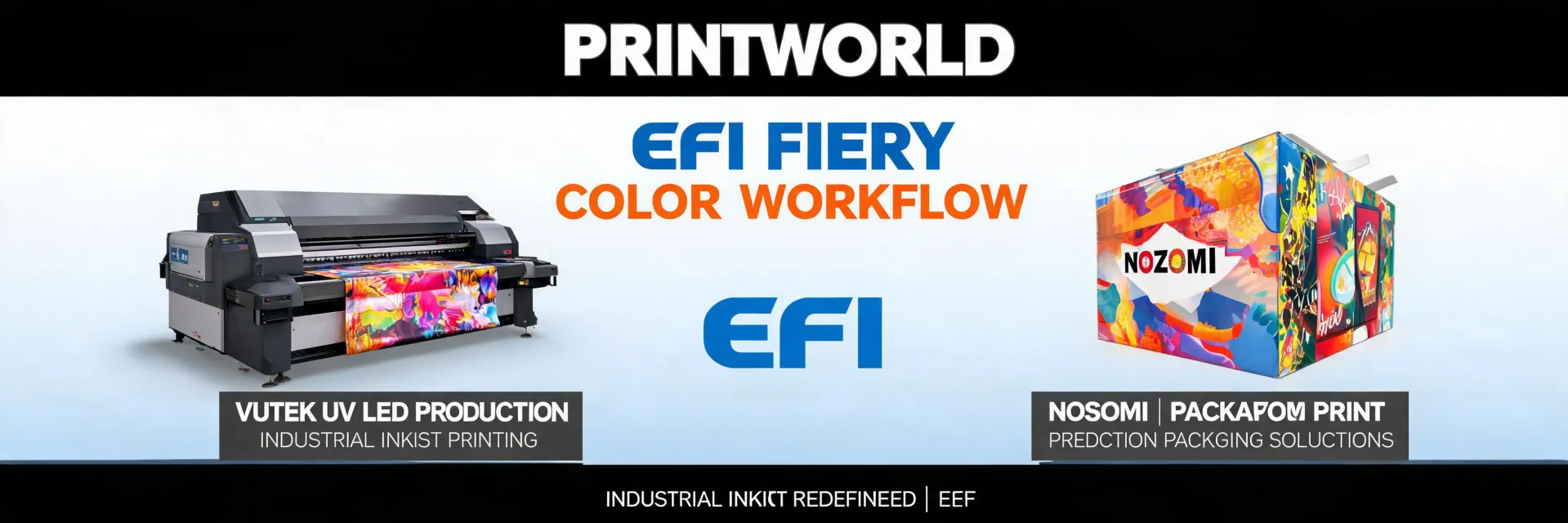
If you're the person who signs off on production printing equipment, this checklist is for you. I've spent six years tracking print equipment purchases at a 180-person packaging company, and I've documented every order in our cost tracking system. I'm not going to answer the search query 'how do 3D printer work?' here — additive manufacturing is a completely different cost model. This is about production inkjet and the EFI wide format printers used to produce signs, packaging, and industrial parts.
Before I get to the steps, here's the thing: when I compared two quotes for a large flatbed last year, I finally understood why line-item detail matters more than the bottom line. One supplier quoted an 8550 printer with installation, training, and first-year service bundled in. The other quote looked cheaper, but the 'extras' added back so much that the cheaper quote ended up costing $14,000 more over two years. From then on, I built a TCO spreadsheet.
Use this checklist when you're replacing an existing production printer, adding a new line, or putting together a budget for management. Skip it if you're buying a small office device or a dedicated CD label printer for a low-volume process. Those decisions are simpler, and the risk profile is different.
Step 1: Define the production scenario
Printer price means nothing until you know how much work will actually run through it. Write down:
- Shifts per week, including the realistic utilization rate
- Typical media mix: roll, rigid sheet, corrugated, specialty material
- Expected average monthly volume in square feet or finished pieces
At my shop, we thought we needed a high-speed line until we realized our average order size was 400 sq ft. A faster machine would have spent most of its time waiting for prepress. If you're evaluating an EFI Nozomi C18000 digital printer, the question isn't just whether it can print 80,000 sq ft per hour. It's whether your workflow can feed it enough to justify that speed. Same with an 8550 printer: high output doesn't help if you're cycling jobs and changing media all day.
Step 2: Price the total installation, not the machine
The most common mistake I see in procurement is comparing base prices without install costs. In 2024, I priced a wide-format line and the difference between two quotes was obvious once I added:
- Rigging and delivery
- Electrical work and compressed air
- Ventilation and floor reinforcement
- Operator training
- Startup media and ink
One quote was 'machine only.' The other included these items. The machine-only quote lost by a wide margin after my TCO spreadsheet. That's not a criticism of the vendor; it's a reminder to ask for line items. If someone tells you 'we handle everything,' get it in writing.
Step 3: Build a consumables model for your actual media mix
Ink is where production costs hide. A brochure saying '$0.03 per square foot' doesn't help if you print heavy coverage or white ink. White ink is usually more expensive, and on dark substrates it's often necessary. I've had jobs where white ink represented 35% of total ink cost. That's a real number from our Q2 2024 production log, not a guess.
Don't forget setup waste. Every job with a calibration print costs material and time. EFI printers include software tools to reduce setup waste, but the operator has to use them. The best machine in the world doesn't save money if your team bypasses the workflow.
If you're comparing the Nozomi C18000, electricity is also a factor. Single-pass printing can lower energy cost per unit, but the peak power draw is real. I like to run a week with a power meter before accepting an annual energy estimate. That sounds obsessive, but it pays off.
Step 4: Put a number on downtime
The old belief that maintenance should be treated as a separate 'if it happens' cost comes from a simpler era. Today's production printers are software-heavy precision machines. Downtime is not a surprise; it's a line item.
Let's say your margin is $180 per operating hour. One 12-hour service visit with no backup plan costs $2,160 in lost contribution. Add the overtime you pay to catch up, and the urgent reprint at another shop, and a $5,000 service contract starts to look reasonable.
Check response times for your region. Are parts stocked nearby? Does the service agreement include remote diagnostics? A few hours of remote troubleshooting can eliminate an unnecessary truck roll. That saved us twice last year. (Not that I kept count. I did keep count.)
Step 5: Include the people cost
This step is often missing from cost spreadsheets. A new printer changes operator tasks, color management practices, and prepress workflows. If your team has never used a Fiery front end, budget for formal training and a slower production ramp.
When we added our first LED-flatbed, production in the first month was 11% below target. The printer was fine. The bottleneck was the team learning the software. That delayed our ROI by three months. Training isn't optional; it's part of the cost.
Step 6: Know when the answer is 'no'
No production printer fits every situation. I recommend an EFI wide-format solution when volumes and mix justify the upfront cost. But if your work is mostly small-batch labels, a digital label printer (or a specialized CD label printer) is likely a better fit than a large-format machine. And if your actual business question is 'how do 3D printer work', the answer is additive, with a completely different ROI model.
Honesty here protects your budget and your reputation. If a supplier recommends equipment that doesn't fit, walk away.
Final 15-minute checklist
- Production scenario written down with conservative utilization.
- Full installed cost, in writing, including training.
- Consumables cost based on a test file, not a brochure.
- Downtime cost quantified and service response time confirmed.
- Training and workflow ramp-up included in the payback model.
- Clear 'not suitable' cases documented.
Pricing as of January 2025 depends heavily on configuration and region, so verify current quotes with your EFI distributor. But the checklist will keep your evaluation honest. Do that, and you'll know exactly why you chose the machine you did — and why you didn't choose the other one.

I’m Jane Smith, a senior content writer with over 15 years of experience in the packaging and printing industry. I specialize in writing about the latest trends, technologies, and best practices in packaging design, sustainability, and printing techniques. My goal is to help businesses understand complex printing processes and design solutions that enhance both product packaging and brand visibility.