
The cheapest printer quote is usually the most expensive decision a print shop makes. I don't say that as a theory. I say it as the person who has signed off on roughly $340,000 in equipment, consumables, and service contracts over the last six years at a 22-person commercial shop — and who has watched two competitors in our county shut down in that same window.
Neither of them closed because their print quality was bad. They closed because they bought on monthly payment and ran on margins that couldn't absorb one bad week.
Here's my position, and I'll defend it below: in commercial print, efficiency is the only cost lever that compounds. Everything else — talking an ink supplier down 4%, finding a media vendor who's three cents cheaper a sheet, shopping lease rates — is a one-time gain you have to re-earn every quarter. Throughput per hour and uptime per month pay you back every day the machine runs.
The quote is maybe half of what you actually pay
In 2023 I ran a full audit of our equipment spend. I pulled every invoice from our cost tracking system going back to 2019 — service calls, consumables, media waste, overtime, reprints. The number that came out surprised me: our quoted purchase price accounted for about 44% of what each machine actually cost us over its first three years.
The other 56% was basically invisible at the point of sale. Service contracts. Freight. Installation and calibration. Downtime hours. Media wasted during setup and profiling. Operator training.
Some of this is just industry-standard and you'd pay it anywhere. Setup fees in commercial printing, for example:
Plate making: $15–50 per color for offset. Digital setup: $0–25 (many online printers have folded it into the quote). Die cutting setup: $50–200 depending on complexity. Custom Pantone color: $25–75 per color.
Rush premiums are steeper — next-business-day turnaround typically runs +50–100% over standard pricing, and 2–3 business days runs +25–50%.
Based on published fee structures from major online printers, January 2025. Verify current rates.
That's all normal, disclosed cost. The expensive part is what happens when you buy a machine that can't hold its own throughput, because then every rush job you can't run in-house gets outsourced at exactly those premiums.
I learned that one the hard way. In 2022 we tried to save $180 a month by dropping the extended service contract on our older roll-to-roll and letting a third-party tech handle calls as needed. Looked smart for about five months. Then the printhead array went, the third-party guy didn't carry the part, and we lost eleven working days in October — our busiest month. We sent nine jobs to a shop across town, paid the rush markup on six of them, and ate the freight.
Net cost of that "savings": somewhere around $12,400, if I remember the accounting correctly. Probably more once you count the customer who didn't come back.
Throughput is the only number that compounds
Let me show you the math I actually use, because it changed how I buy.
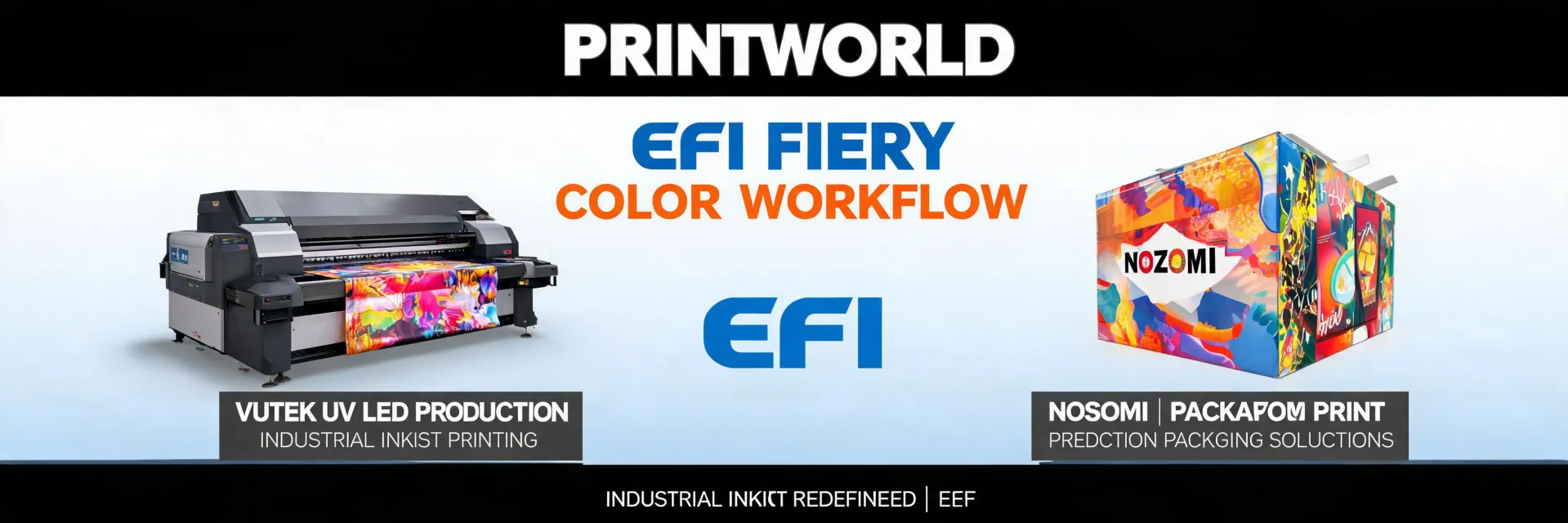
Take a mid-tier hybrid LED machine — the class of printer that something like the Ricoh EFI Pro 16h sits in. On paper you're comparing it against a machine that costs 20–25% less. But the cheaper machine prints maybe 30% slower on rigid substrates and needs a manual media change between board thicknesses.
On a 40-hour production week, that 30% gap is roughly 12 hours of lost capacity. Our average job bills out around $95 an hour of machine time when we're loaded. So that's about $1,140 a week in foregone work — north of $55,000 a year.
The machine that costs 25% less up front costs you more than its own purchase price in lost capacity inside 18 months.
And that's before downtime. Every hour a printer is down, you're not just losing the revenue on that job — you're paying a lease, paying an operator, and paying rent on the floor space the machine occupies. In our shop, an unplanned downtime hour costs about $340 in fixed cost with zero production against it. That's the number I put in front of ownership whenever someone proposes a cheaper machine with a thinner service network.
The surprise for me wasn't the throughput math. It was how much the service network mattered. I went into 2021 thinking service contracts were a vendor's margin play. Turns out the shops that print the most per dollar of equipment are almost always the ones with the tightest service relationship — not because the machines break more, but because a four-hour response window versus a four-day response window is the difference between a bad afternoon and a lost customer.
The entry-level trap (this is the counterintuitive one)
Here's where I'd expect pushback from people running smaller operations, and I want to address it honestly.
If you're a one-person shop, a 5x7 photo printer or a t-shirt printing machine for beginners is a completely reasonable buy. I'm not going to pretend otherwise — those machines do real work and there's nothing wrong with starting there.
But the "entry-level is cheaper to run" thinking comes from an era when the alternative was a $60,000 offset press and a two-year learning curve. That's changed. Today the cost curve on small-format equipment is much flatter than it used to be, and what actually hurts the low-end buyer isn't the machine — it's the per-unit math on consumables.
Brother printer cartridges are a decent example. A single OEM cartridge might run, I think, somewhere in the $50–80 range depending on the model, and the page-yield math looks completely fine at 200 pages a month. At 4,000 pages a month — which is where any growing operation ends up — the per-page consumable cost stops being competitive with a machine whose ink economics were designed for volume from the start. People don't notice the inflection point because it happens gradually.
Put another way: the belief that "cheap machine, cheap to run" was true maybe 15 years ago, when digital options were limited and consumable pricing was closer to uniform across tiers. It isn't true now. What separates a profitable small shop from a struggling one is almost never the purchase price of their printer. It's their cost per finished unit — and that number is set by consumables, uptime, and how much rework they have to eat.
One brief detour, because it comes up constantly: if you landed here searching for "EFI service" and you were actually after fuel injection cleaning, you're in the wrong place — that's Electronic Fuel Injection, an entirely different EFI. In print, EFI refers to the digital printing equipment side of the industry, and the two searches get crossed up all the time. Roughly half the inbound calls to our front desk in 2023 were one of the two.
"This only works if you're already big"
I hear this a lot, and I want to take it seriously, because it's the most common objection to everything I just said.
The argument goes: sure, a 22-person shop can justify a $200K hybrid printer, but a two-person shop can't. Fair. That's a real constraint and I'm not going to pretend a TCO spreadsheet changes your available capital.
But here's what I'd push back on. The efficiency argument doesn't require buying a bigger machine. It requires measuring the machine you already have in the same terms — cost per finished unit, not cost per machine. I've watched two-person sign shops run circles around us on certain job types because they priced their work correctly for their actual cost structure instead of guessing at it.
Also worth noting: FTC advertising guidelines require performance claims to be truthful and substantiated. "Up to X sq ft/hr" is usually the best case under ideal conditions, and if a vendor won't run your actual job on a demo machine, the claim doesn't mean much. Ask for the substantiation. Most reps will give it to you. The ones who won't are telling you something.
The shops that get hurt aren't the small ones. They're the ones buying equipment to match a competitor's capability instead of their own order book. That's a different mistake, and it's the one that actually closes businesses. At least, that's been my read on the two closures I mentioned at the top.
Where I land
If you take one thing from this: stop comparing printer quotes. Start comparing cost per finished unit, and start comparing uptime guarantees.
I'm not saying price doesn't matter — it obviously does, and I've walked away from plenty of deals that were priced wrong. But the machine with the higher invoice price, the faster throughput, and the tighter service network has beaten the "cheaper" option in every comparison I've run since 2021. Not by a little. By margins that show up on the P&L.
The shops still standing in five years will be the ones who figured that out early. Not the ones who saved $200 a month on the lease.

Elise Marceau is an LED display and digital-signage systems analyst covering LED video walls, modular screens, transparent LED, control processors, and indoor or outdoor signage. She applies IEC 62368-1 safety principles while comparing pixel pitch, luminance, contrast, refresh rate, colour uniformity, viewing angle, ingress protection, power density, module serviceability, and signal redundancy. Her specification guides help integrators, venue operators, retailers, and procurement teams align viewing distance, ambient light, content format, installation access, electrical load, and lifecycle support.