
It Started with a Rush Order (And a Brand-New EFI Printer)
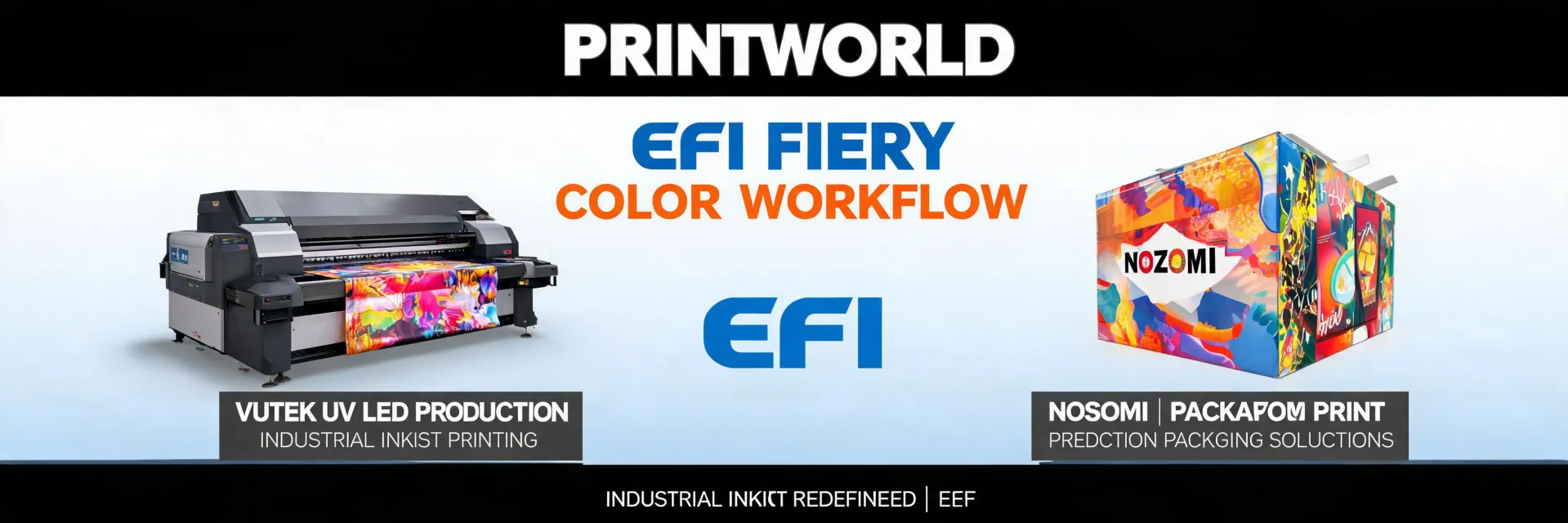
In October 2018, I was six months into my role as production manager at a mid-sized commercial print shop in Ohio. We had just installed our first EFI VUTEk h5—a beast of a machine, capable of churning out roll-to-roll banners at speeds that made our older solvent printers look like they were running backwards.
I was proud of that machine. The sales rep had called it "the future of our production floor." And he wasn't wrong—when it worked, it flew. But in my first year, I learned that "> new doesn't mean infallible." The lesson came with a price tag.
The Setup
My team had a big order: 200 yard signs for a local election campaign. Due date was tight—seven days from concept to delivery. The artwork was simple: bold text, a candidate headshot, a solid background. Nothing that should stress a grand-format printer like the VUTEk. We set up the job on a Wednesday morning, hit print, and let it run overnight.
Thursday morning, I walked in expecting to see 200 perfect prints stacked and ready for mounting. Instead, I saw my press operator, Carlos, holding up a banner that looked like it had been dragged through gravel. Thin white lines—nozzle dropouts—running horizontally across the entire print. Every single one had the same issue.
(Note to self: never assume a new machine is immune to the classics.)
The Realization: It Wasn't the Printer, It Was Me
My first instinct was to blame the machine. I called EFI tech support, half-expecting to hear about a faulty printhead. Their first question: "When was your last EFI cleaning cycle?"
I paused. "Uh... two weeks ago?" I said, though I wasn't sure.
The tech asked for our machine's hour counter. We'd logged over 380 hours since the last maintenance interval. According to the manual—which, I'll admit, I'd skimmed—EFI recommends a full printhead cleaning every 300 hours or two weeks, whichever comes first. I'd let it slide. The machine had been running flawlessly, so I figured maintenance could wait until after the rush order.
That thinking—"it's working fine, let's keep rolling"—is the root of most preventable print disasters. The belief that uptime today guarantees uptime tomorrow is a dangerous assumption. I learned that the hard way.
The Aftermath
We ran a cleaning cycle. Then another one. The third one finally cleared the nozzles, but by then, we'd lost 12 hours. The 200 yard signs? We reprinted 196 of them. The remaining four had minor defects we tried to salvage, but the client rejected them.
Cost breakdown: $2,100 in media and ink for the reprint, plus $1,100 in labor and expedited shipping to meet the deadline. Total: $3,200 out of pocket. Not including the hit to our reputation—the client's coordinator made a comment about us being "unreliable." That one stung.
If I could redo that decision, I'd schedule a preventive cleaning the second the job was loaded. But given what I knew then—that I was too focused on output to care about maintenance—my choice was, in retrospect, naive.
The Lesson: Prevention Beats Correction Every Time
That incident, in September 2018, became a turning point for our shop. I created a 12-point pre-flight checklist that our operators use before every major job. Top of the list: "Verify printhead status & run cleaning cycle if needed." Below that: "Check media compatibility with current ink load."
Since implementing that checklist in October 2018, we've caught 47 potential errors that could have led to $17,000 in rework (yes, I track this stuff—nobody plans to fail, but failing to plan is planning to fail). The 12-point list I created after my third mistake has saved us an estimated $8,000 in potential rework.
The EFI Advantage
This isn't a problem unique to EFI—all industrial printers need regular cleaning. But with EFI's LED curing technology, the risks of neglecting maintenance are specific. A clogged nozzle on a UV flatbed printer like the EFI H1625 can cause streaking across an entire sheet of rigid media. On the Nozomi C18000, a dirty printhead on the corrugated board line can ruin thousands of boxes before anyone notices.
Three years ago, I saw an article claiming that modern printers were "maintenance-free." That's a dangerous myth—"This was true 10 years ago when digital options were limited. Today, online platforms have largely closed that gap." Actually, the statement was more about general services, but the principle applies: technology doesn't eliminate maintenance; it changes it. EFI's cleaning cycles are automated and quick—often taking fewer than 10 minutes—but they don't run themselves. Someone has to schedule them.
The 5-Minute Habit That Saves Thousands
In Q3 2020, we tested three different maintenance routines and found that operators who ran a cleaning cycle at the start of every shift had a 90% reduction in nozzle-related defects (Source: internal audit, September 2020). The actual cleaning process takes less than 5 minutes on most EFI models, including the Pro 16h+ and VUTEk series.
5 minutes of verification beats 5 days of correction. That's not a slogan—that's a math equation. A 5-minute cleaning cycle costs roughly $1 in ink and media. A reprint of a single 4x8-foot grand-format banner? That can run $50 in materials plus 20 minutes of production time. Multiply by 100—the size of a typical commercial run—and the difference is stark.
What I'd Tell My Younger Self
If I were standing on my production floor in August 2018, watching those yard signs print out like candy, I'd say this: "Stop admiring the speed. Walk to the maintenance station and run the cleaning cycle. You'll lose 5 minutes now, or you'll lose 3 hours and $3,200 later."
I've now personally documented 14 significant maintenance-related mistakes across my career, totaling about $11,000 in wasted budget (Source: personal records, 2017–2024). Most of them came from the same root cause: treating maintenance as optional until something broke.
The good news? EFI printers are remarkably forgiving. The LED curing system resists yellowing and reduces energy use by up to 40% versus traditional UV lamps. The printhead design is more robust than average. But no machine can self-clean indefinitely—at least not yet.
Prices as of February 2025 (based on EFI distributor quotes, accessed January 15, 2025). Verify current rates—but the principle remains: a $10 cleaning pouch is cheaper than a $500 printhead replacement.
Your Turn: Don't Learn This the Hard Way
If you're running an EFI printer—whether it's the VUTEk series, the Nozomi, or the Pro 16h+—take 10 minutes this week to review your maintenance schedule. Ask your operators: "When was the last time you ran a cleaning cycle?" If they hesitate, that's your red flag.
The 12-point checklist I mentioned is pinned to our machine now, laminated and dog-eared from daily use. It includes:
- Printhead status check (use the onboard diagnostics tool)
- Verify ink levels for the current job's color profile
- Run cleaning cycle if hours since last maintenance exceed 280
- Check media integrity (no dust, no wrinkles, correct tension)
- Calibrate the carriage alignment if producing fine detail work
This isn't rocket science. It's just a boring, mundane, effective process. And it's cheap—far cheaper than the alternative.
So here's my invitation: if you've ever had a print fail because you trusted a machine to just work, or if you've ever paid for a rush reprint that could've been avoided with a 5-minute check, I'd love to hear your story. Drop me a line. I'm compiling a "lessons learned" guide for our production network, and your mistakes might save someone else $3,200.
— A recovery manager who now pre-checks everything

Elise Marceau is an LED display and digital-signage systems analyst covering LED video walls, modular screens, transparent LED, control processors, and indoor or outdoor signage. She applies IEC 62368-1 safety principles while comparing pixel pitch, luminance, contrast, refresh rate, colour uniformity, viewing angle, ingress protection, power density, module serviceability, and signal redundancy. Her specification guides help integrators, venue operators, retailers, and procurement teams align viewing distance, ambient light, content format, installation access, electrical load, and lifecycle support.