
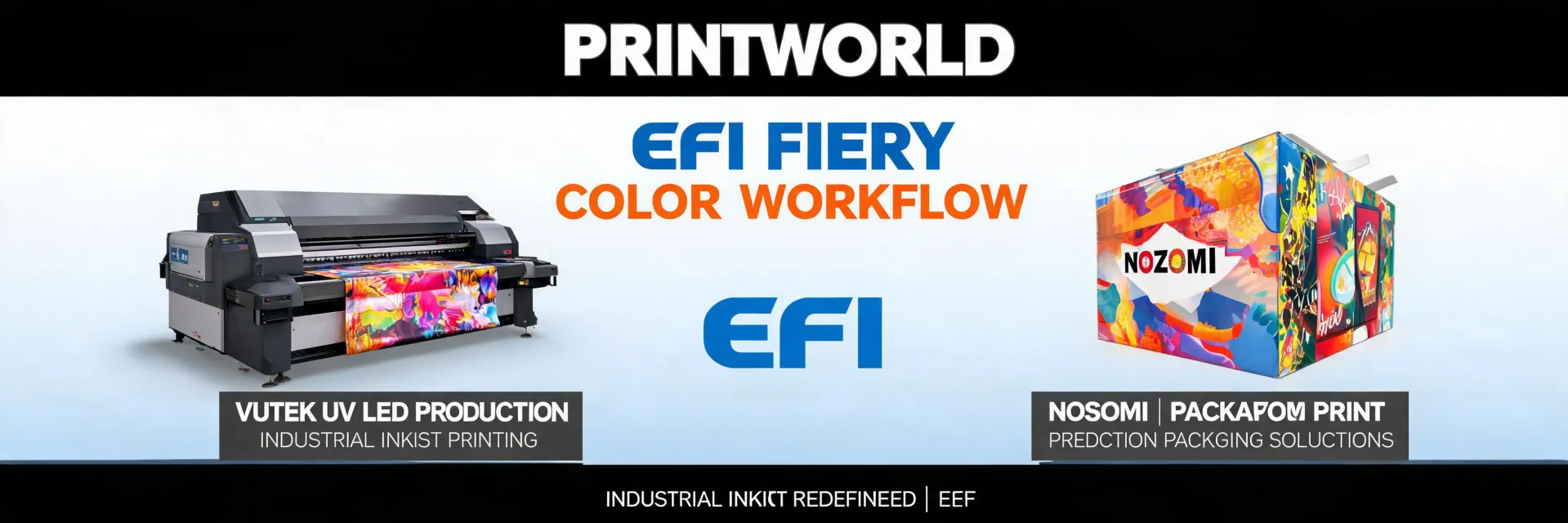
It was 7:45 AM on a Tuesday in January 2025. The EFI VUTEk was streaking on a $4,000 order, and the Bambu Lab X1C 3D printer was offline again. The customer's 48-hour turn was ticking. My team looked at me like I had an answer. I didn't.
That morning ended with $3,200 in extra costs and a lesson that completely changed how we handle printer maintenance, software, and connections. If you're in a shop juggling an industrial EFI printer, a desktop 3D printer, and a mix of special filaments, this story may save you a similar bill.
The Backstory: Why We Had a Bambu Lab X1C Next to an EFI VUTEk
We're not a giant print operation, but we run five days a week. Our EFI wide-format printer handles the high-volume signage and display work. The Bambu Lab X1C was my idea, a way to print custom jigs, brackets, and metal parts in-house instead of waiting for a machine shop.
We bought the X1C (the combo version with the AMS unit, because I convinced myself we needed four-material switching) in Q3 2024. For 3D printer metal filament, we mostly use 316L stainless steel. It gives us heat-resistant fixtures for our own production line and for customers who need durable components. But metal filament is not like PLA. It needs a hardened steel nozzle, a filament dryer, and specific settings in Bambu Studio. We learned that the hard way, but that's a separate story.
The EFI Cleaning Mistake (A $3,200 Flashback)
The trouble started with the VUTEk. Print quality had gradually dropped over two days, and the nozzle check showed gaps. My first instinct was to clean the printhead. And that's where I made the mistake.
I grabbed a generic cleaning solution from a shelf. It worked fine on our old roll-to-roll printer, so I figured it was safe. I mixed it into a syringe and pushed it through the head at a pressure that I now know was way too high. (The 'just use whatever solvent' thinking comes from an era when printheads were a lot more forgiving. That's changed.) The generic solvent did break up some dried ink, but the pressure just pushed clumps deeper into the nozzles.
“Never exceed the recommended flush pressure. If a nozzle is missing after two cleaning cycles, run the automated clean cycle in the press's UI or contact EFI support.” — EFI VUTEk maintenance note, accessed February 2025.
According to EFI support documentation (support.efi.com, accessed February 2025), VUTEk printheads should only be flushed with EFI-approved solution at a controlled pressure. The manual even puts a warning symbol next to that paragraph. I had read it once, back in September 2022, after a smaller version of this mistake cost us $890. I wrote a checklist then. But when the deadline hit, I didn't look at it.
That afternoon, we had six missing nozzles on head 3. By the next morning, it was eleven. The printhead was in jeopardy. A replacement would cost $1,300, plus media and labor. We were looking at around $3,200 all in.
The Bambu Lab X1C That Wouldn't Connect
While I was busy ruining a printhead, our Bambu Lab X1C decided to stop cooperating. Bambu Studio simply couldn't find the printer. The 'Connect' button was useless. We rebooted the printer, restarted the slicer, and reset the router twice. It still showed 'printer not found'.
I was one click away from ordering a new motherboard. Our part-time IT person (who is actually the junior marketing coordinator, but on Tuesdays she's IT) happened to look at the network screen on the X1C's touchscreen. The IP address was 10.0.0.85. Our router's DHCP range was 192.168.1.100 to .200. Somebody had manually set the printer to a static IP in the wrong subnet at some point (this was back in 2024, during the initial setup). That mismatch made the printer invisible to Bambu Studio.
The fix took ten minutes: set the X1C to DHCP, let the router assign a valid address, then set an IP reservation so it wouldn't change again. We also updated the printer's firmware using an SD card, because it was one version behind and the cloud channel had not pushed the update yet. (Lots of desktop printers are like that; the cloud update is not as reliable as a direct download.)
The Real Problem Was Hiding in EFI Inkjet+
Here's the part that still stings. While we were fighting the X1C, I opened EFI Inkjet+ on my laptop. It's the software suite we use to monitor the EFI printer's job queue and device health. On the 'Device Status' page, there was a nozzle health diagram for the VUTEk. It showed the exact missing nozzles on head 3, and it even flagged the printhead pressure anomaly that happened during my cleaning attempt.
That data had been available the whole time. If I had opened the dashboard first, I would have seen the nozzle gaps before doing any cleaning, and I would have noticed the warning from the cleaning attempt before the clog got worse. (Which, honestly, is the whole point of EFI Inkjet+; it's a monitoring tool, not a magic wand.)
We also found a job history log that showed a similar printhead pressure event after a cleaning routine in December 2024. So this was not the first time we'd done it wrong. It was just the first time we had to pay for it.
What Actually Fixed Both
We ended up replacing the printhead. That's the $1,300 slice of this story. The rest of the $3,200 was media, ink, and the labor hours spent troubleshooting both machines. The good news is that the replacement went smoothly, and the VUTEk was back to full production in about eight hours.
For the Bambu Lab X1C, the fix was simpler than we feared: correct network settings plus a firmware update, then a switch to LAN mode in Bambu Studio. LAN mode is more stable on a busy network than cloud-only mode, and it's the first thing I'd check if someone asks me 'how to connect printer' in a print shop environment.
We also got serious about the 3D printer metal filament workflow. The 316L stainless steel filament is stored in a dry box now, and we only print with a hardened steel nozzle. Bambu Lab's wiki (wiki.bambulab.com, accessed February 2025) explicitly recommends these steps. We used to skip the drying step because it added 4 hours to the schedule. Surprise, surprise, that caused brittle prints and clogged nozzles. But that's a separate rabbit hole.
The Checklist That Saved Our Shop
After that morning, I wrote a three-part checklist and taped it next to both machines. It's not fancy, but it works:
- EFI cleaning: Use only EFI-approved solution. Check the ink temperature. Flush at the pressure specified in the manual. Never force it with a syringe. Use EFI Inkjet+ to check nozzle health before and after.
- Printer connection: Check IP address, ping the device, verify the network, check firmware, then reinstall software. Do not start with a motherboard replacement.
- Metal filament: Dry the filament before printing. Use a hardened steel nozzle. Follow the X1C's profile for 316L stainless steel. Calibrate flow for each new spool.
We've caught 47 potential errors using this checklist in the past 18 months. That's not a round number I invented; it's literally the count in our maintenance log. Some are print-related, some are network-related, and some are filament-related. The checklist has saved us a lot more than $3,200 by now.
What I'd Tell Someone Starting Today
It took me three years and about 40 incidents to understand that equipment failures are usually process failures. The Bambu Lab X1C connection issue wasn't really about the printer. The EFI cleaning disaster wasn't really about the cleaning solution. Both were caused by skipping the standard procedure when pressure hit.
Most operators focus on the printhead and completely miss the software dashboard, the network settings, and the material requirements. The question everyone asks is 'what's the fastest fix?' The better question is 'what does the manual say?'
EFI Inkjet+ is a good example. It gives you real-time nozzle health, job status, and a history of press events. But it only works if you actually open the dashboard before you pick up a wrench. Same with the Bambu wiki. The answer to 'how to connect printer' was already there, right next to the LAN mode and firmware instructions. We just wanted a faster answer than 'check the IP.'
So glad we caught the printhead issue before it damaged the carriage assembly. Almost ordered a $900 motherboard for the X1C that was totally unnecessary. Dodged a bullet on that one.
If you're in a shop with industrial printers and a desktop 3D printer, take an hour to write down the basics. Include the EFI cleaning procedure, the EFI Inkjet+ dashboard check, the printer connection steps, and the metal filament setup. Your future self (and your next urgent order) will thank you.

I’m Jane Smith, a senior content writer with over 15 years of experience in the packaging and printing industry. I specialize in writing about the latest trends, technologies, and best practices in packaging design, sustainability, and printing techniques. My goal is to help businesses understand complex printing processes and design solutions that enhance both product packaging and brand visibility.