I'm a production coordinator at a commercial print shop, and I've handled 200+ rush orders in five years. Last quarter alone, we processed 47 rush orders with 95% on-time delivery. The one thing that separates a midnight save from a missed install is knowing exactly what type of printer you're standing in front of.
This checklist is for anyone who needs to answer the question 'how to know if you have an inkjet printer' without cracking a service manual. It's also a guide to the machines that confuse people: EFI printing systems, the Kodak printer mini, and the Bixolon label printer. There are six checks. Do them once, label your machines, and the next emergency becomes a process instead of a panic.
1. Follow the Ink
Inkjet printers use liquid ink. It's stored in cartridges, bottles, or bulk tanks, and it moves through ink lines, dampers, and printhead nozzles. If you open a panel and see tubes carrying colored liquid to a print carriage, that's an inkjet.
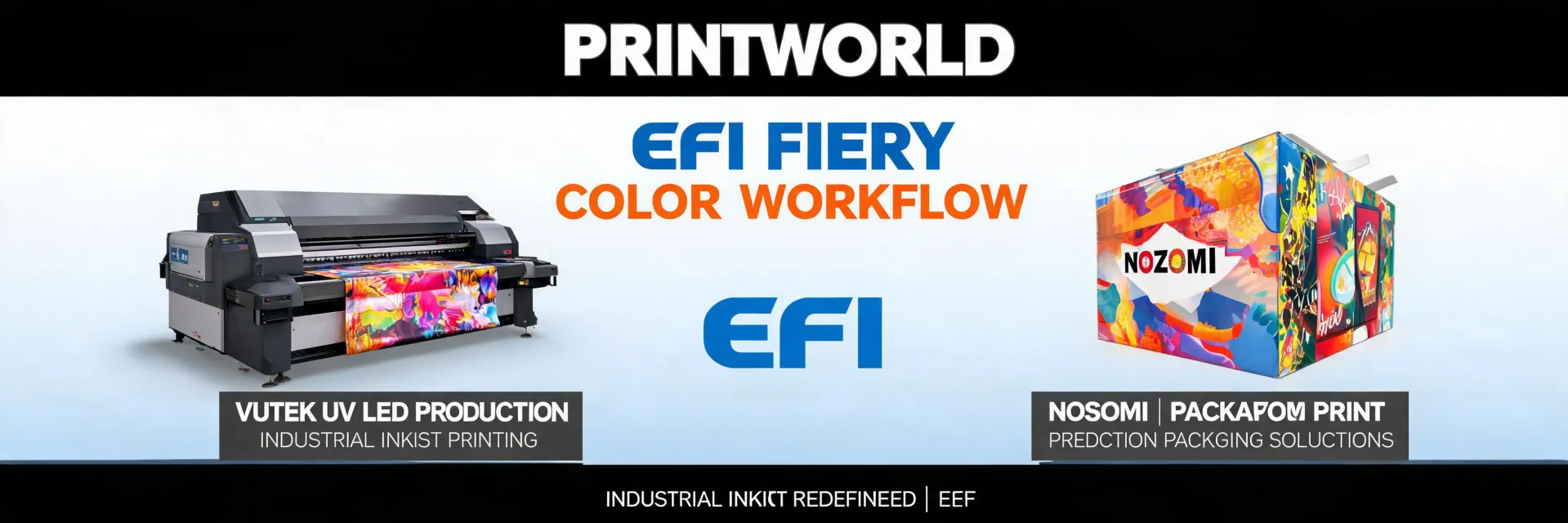
EFI printing systems like the VUTEk and Nozomi are inkjet. They use bulk ink supplies rather than desktop cartridges. A Bixolon label printer? Most Bixolon models are thermal printers, not inkjet. A Kodak printer mini is a dye-sublimation photo printer, also not inkjet. Same 'printer' word, completely different maintenance.
2. Find the Printhead and the Wiper
Inkjet printers have a service station. When the printhead parks, it caps, and a rubber wiper cleans the nozzle plate. If you see that wiper, you're looking at an inkjet.
Thermal label printers and dye-sub photo printers don't have that setup. A Bixolon label printer has a thermal printhead that applies heat to the label or ribbon, but there are no liquid nozzles and no wiper station. The Kodak printer mini uses a thermal head with a dye ribbon. If you go hunting for inkjet parts in there, you'll get confused.
3. Listen for the Carriage
Most inkjet printers move a print carriage back and forth across the media. In a wide-format EFI VUTEk, that carriage is big and unmistakable. In a desktop inkjet, the noise is a rapid click-click-click. If you hear that sort of oscillation, it's probably inkjet.
There are exceptions. EFI's Nozomi is a single-pass inkjet; it doesn't scan side to side. But the ink lines and nozzles still give it away. Thermal and dye-sub printers feed media past a stationary head or use a drum, so they don't make the same scanning sound.
4. Check the Driver Description, Then Ignore It
Printer drivers sometimes say 'inkjet' right in the model name. But many don't. The driver for a Kodak printer mini calls it a photo printer. The driver for a Bixolon label printer may just show a serial number and a media type.
Use the driver to find the model, then look up the spec sheet. That's where you'll see 'technology: thermal transfer' or 'technology: drop-on-demand inkjet.' Trust the spec, not the marketing. The question I get asked constantly is, 'what's the price?' The question they should be asking is, 'what's the maintenance requirement?' That answer is usually hiding in the same spec sheet.
5. Read the Consumables List
Inkjet consumables include ink, printheads, dampers, maintenance cartridges, and cleaning fluid. Thermal label printers use ribbons and heat-sensitive labels. Dye-sub photo printers use special paper and separate dye panels. If the consumables include liquid ink, it's inkjet.
This is also where total cost thinking starts. A Bixolon label printer can be inexpensive to buy, but approved labels and ribbon drive the real cost. A used EFI printer looks expensive until you calculate cost per square foot at production speed. The cheapest option on paper is often the most expensive one in practice.
6. Set the Right Cleaning Routine
Once you know it's inkjet, cleaning becomes a maintenance routine, not a rescue mission. On EFI wide-format systems, what many shops call EFI injector cleaning is the cycle that clears blocked nozzles and keeps the printhead firing. I schedule it before I need it.
Here's a real example. In March 2024, 36 hours before an install deadline, a VUTEk started dropping nozzles. Our cleaning log was current, so I ran two injector cleaning cycles and a nozzle check. It cleared. If it hadn't, a service call would have been $350 transport plus at least $600 labor, on top of a project with a $50,000 penalty clause. The risk calculation was simple. The upside of skipping maintenance was saving a few minutes. The downside was losing the job.
If the printer is not inkjet, don't use injector cleaner. A Kodak printer mini needs its ribbon and special paper. A Bixolon label printer needs thermal label media and, in some models, ribbon. The wrong cleaning fluid can ruin a thermal head. I do not say that to be dramatic; I've seen it happen.
Why This Matters Beyond the Emergency
When I compared our Q1 and Q2 printhead replacement costs side by side, same EFI model, different cleaning discipline, I finally understood why maintenance is a cost center, not a rounding error. In Q1, we stretched cleaning intervals and ordered two replacement printheads. In Q2, we ran scheduled injector cleaning and ordered one, only because of a date code failure.
The first instinct is to focus on purchase price and miss the operating cost. I've had a $500 quote turn into $800 after shipping, setup, and revision fees. The $650 all-inclusive quote was cheaper. The same logic applies to equipment: a printer with cheap upfront pricing and expensive downtime is not a bargain.
If you're comparing outside printing services to in-house production, use a current baseline, not memory. Business cards (500, 14pt, double-sided) generally run $20-60. Flyers (1,000, 8.5x11, 100lb gloss) run $80-150. Envelopes vary by window and setup, roughly $80-180. Those are publicly listed online printer quotes from January 2025; verify current rates before you budget.
Quick Reference: Is It Inkjet?
- EFI wide-format and industrial inkjet printers (VUTEk, H1625, Nozomi): Inkjet.
- Kodak printer mini: No, dye-sublimation.
- Bixolon label printer: Not in most models, thermal transfer or direct thermal.
- Printer with bulk liquid ink lines and a wiper station: Inkjet.
- Printer with toner cartridge: Not inkjet.
Before the Next Rush Job
Label every printer in the shop with its print technology and cleaning procedure. Put a small card next to the machine: 'inkjet, use printhead cleaning,' 'thermal, use approved wipes,' 'dye-sublimation, use manufacturer ribbon and paper.' It sounds too obvious, but when the deadline hits, I've seen people grab the nearest bottle and make things worse.
If the machine is inkjet, schedule injector cleaning before you need it. If it's not, leave the injector cleaner in the cabinet. Time is also a cost, and in my experience, the fastest way to waste it is to assume every printer works the same way.

Elise Marceau is an LED display and digital-signage systems analyst covering LED video walls, modular screens, transparent LED, control processors, and indoor or outdoor signage. She applies IEC 62368-1 safety principles while comparing pixel pitch, luminance, contrast, refresh rate, colour uniformity, viewing angle, ingress protection, power density, module serviceability, and signal redundancy. Her specification guides help integrators, venue operators, retailers, and procurement teams align viewing distance, ambient light, content format, installation access, electrical load, and lifecycle support.