Every week I review print specifications for the production side of a commercial printing operation. My job is to find the mismatches before they become expensive. Last year, in our Q1 2024 quality audit, I rejected 11% of first deliveries because the output didn't match the approved proof. In every case, the issue wasn't the printer brand alone. It was a mismatch between the tool and the expectation.
When I first started doing this, I assumed a bigger printer was just a more expensive version of a smaller one. That assumption cost me. The phrase ricoh efi 16h printer is a good example of the problem. It mixes a manufacturer name, a digital front end or component supplier, and a model generation. But it tells you almost nothing about the workflow behind the machine. Is it a production wide-format system, an office mono laser printer, or a legacy configuration? The category matters more than the name.
What I Compare First
Before comparing any two printers, I set four dimensions: volume, color consistency, total cost, and workflow certainty. In that order. If a sales rep starts with throughput before I know the service plan, I stop listening. The question isn't how fast a machine can print. It's whether you can control it at that speed.
Dimension 1: Production, Office, Making, and Novelty
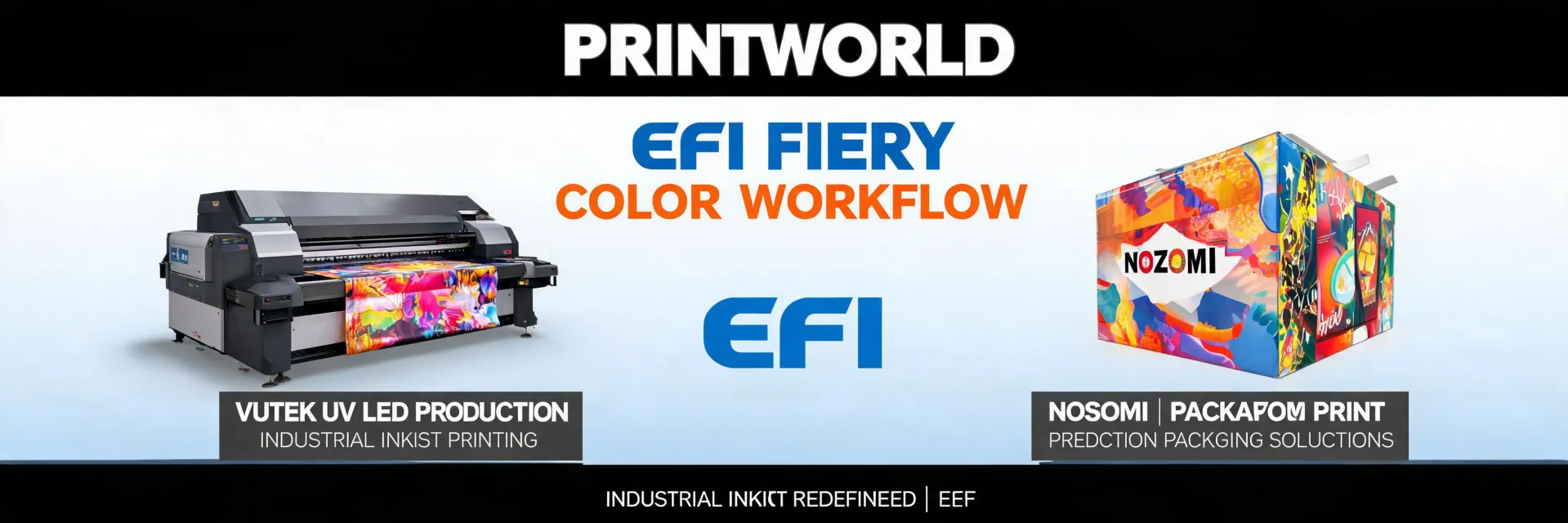
An EFI VUTEk printer is a production machine. It is designed for continuous wide-format work—rigid boards, roll media, banners, packaging prototypes. A mono laser printer is a document machine. A Raspberry Pi 3D printer project is a controller plus a motion system. An inkless thermal device is a small-format convenience tool. They are not direct competitors.
What I mean by that is simple: the purchase decision for a production room is not the same as the purchase decision for an office. If you search for a ricoh efi 16h printer, check whether the 16h designation belongs to that production class or to an office class. The model number is a clue, not the whole answer.
Dimension 2: Color Consistency Can't Be Compared Cross-Category
A VUTEk is expected to hold color across a long run. A mono laser printer only needs to hold grayscale density. A Raspberry Pi 3D printer has no color gamut in the traditional printing sense. Inkless thermal output has a limited color range and can fade. If you judge them using the same quality standard, every comparison fails.
As a quality inspector, I define the standard before I look at the sample. For production inkjet, that means Delta E tolerance, banding checks, and substrate-specific profiles. For a mono laser printer, it means consistent text density and no background toner. Different deliverables, different tolerances.
Dimension 3: The Transparency Test
This is where I get cynical. I've learned to ask what's not included before I ask what the price is. The vendor who lists all fees upfront—even if the total looks higher—usually costs less in the end.
The biggest quality risk is not the printer. It's a surprise fee after installation.
Printhead replacement is one of the easiest costs to hide. (Note to self: always ask for it before signing.) Installation and training can double a small shop's cost on a production system. Public price lists from January 2025 still show setup fees, shipping, and rush charges added separately on common online print jobs. In industrial printing, the same principle applies with bigger numbers: ink, printheads, service contracts, and downtime all have to be in the comparison.
Everything I'd read about print buying said a higher initial quote meant a better machine. My experience with 200+ specifications suggests otherwise. The cheapest machine is rarely cheap when you add the time spent managing issues, the risk of delays, and the potential need for redos.
Dimension 4: Workflow Certainty
The most expensive printer I have specified was not the one with the highest purchase price. It was the one that could not integrate with our management information system. EFI's production ecosystem—Fiery digital front ends, color management tools, and workflow software—exists for that reason. A mono laser printer with a simple driver is fine for an office. A Raspberry Pi 3D printer project means you will spend weekends configuring controllers and slicers. An inkless printer is fixed-function. That is fine if the function is exactly what you need.
Why does workflow matter? Because delivery dates are not a guess. A machine that prints fast but cannot be scheduled through your existing system will cause more re-proofing than a slower machine with a predictable process.
How Does an Inkless Printer Work?
Since the phrase how does an inkless printer work keeps showing up, here is the direct answer. It does not use liquid ink or toner in the conventional sense. Direct thermal printers heat chemically coated paper to create marks; that is how many receipt and shipping-label printers work. ZINK printers use special paper with embedded dye crystals, and the printhead applies heat pulses to activate those crystals into visible colors. That is why it is called inkless: the color is already in the media.
The tradeoff is that the output is not an archival, color-managed production document. The inkless idea is not new. Direct thermal has been around for decades. It has real uses—receipts, labels, mobile photo prints—but it is not a replacement for an industrial EFI VUTEk printer or for an office mono laser printer when file longevity matters.
When to Choose Which
Use this as a rough triage, not a universal rule.
- Choose an EFI VUTEk/H1625-class production system if you have consistent high-volume or wide-format work and a service plan to support it.
- Choose a mono laser printer for office documents, forms, and black-and-white jobs where low cost per page and simple operation matter.
- If your search is for a ricoh efi 16h printer, get the full model number, the digital front end, and a written service history before comparing prices.
- Choose a Raspberry Pi 3D printer project if you are prototyping and treating the setup itself as part of the project.
- Choose an inkless thermal or ZINK printer only for receipts, labels, or quick portable output where image longevity is secondary.
My Quality Audit Takeaway
The word 'printer' is not a useful category. The real distinction is what the device must survive after installation: volume, color tolerance, uptime, cost certainty. The more transparent a vendor is about those dimensions, the more likely the project will pass a quality audit. That is not a slogan. It's a spec.

I’m Jane Smith, a senior content writer with over 15 years of experience in the packaging and printing industry. I specialize in writing about the latest trends, technologies, and best practices in packaging design, sustainability, and printing techniques. My goal is to help businesses understand complex printing processes and design solutions that enhance both product packaging and brand visibility.