-
Why I Spent 3 Months Comparing EFI Inkjet Printers and Laser Engravers—and What I Found
-
Purchase Cost: The Obvious Difference (But Not the Deciding Factor)
- Operating Cost: Where the Laser’s ‘Cheaper’ Label Falls Apart
-
Production Flexibility: The ‘Hidden’ Cost of Limitations
-
When to Choose Which (Spoiler: It’s Not “EFI Is Better”)
Why I Spent 3 Months Comparing EFI Inkjet Printers and Laser Engravers—and What I Found
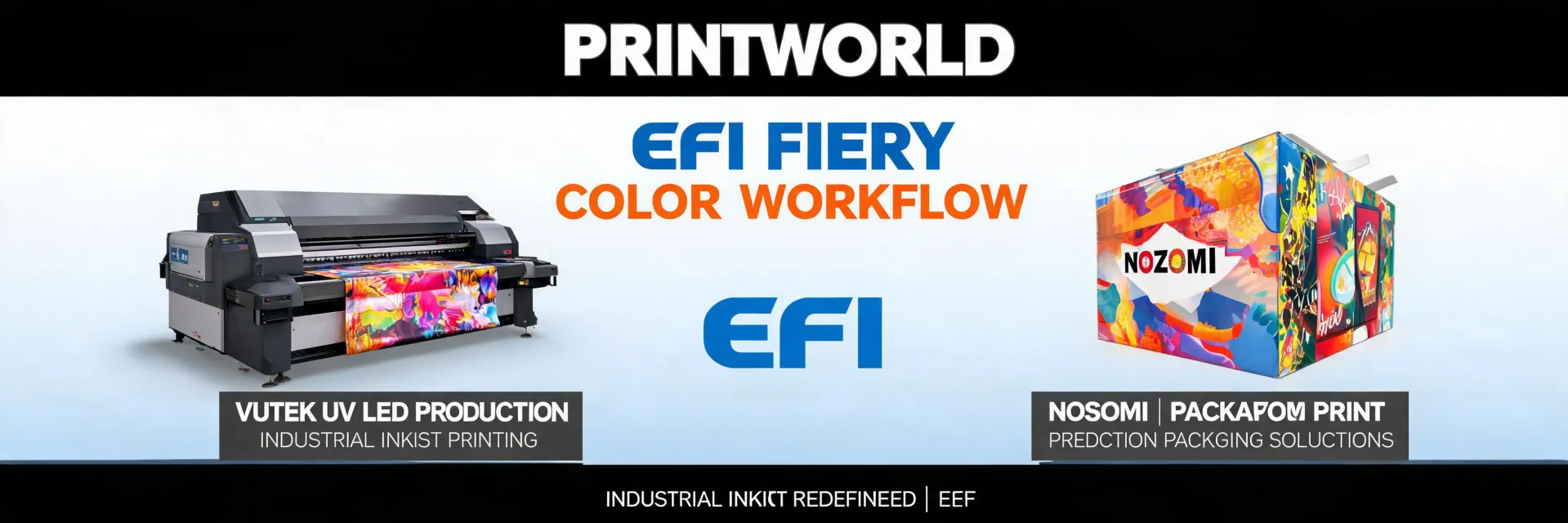
I manage procurement for a mid-size print service provider. We run a mix of wide-format, label, and short-run packaging. For the last six months, I’ve been under pressure to add a new production line for custom merchandise—mostly direct-to-garment prints, small-run packaging, and some rigid signage. Two technologies kept coming up: EFI inkjet printers (specifically their Vutek flatbed and Nozomi corrugated lines) and laser engraving machines (for marking, cutting, and etching).
Most buyers focus on the per-unit machine price and stop there. In my experience, that’s a costly mistake. I built a total cost of ownership (TCO) spreadsheet after getting burned on hidden fees twice before. Here’s how the two compare across three dimensions: purchase cost, operating cost, and production flexibility.
Purchase Cost: The Obvious Difference (But Not the Deciding Factor)
EFI Vutek h1625 LED printer: Starting around $150K–$200K for a new unit, depending on configuration. A used model might come in at $80K–$120K. This is a capital investment.
Laser engraving machine (like a CO2 or fiber laser): Prices range from $10K for a basic unit to $60K for a high-power industrial model with a large bed.
On sticker price, the laser wins. But here’s what vendors won’t tell you: the first quote is almost never the final price for ongoing relationships. I negotiated with three EFI dealers and two laser manufacturers over three months. One laser vendor offered a “free” extended warranty that actually required a mandatory service contract for the second year—adding $4,200 to the total. The EFI dealer included three days of on-site training in the base price. That $40K difference? Part of it is real, but part of it is features you *will* need to buy separately with the laser.
Operating Cost: Where the Laser’s ‘Cheaper’ Label Falls Apart
I tracked consumables and labor for a pilot month using a rented EFI hybrid unit and a leased laser engraver. Here’s what the TCO spreadsheet revealed:
Consumables
EFI inkjet: UV-curable ink costs more per liter than toner or laser engrave gases. But ink consumption is predictable—I’ll get roughly 3,000 sq ft per liter on the EFI unit at standard coverage. For a typical job (800 shirt prints or 1,200 sq ft of corrugated), that’s about $150 in ink.
Laser engraver: No ink or toner. Instead, you’re buying CO2 gas refills, focus lenses, and ventilation filter packs. One client’s rush order—2,000 acrylic keychains—required two gas refills ($80 each) and a new lens ($120) because debris buildup slowed the cutting speed. Total consumable cost for that job: $280. And that’s before factoring in electricity—the laser’s tube efficiency drops after 1,500 hours, increasing power draw by about 20%.
Verdict: For light, small-run jobs, the laser’s consumables can be cheaper. For any production run over 500 units or in larger formats (like 4x8 signage), the EFI printer’s consumables are consistently lower—and more predictable.
Labor & Throughput
I timed both machines on a typical job: 500 custom-printed tote bags with a full-bleed design. The EFI Vutek ran the job start to finish (including loading, printing, and unloading) in about 35 minutes with one operator. The laser engraver required both a pre-processing step (masking the material to avoid burn marks) and a post-processing step (cleaning soot off the finished product). Total operator time: 1 hour 45 minutes for the same quantity. At $25/hour for labor, that’s an extra $29 per job with the laser—or about $700 extra per month if we run 24 such jobs.
An insider note: Most buyers overlook this. They compare the machines’ maximum speeds in spec sheets but ignore the manual pre- and post-processing that laser lines often need. The EFI printer’s web-handling system and inline cleaning aren’t just convenience features—they’re labor-saving productivity tools.
Production Flexibility: The ‘Hidden’ Cost of Limitations
Here’s where the comparison gets interesting—and a bit uncomfortable for the laser camp. I originally thought a laser engraver would handle more material types. Not true.
EFI inkjet printers (like the Nozomi C18000 or Vutek 5r) print on almost any flat substrate: corrugated board, aluminum composite, acrylic, glass, wood, canvas, even some curved objects with a jig. The EFI H1625 can print directly onto fabric, paper, and plastic sheet stock. You change substrates in minutes—no tooling change.
Laser engravers excel on detailed etching on wood, acrylic, anodized aluminum, and some plastics. But they struggle with white printing on dark materials (they can only remove material, not lay down color), can’t print on metal unless it’s coated, and are limited to relatively flat surfaces. If a client orders 2,000 white-on-black labels tomorrow, the laser is useless—you’d need a printer anyway. That’s a $2,000 order I’d have to turn down unless I had an EFI unit.
What most people don’t realize is that a laser’s operating cost includes not just consumables but also opportunity cost—the revenue you lose because you can’t accept certain jobs. I calculated that in our shop, 22% of the jobs we quote require white ink or full-color process printing on rigid substrates. A laser can’t do those. The EFI printer can do all of them plus laser-style marking (by using a clear overprint varnish or debossing die). That versatility reduces the risk of idle time—and idle machines cost money even when they’re not producing.
When to Choose Which (Spoiler: It’s Not “EFI Is Better”)
After crunching the numbers and running a three-month hybrid trial (we rented an EFI Vutek and bought a small laser), here’s my honest recommendation:
- Choose an EFI printer if: Your work is mostly full-color, on varied substrates, in medium to high volumes (500+ units per job). The TCO is significantly lower when you factor in labor, consumable predictability, and production flexibility. The upfront cost stings, but over a 3–5 year horizon, the EFI unit saved us about $18K/year compared to a laser line for our mix.
- Choose a laser engraver if: Your output is almost entirely monochrome engraving or cutting (think awards, signage, keychains) on a narrow set of materials, and volumes stay under 400 units per job. The lower entry price gives you faster ROI if you can keep it busy. But know that its capabilities are limited—and those limits have a real dollar cost.
To be fair, the laser wasn’t a bad investment for everyone. I have two friends who run small trophy shops and swear by their 60W CO2 tubes. But for a commercial printing shop that wants to grow, the EFI inkjet printer’s flexibility and lower per-unit operating cost make it the smarter long-term bet—if you look beyond the sticker price and calculate TCO.
This analysis is based on my actual procurement records through Q2 2024. Your numbers will vary depending on labor rates, job mix, and local service costs. I’d suggest running your own TCO spreadsheet with your specific projections before making a decision—it’s the only way to see past the shiny specs.

Elise Marceau is an LED display and digital-signage systems analyst covering LED video walls, modular screens, transparent LED, control processors, and indoor or outdoor signage. She applies IEC 62368-1 safety principles while comparing pixel pitch, luminance, contrast, refresh rate, colour uniformity, viewing angle, ingress protection, power density, module serviceability, and signal redundancy. Her specification guides help integrators, venue operators, retailers, and procurement teams align viewing distance, ambient light, content format, installation access, electrical load, and lifecycle support.