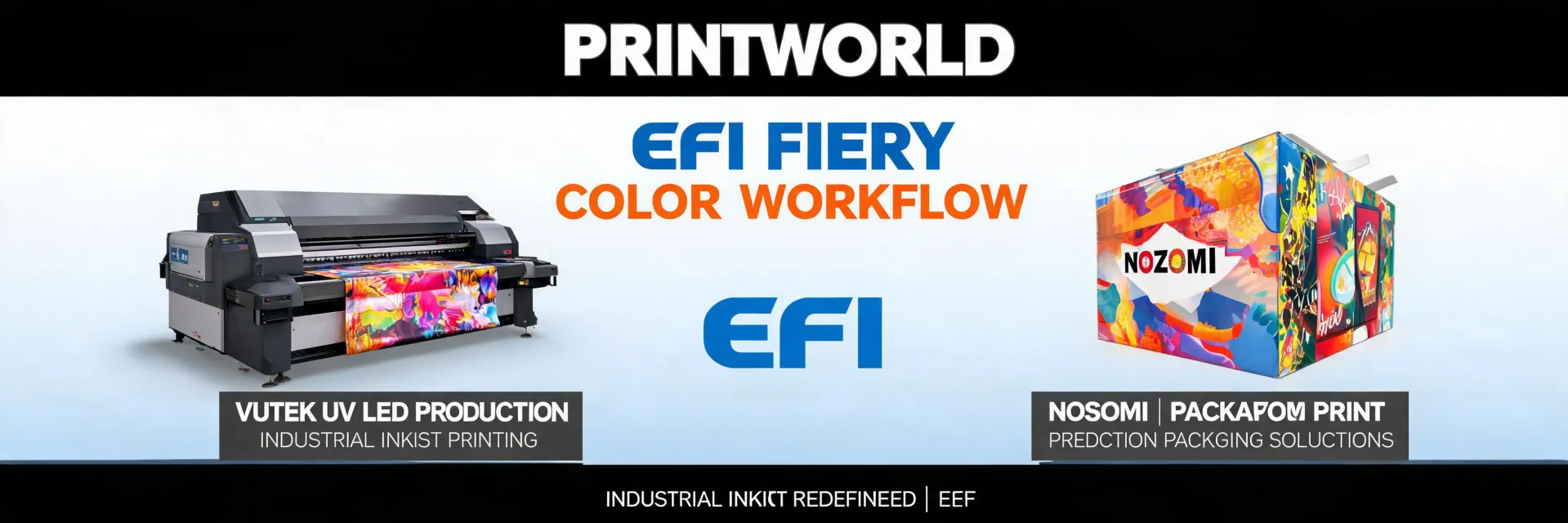
If you're here because you searched 'what is the best 3D printer for kids,' you're in the wrong place. This isn't about 3D printer tables, desktop hobby machines, or the Dymo LabelWriter 550 label printer sitting next to an office computer. This is about EFI digital printer cleaning—the big LED flatbeds and roll-to-roll production units, the ones that cost more per hour than your first car.
Here's my position: 5 minutes of verification beats 5 days of correction. Period.
I'm a production supervisor who has handled wide-format printing orders for 7 years. I've personally made—and documented—11 significant mistakes, totaling roughly $28,000 in wasted budget. Now I maintain our team's checklist so no one else repeats my errors. This isn't management theory. It's a list born from failure.
The Cleaning Mistake That Started It
In my first year (2017), I made the classic mistake. I assumed 'clean' meant 'clean enough.' We were flushing an EFI VUTEk after a color change, and I wanted to save time. I skipped the final nozzle check because the printhead looked fine on the test strip. It was not fine.
The next morning, 42 panels went through the press with streaky cyan. Every single panel had the issue. The client rejected the whole batch. That error cost $890 in redo plus a 1-week delay—and that was just the direct cost. The credibility hit was worse. The client still jokes about it, which means they haven't forgotten.
That's when I learned the first rule: looking at a printhead is not the same as verifying output. The eye lies. The print tells the truth.
Why We Kept Missing the Obvious
You'd think I'd learn. I didn't. In September 2022, I created a bigger mess. We had a rush job for a packaging customer. I told my operator, 'Make sure the cleaning cycle is done before you start.' He heard, 'Run the automatic cleaning cycle and get going.' Two different things.
We were using the same words but meaning different things. Discovered this when the job came off the press with banding in the darkest areas. The EFI cleaning cycle had been completed, but the dampener wipers were worn. The unit ran the cycle, but it didn't actually clean anything.
On an EFI VUTEk, the maintenance menu offers different cleaning levels. Light, normal, heavy. In a rush, operators pick normal because it's faster. But if the wipers are worn or the ink is old, 'normal' doesn't clear the nozzle. The machine reports 'cleaning complete.' The output says otherwise.
The result? $1,400 in wasted material and a 3-day production delay. All because I didn't verify the cleaning had actually worked. I said 'done,' he said 'done,' nobody checked.
Here's the part that still bothers me: the checklist existed. It was on a clipboard. But it had become a 'sign here without reading' document. That's worse than no checklist at all, because it gives you false confidence.
The $3,200 Order That Finally Changed Our Process
In Q1 2024, we had a 200-piece order for an architectural firm. Every panel was brand-critical. The spec called for a Delta E under 2. We hit Delta E readings over 6—visible to anyone, not just trained observers. For reference, Pantone's color matching guidelines list Delta E under 2 as the target for brand-critical colors; 2-4 is noticeable to trained observers; above 4 is visible to most people.
The cause? We had switched to a different ink lot and skipped the nozzle check. Again. Same mistake, different month. The whole order—$3,200—went to the trash. It was a painful way to learn that a nozzle check is the cheapest insurance you can buy. A 5-minute verification would have caught the problem before the first panel, not after panel 37.
That waste made me re-think how we train people. Instead of telling new operators to 'be careful,' we created a verification sequence. Now, before every EFI digital printer run, we physically confirm three things:
- Printheads are clean and aligned—and we print a test strip, not just eyeball the head.
- The cleaning cycle actually improved output. If banding or streaking remains, we don't start.
- The substrate profile matches the job ticket. Because 'same specifications' can mean different things to different vendors.
This approach worked for us, but our situation was specific: we run a mid-size production shop with predictable order patterns. If you're running a seasonal business with demand spikes, the calculus might be different. But the core principle stands.
What People Might Argue
Some will say, 'We don't have time to check every printhead before every job. The customer wants it yesterday.' I've felt that pressure. In early 2023, I had 2 hours to decide whether to rush a job through without a full check. Normally I'd run a test strip and let the ink settle. But there was no time. I went with 'trust but verify only the critical areas.' It worked. But it also scared me enough that I wrote a policy: if you can't do the check, you can't do the job.
'We don't have time to do it right' is the most expensive sentence in print production.
I've never fully understood why some operators treat cleaning and verification as optional. My best guess? They've never had a $3,200 order go to the trash. Once it happens, the math becomes simple. The time you 'save' by skipping checks is reclaimed many times over when the press jams, the colors drift, or the client rejects the batch.
Honestly, I'm not sure why that lesson has to be learned the hard way. If someone has insight, I'd love to hear it.
The Checklist That Saved Us $8,000 in Potential Rework
The 12-point checklist I created after my third mistake has saved us an estimated $8,000 in potential rework over the past 18 months. We've caught 47 potential errors using it—including a bad ink lot that would have ruined another 200-piece run.
Is it glamorous? No. Does it slow things down? About 5 minutes per job. Is it worth it? Every time the checklist catches something, I remind myself: prevention over cure.
The list is simple:
- Check printhead nozzles—print a test strip, not just a visual check.
- Run a cleaning cycle if needed, then confirm the improvement.
- Verify the ink lot and expiration date.
- Confirm the substrate profile matches the job ticket.
- Check color management settings. Target Delta E under 2 for brand-critical colors.
- Calibrate the flatbed before loading panels.
- Inspect media for dust or debris.
- Review the file for resolution. 300 DPI is standard for detailed commercial print; large-format pieces viewed from a distance can often run at 150 DPI without visible loss.
- Confirm the proof is the latest version.
- Check the drying and curing settings, especially after a cleaning cycle.
- Run a small sample for production jobs before the full run.
- Record the results in the job log, so the next person knows what 'good' looks like.
If you run a Dymo LabelWriter 550 label printer or a hobby 3D printer on a custom table, this list is overkill. A Dymo label printer has its own maintenance routine, and 'what is the best 3D printer for kids' is a completely different question. I'm not qualified to answer that one. Ask someone whose kids haven't lost interest.
But if you're running an EFI digital printer—a VUTEk, an H1625, or a Nozomi C18000—the stakes are higher. Your 'table' is a vacuum bed that costs more than a truck. Your 'label printer' is a roll-to-roll machine that prints faster than you can measure. The 5-minute check is the difference between a profitable day and a costly one.
Let me be clear about one thing: this isn't about making operators paranoid. It's about making the process so simple that the right thing is also the easy thing. 5 minutes of verification beats 5 days of correction. That's true in printing, in packaging, and probably in a hundred other industries I don't know anything about.
Simple.

I’m Jane Smith, a senior content writer with over 15 years of experience in the packaging and printing industry. I specialize in writing about the latest trends, technologies, and best practices in packaging design, sustainability, and printing techniques. My goal is to help businesses understand complex printing processes and design solutions that enhance both product packaging and brand visibility.