
-
I’m Not Going to Sell You on an EFI H1625 LED Printer. Here’s Why.
-
Argument 1: The Discipline of Volume vs. The Chaos of Office Printing
-
Argument 2: The Hidden Cost of Specialized Media (The 'Construction Paper' Problem)
-
Argument 3: The 'Mac Printer' Fallacy and the Fiery Ecosystem
-
What About the Critics? Addressing the Obvious Question
I’m Not Going to Sell You on an EFI H1625 LED Printer. Here’s Why.
I'll say it right off the bat: If you're asking yourself if you can put construction paper in a printer and actually get a reliable result, you’re probably looking at the wrong category of machine. That question is a huge red flag that you might be over-engineering a simple problem. And as someone who’s been managing office supplies and equipment purchasing for a 200-person company since 2020, I’ve learned the hard way that buying a Ferrari when you need a Ford Fiesta is a fast track to a blown budget and a lot of frustrated users.
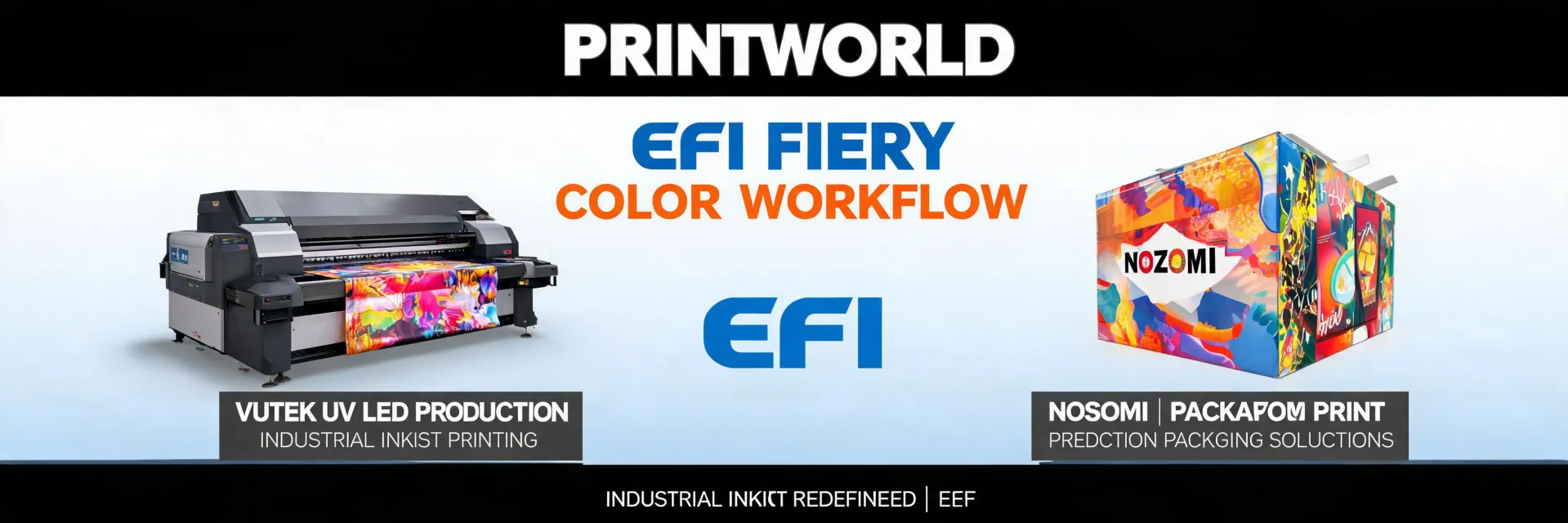
When people search for an EFI digital printer, they’re often picturing a sleek, magical box that can do everything—print marketing materials, handle office memos, and maybe brew coffee. The EFI H1625 LED printer is a beast of a machine, but it’s a specialized beast. My honest view? If your primary need is to print a weekly newsletter or a child’s printer drawing project, this machine is overkill. Let me explain.
Argument 1: The Discipline of Volume vs. The Chaos of Office Printing
I'm not a production print specialist, so I can't speak to the nitty-gritty of carrier optimization or ink adhesion on corrugated board. What I can tell you from a procurement perspective is how this tool fits into a workflow. The EFI H1625 is a roll-to-roll and flatbed printer. It’s designed for volume consistency.
In an office, you don't have volume consistency. You have a random Tuesday where someone needs 50 business cards (“right now”), and a Friday where the marketing team wants 10,000 direct mail pieces in 48 hours. Meanwhile, Karen from accounting is trying to print a spreadsheet on 11x17. The EFI H1625 LED printer hates that kind of chaos. It’s happiest when you feed it a long, stable job. It is not happy when you stop a run for a single-page printer drawing test.
Argument 2: The Hidden Cost of Specialized Media (The 'Construction Paper' Problem)
This is where the “construction paper” question becomes so telling. The EFI H1625 is an industrial-grade UV LED inkjet printer. It’s designed for rigid and roll-fed media up to 1.6 meters wide—signage, banners, corrugated board, vinyl. It does not want your 20lb bond paper, let alone porous construction paper. Trying to feed that through a machine that costs as much as a small car is a recipe for a jam that costs you more in technician time than the paper itself.
Here’s the kicker: You can print on a wide range of media with this machine, but the sweet spot is for materials that are durable, ink-receptive, and often expensive. The cost per square inch for a standard office document is going to be prohibitively high. According to comparative pricing analysis on online platforms (based on publicly listed prices for wide-format print services, January 2025), the cost to run a single standard-sized poster on a production machine like this is often 3-5x more than using a dedicated, standard office plotter or printer.
Argument 3: The 'Mac Printer' Fallacy and the Fiery Ecosystem
A lot of people think of an EFI digital printer as a “Mac printer”—something that just works with a beautiful, seamless drag-and-drop interface. That’s the fantasy. The reality is that the Fiery digital front end (DFE) that comes with it is a powerhouse for color management and workflow automation, not for simple document printing.
Fiery is a professional tool. It’s fantastic if you need perfectly consistent Pantone colors across a 10-foot banner. It’s a headache if you just need to print a PDF with a printer drawing your kid made. The set up for different media types (think 50 to 200 different profiles) is a job for a trained operator. If you’re just looking for a printer that works like your home inkjet but for bigger sizes, you’re stepping into a completely different level of operational complexity.
What About the Critics? Addressing the Obvious Question
“But wait,” I hear you say. “I see claims that it can print on any material with zero set up time!” Right. Read the fine print. That’s marketing. The EFI H1625 is built for speed and quality, but no industrial printer is “zero setup.” You need to handle the media, configure the vacuum table, set the head height, and load a specific media preset. The promise is that the technology handles a massive variety of substrates, not that you can swap between them on a whim without any adjustments. Don't fall for that.
So, should you buy an EFI H1625? My advice? If your average job is a run of 500+ signs for a retail chain, or a continuous batch of product labels, absolutely. If you are a print service provider needing a versatile workhorse, it’s a star player. But if your office is looking for a “super printer” to handle everything from the company newsletter to a kid’s school project, you are in the 20% of use cases where this solution is a bad fit.
I recommend this for the high-volume production shop. But if you're dealing with chaotic, low-volume office jobs with random media like construction paper, you might want to consider alternatives. Honestly, I'm not sure why so many people try to force a production machine into a general office role. My best guess is they see the impressive capabilities and assume it's a magic box. It’s not. It’s a brilliant, specialized tool. The most efficient purchase is the one that matches the job.

Elise Marceau is an LED display and digital-signage systems analyst covering LED video walls, modular screens, transparent LED, control processors, and indoor or outdoor signage. She applies IEC 62368-1 safety principles while comparing pixel pitch, luminance, contrast, refresh rate, colour uniformity, viewing angle, ingress protection, power density, module serviceability, and signal redundancy. Her specification guides help integrators, venue operators, retailers, and procurement teams align viewing distance, ambient light, content format, installation access, electrical load, and lifecycle support.