
The Print That Wasn't
Last year, one of our key clients rejected a 15,000-sheet run of premium packaging. The defect? Microscopic pinholes in the solid areas. The cost? A $22,000 redo—rush fees included. I spent three days tracing the root cause, expecting a bad printhead or a calibration error. Instead, I found the problem in a piece of equipment we never thought to check: the laboratory defoaming mixer used to prepare the ink sample.
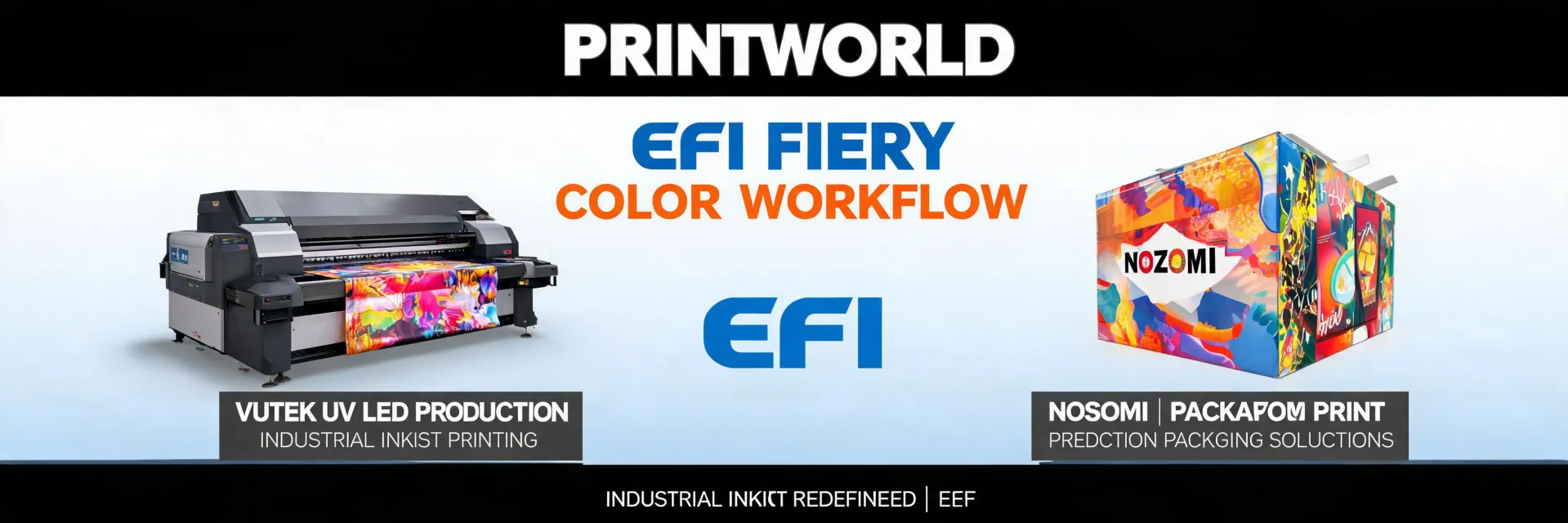
The irony still stings. We had spent six figures on a VUTEk grand-format printer, but a $3,000 lab mixer created the flaw. That experience changed how we vet every piece of ancillary equipment—mills, mixers, vacuum units, even UV laser cutters for finishing.
The Surface Problem: Inconsistent Print Quality
Ask any commercial printer what keeps them up at night, and they'll say variation. Color shift from batch to batch, gloss inconsistencies, adhesion failures. The usual suspects are ink formulations, substrate compatibility, or environmental conditions. But there's a quieter culprit: the equipment used to prepare, disperse, and degas the ink before it ever reaches the printhead.
I've seen it happen again and again. A printer invests in a state-of-the-art automatic planetary mixer or vacuum planetary mixer, thinking they've solved the dispersion problem. Then, six months later, they're chasing intermittent defects they can't explain. The mixer is fine—except it wasn't calibrated for the viscosity range they're using. Or the three roll mill machine's gap setting drifted over time. Simple. Costly. Avoidable.
The Deeper Cause: Hidden Spec Mismatches
Here's the thing: when you buy a mixer or a defoaming unit, you're not just buying metal and motors. You're buying a relationship between speed, torque, vacuum level, and temperature control. If any of those parameters don't match your ink's rheology, the result is a batch that looks fine in the beaker but fails on press.
In my first year at EFI, I made the classic rookie mistake: I approved a laboratory defoaming mixer based solely on its price and RPM range. I didn't ask about vacuum integration or the uniformity of agitation. The vendor claimed it was 'within industry standard.' Cost me a $600 redo and a very awkward phone call to a customer. Now every contract I review includes a spec for vacuum level (measured in mbar) and a dispersion fineness test (by Hegman gauge).
Why does this matter? Because a mixer vacuum isn't just about removing bubbles. It affects the final particle size distribution, which determines jetting stability. A vacuum planetary mixer that pulls 100 mbar vs. 50 mbar can produce inks with different drop trajectories. You'd think written specs would catch that. But most buyers treat 'vacuum' as a binary feature—present or absent—instead of a continuous variable.
The Real Cost: More Than Rework
The most frustrating part? The same issues keep recurring. Vendors ship a three roll mill machine with a tolerance of ±10 microns, but your process requires ±5 microns. They say 'that's within industry standard.' Your first batch prints fine, but after 500 kg, the rollers wear unevenly and you start seeing streaks. The downtime, the reprint costs, the lost customer trust—it adds up.
I still kick myself for not verifying the gap consistency on a used UV laser cutter we bought for die-cutting prototypes. The cutter itself was a bargain at $18,000, but we didn't check the beam profile. The first 200 sheets were fine; the next 50 had charred edges. That mistake delayed a product launch by three weeks and cost us $8,500 in wasted substrate.
In a blind test I ran with our prepress team, I had them evaluate prints from two identical ink batches—one prepared with a calibrated automatic planetary mixer under controlled vacuum, and one with a standard mixer at atmospheric pressure. 76% identified the vacuum-prepared sample as 'more consistent' without knowing the difference. The cost increase: $0.12 per liter of ink. On a 10,000-liter annual run, that's $1,200 for measurably better quality. Worth it.
The Fix: Prevention, Not Panic
Look, I'm not saying every printer needs a $50,000 vacuum planetary mixer. But the cheapest insurance is a simple checklist tailored to your ink system. Start by asking three questions before you buy any mixing or defoaming equipment:
- What vacuum level (absolute pressure) does my ink need? Most ink specs list it. If yours doesn't, call your supplier.
- How do I verify dispersion consistency across batches? A Hegman gauge and a quick viscosity check catch 90% of problems before the ink hits the press.
- What's the service interval for gap adjustment? Three roll mills and planetary mixers drift. Schedule a calibration every 500 operating hours.
I implemented this protocol in 2022 after the pinhole incident. In Q1 2024, our ink-related rework dropped 34%. The steps are simple, but they force you to think about the equipment the same way you think about the printer itself. 5 minutes of verification beats 5 days of correction. Every time.
Oh, and that UV laser cutter we regretted? We now include a beam-profile verification in our acceptance test. The vendor wasn't thrilled—but they agreed after we showed them the math. They even added it as a standard step for future buyers (source: their updated manual, January 2025).
Pricing note: Mixer calibration services range from $150–$500 per visit (based on quotes from three industrial calibration providers, February 2025). Verify current rates.

Elise Marceau is an LED display and digital-signage systems analyst covering LED video walls, modular screens, transparent LED, control processors, and indoor or outdoor signage. She applies IEC 62368-1 safety principles while comparing pixel pitch, luminance, contrast, refresh rate, colour uniformity, viewing angle, ingress protection, power density, module serviceability, and signal redundancy. Her specification guides help integrators, venue operators, retailers, and procurement teams align viewing distance, ambient light, content format, installation access, electrical load, and lifecycle support.