The Project That Changed How I Buy Equipment
Last March, our operations manager dropped a binder on my desk. Inside: equipment requirements for three new product lines — laser-engraved serial plates, on-the-fly date codes on plastic tubes, and full-color display graphics for a retail rollout. I'm the admin who handles procurement for our mid-size industrial labeling company, so this was my problem.
I'd been doing this since 2020, processing roughly 60–80 orders a year across eight different vendors. I thought I knew the drill. My first instinct? Find one supplier who could handle everything: a CO2 laser for the wooden plaques, a fiber laser engraving machine for the metal tags, a portable laser for on-site customizations, a UV laser for a tricky polycarbonate job, a CIJ printer for the production line coding, and a large-format printer for the retail graphics. That's six technologies in one basket. Seemed efficient.
The Assumption That Nearly Cost Us $12,000
I found a "full-service" equipment dealer who claimed they could supply all of it. They had a slick catalog and a sales rep who said they'd been in business for 20 years. I didn't verify references. (Honestly, I was swamped.) We placed the order — roughly $45,000 for three systems to start. The CO2 laser arrived on time but couldn't hold a consistent depth on the plaques. The fiber laser worked, but their training documentation was so bad our operators ruined $2,000 worth of blanks. The CIJ printer? It kept jamming with our ink formulation. The portable laser? They sent the wrong model — a lower-power unit that couldn't cut through our standard acrylic.
I don't have hard data on how many of their systems had issues, but based on our experience, it was about 40%. And the kicker: they couldn't help with the large-format graphics at all. They said they'd "outsource" that part. The proofs they sent back looked like they'd been printed on a home inkjet. The color was off — Delta E must have been way above 5 (industry standard for brand-critical colors is Delta E < 2, per Pantone Color Matching System guidelines).
The Wake-Up Call
I knew I should have checked references, but thought, 'What are the odds?' Well, the odds caught up with me when our VP of Operations saw the first batch of rejected parts. That's when I finally admitted my initial approach was completely wrong. I'd assumed one vendor could handle everything — but the reality is, specialists exist for a reason.
I started over. This time, I split the requirements:
- For the fiber laser engraving machine and portable laser engraving tasks, I found a local shop that only does laser marking. They asked me about material thickness, production volume, and whether I needed a galvo head. Their quote was 30% higher than the one-stop-shop, but they offered a one-year warranty on the laser source.
- For the CIJ printer, I went with a manufacturer that specializes in industrial coding. They set up a test run with our actual ink. Worked flawlessly. But when I asked if they could also supply a UV laser for the polycarbonate, they said straight up: 'That's not our strength — here's who does it better.' I'll never forget that honesty.
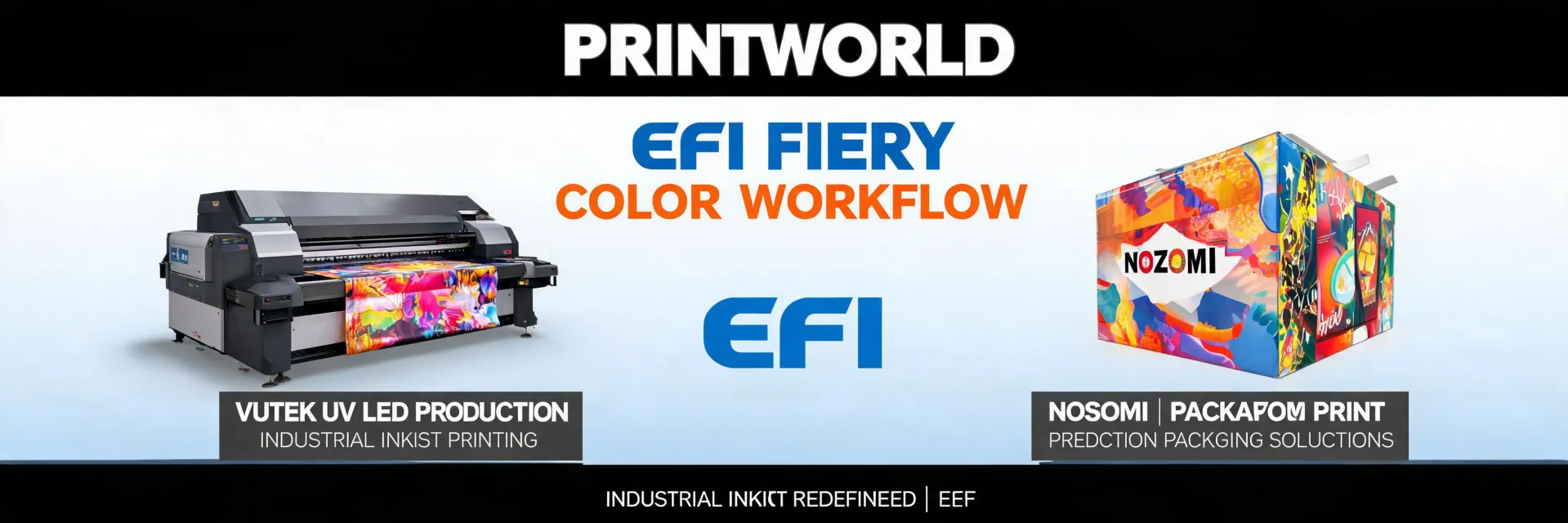
- For the full-color retail graphics, I contacted EFI. They're known for their LED UV wide-format printers (like the VUTEk series). I'd heard about their color accuracy and speed. Their sales engineer didn't try to sell me a laser or a CIJ — just showed me how their flatbed printer could hit Pantone 286 C with a Delta E of 1.5 on our corrugated board. That's the kind of focus I needed.
The ROI of Specialization
Bottom line: the project ended up costing about the same as the one-stop-shop quote, but with significantly fewer headaches. The laser engraving specialist had us up and running in two weeks. The CIJ setup took three days. EFI's printer was installed in four weeks, and the first batch of graphics passed the client's color check immediately.
I also learned a thing or two about specifications. For example, a fiber laser engraving machine typically requires a wavelength of 1064 nm for metal marking — a CO2 laser (10.6 μm) won't work on metal. And a UV laser (355 nm) is great for cold marking on plastics but expensive. These aren't things a generalist dealer always understands.
What I'd Do Differently (and What You Should Too)
Now I have a simple rule: if a vendor says they can do everything, I ask them which one thing they do best. If they can't answer clearly, I walk. The vendor who said 'this isn't our strength — here's who does it better' earned my trust for everything else.
My experience is based on about 200 mid-range orders across labeling and print. If you're working with ultra-low budgets or very high volumes, your mileage may vary. But the principle holds: specialists outperform generalists when the technology is different.
One more thing: I wish I had tracked the hidden costs from that first attempt — expedited shipping for replacements, lost labor during rework, the VP's time. Anecdotally, it was at least $12,000 we could have saved. Now I budget 20% extra for specialty vendors, because the cost of getting it wrong is higher than the premium for expertise.
(This was back in 2023, and as of January 2025, I still use the same laser and CIJ specialists. EFI has been our go-to for large-format color ever since.)
So if you're in the market for a CO2 laser, portable laser, UV laser, fiber laser engraving machine, CIJ printer, or laser marking machine — don't try to bundle them all with one supplier. Find the experts. Your budget and your reputation will thank you.

Elise Marceau is an LED display and digital-signage systems analyst covering LED video walls, modular screens, transparent LED, control processors, and indoor or outdoor signage. She applies IEC 62368-1 safety principles while comparing pixel pitch, luminance, contrast, refresh rate, colour uniformity, viewing angle, ingress protection, power density, module serviceability, and signal redundancy. Her specification guides help integrators, venue operators, retailers, and procurement teams align viewing distance, ambient light, content format, installation access, electrical load, and lifecycle support.