
That $3,200 Mistake I Made in My First Year
Back in September 2017, I was handling production orders for a mid-size commercial print shop. We serviced sign shops and packaging producers. I thought I had everything figured out. I didn't.
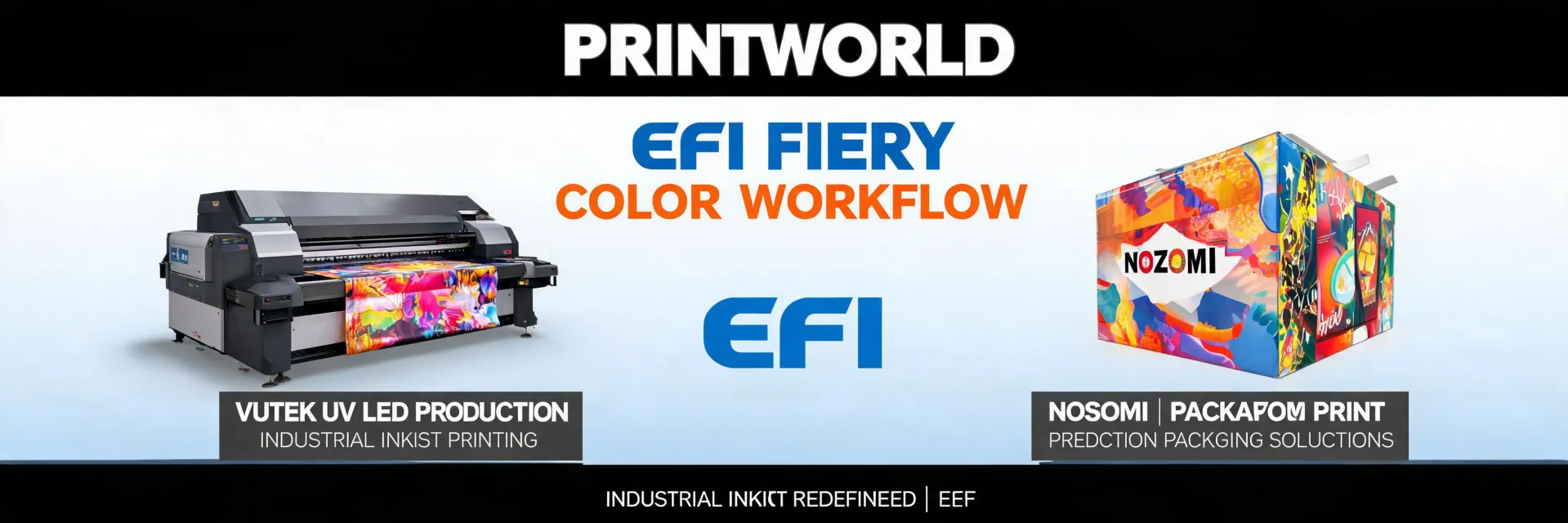
I ordered 500 corrugated display pieces for a client. The artwork looked perfect on my screen. The specs matched their file. We printed it on our EFI VUTEk—a workhorse that handles grand format jobs like a champ. The result? Every single piece had to be trashed. Straight to the recycling bin. $3,200 down the drain. Plus a 1-week delay, an angry client, and a seriously awkward conversation with my boss.
The problem wasn't the printer. It wasn't the file. It was me. I approved a material I'd never tested on that specific machine. And I learned a lesson the hard way: never assume a material will work just because the spec sheet says it should.
The Mistake (and the Expensive Discovery)
Here's what happened. The client wanted a textured, matte finish on a synthetic board. The supplier told me it was compatible with UV flatbed printers. Our EFI VUTEk uses LED-curable inks. In theory, it should have worked. In practice? The ink didn't adhere properly. It peeled off in patches. Looked terrible. (Ugh.)
I'd skipped the test run. Why? Because I was in a hurry (classic rookie move). The client needed it in 5 days. We were short-staffed. I thought, "It'll be fine. The spec says it's compatible."
To be fair, the supplier's spec sheet was technically correct—for some UV printers. But not all UV printers are the same. LED-cured inks have different adhesion characteristics than mercury-vapor cured inks. Our EFI VUTEk uses advanced LED technology, which is great for speed and energy efficiency. But the material's surface energy wasn't a match. That's something a test print would have caught in 2 minutes.
How I Fixed It (and the Checklist I Still Use)
After that disaster, I created a pre-production checklist. I've now been handling orders for 7 years, and I've personally documented 14 significant material-related mistakes. Totaling roughly $8,500 in wasted budget. I maintain our team's checklist to keep others from repeating my errors.
My Pre-Check List (Abbreviated Version):
- Step 1: Always request a material sample and test it on the actual printer. Don't trust the supplier's word alone. This would have caught my issue instantly.
- Step 2: Check the ink adhesion with a simple tape test. If it peels, it's a no-go.
- Step 3: Verify the material's surface energy and compare it to your ink's requirements. A quick contact angle test can save thousands.
- Step 4: Print a small batch first, even if the client is in a hurry. A 2-minute test can prevent a 1-week redo.
Since I started using this checklist, we've caught 47 potential errors in the past 18 months. That's 47 jobs that could have gone sideways. Instead, they went out on time and on spec.
What I Learned About EFI Printers (Especially the H1625 and VUTEk Series)
EFI printers are solid machines. I've worked with the H1625 LED printer, the VUTEk series, and even the Nozomi C18000 for packaging. They're built for industrial production—high speed, excellent quality, and pretty reliable uptime. But they're not magic. They have specific needs.
The H1625, for example, is a roll-to-roll printer that can handle a wide range of flexible media. But it's optimized for certain ink-media combinations. If you use a material with low surface energy, you'll get adhesion issues. The VUTEk series (like the VUTEk h5 or the VUTEk HS125 Pro) is similar—great for rigid substrates, but you still need to match the material to the ink chemistry.
On a related note, I've had clients ask me, "Can I print on vinyl paper with an inkjet printer?" The answer: yes, if the ink is compatible. Many EFI LED printers can handle vinyl just fine. But always test first. The same vinyl that works on a solvent printer might not behave the same way with UV-curable inks.
Another question I get a lot: "Where is the IP address on a printer?" Most industrial printers, including EFI models, display the IP on the control panel under network settings. For the H1625, it's usually in the setup menu. For VUTEk models, check the front panel display or the Fiery server interface. Honestly, I still forget where it is on each model—I keep a printed cheat sheet taped to the side of each machine. (Seriously, it saves time.)
The Pricing Lesson (and Why Transparency Matters)
Here's where the transparency stance comes in. After my expensive mistake, I also started paying way more attention to vendor pricing. I learned to ask: "What's NOT included?" before asking "What's the price?"
The vendor who lists all fees upfront—even if the total looks higher—usually costs less in the end.
This applies to both materials and printing services. A quote for $200 per sheet might sound good, but if it doesn't include setup fees ($15-50 per color for offset), die cutting setup ($50-200), or rush charges (+25-200% for expedited turnaround), your final bill could be way higher. I've seen clients get burned by this. A "low" quote for shipping label printing turned into a $400 surprise when they added the rush fee and the custom die cut charge.
For reference, based on publicly listed prices from major online print vendors (January 2025): business cards (500, 14pt, double-sided) run $20-120 depending on the tier. Flyers (1,000, 8.5x11) are $80-300. Setup fees for offset printing typically include plate making at $15-50 per color. Always verify current pricing, but these ranges give you a ballpark.
Now, I tell every new team member: "If a price looks too good to be true, ask about the exclusions. The best deal is the one where everything is included."
The Bottom Line
Honestly, I'm still embarrassed about that $3,200 mistake. But it taught me two things that have saved us a ton of money since:
- Test before you print. A 2-minute test can save a $3,200 disaster.
- Read the fine print. On material specs, pricing quotes, and compatibility claims. Nobody will look out for your budget like you do.
Granted, this approach requires a little more upfront work. It means asking your supplier for samples, running test prints, and reading the details. But I've found it saves time later. A lot of time. And a lot of money.
One more thing: if you're shopping for a printer—say, a shipping label printer nearby, or a new industrial model for your shop—make sure the vendor is transparent about what's included. The machine cost is just the start. Ask about installation, training, maintenance, and ink compatibility. A vendor who lists all costs upfront is worth trusting.
We've used EFI printers for years, and they're solid. But even the best machine won't save you from a bad material choice or a hidden cost. Trust me on that. I learned it the expensive way.

Elise Marceau is an LED display and digital-signage systems analyst covering LED video walls, modular screens, transparent LED, control processors, and indoor or outdoor signage. She applies IEC 62368-1 safety principles while comparing pixel pitch, luminance, contrast, refresh rate, colour uniformity, viewing angle, ingress protection, power density, module serviceability, and signal redundancy. Her specification guides help integrators, venue operators, retailers, and procurement teams align viewing distance, ambient light, content format, installation access, electrical load, and lifecycle support.