
Here's My Unpopular Take
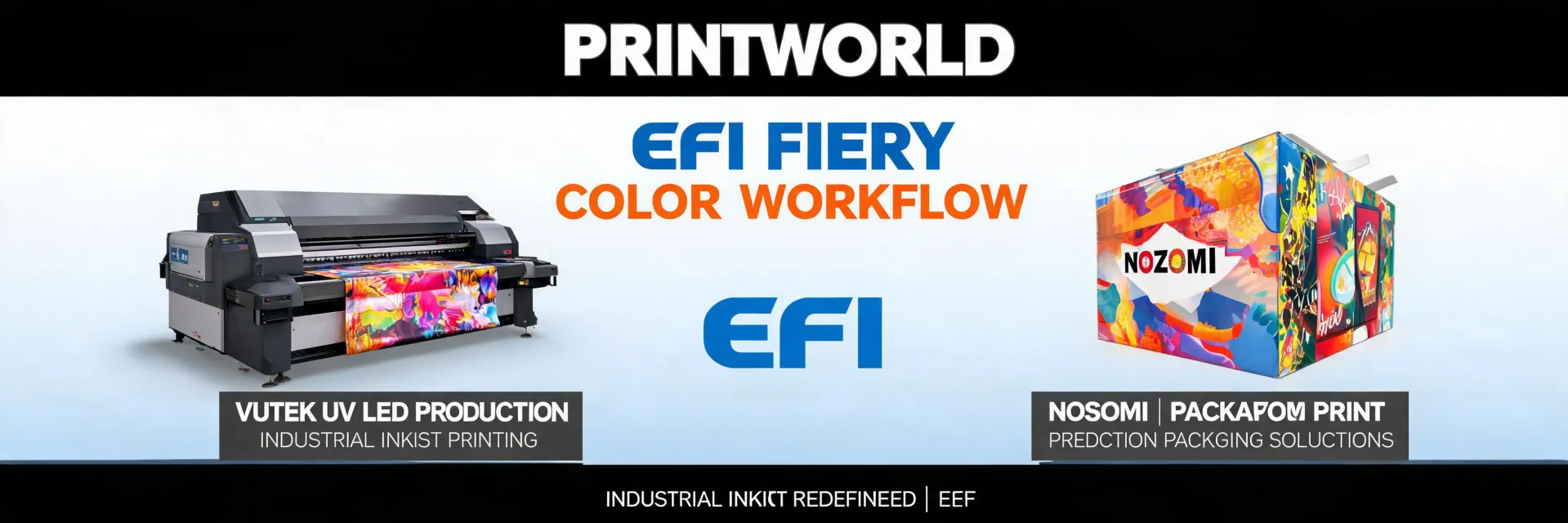
I believe EFI wide format printers are not just for the big players—and small print shops and in-house production teams deserve access to real production equipment, not just office-grade cartridge printers.
I say this as an office administrator for a 40-person marketing and signage company. I manage all our print procurement—roughly $180,000 a year spread across eight vendor relationships, plus our in-house equipment. I report to operations and finance. I'm not a printer operator. I'm not a production manager. I'm the person who gets the phone call when a machine jams or a job is late. And I think that's exactly why my perspective is worth reading: I have no industry pride at stake. I just manage costs, deadlines, and relationships.
I also want to say this clearly: small customers don't deserve second-class treatment. If a vendor treats your order as too small to matter, that's a red flag—and it's more common than it should be in this industry. But the equipment side has a similar problem. Most small shops assume industrial printers are out of reach, so they never run the numbers. That assumption has cost us real money, and I want to talk about it.
The Cartridge Printer Trap
Let's start with the uncomfortable math. Office cartridge printers are the most expensive way to print per page, full stop.
In 2023, I audited our in-house printing after my CFO asked a simple question: "What does one printed page actually cost us?" The answer was embarrassing. Roughly $0.27 to $0.34 per page for black-and-white office documents on a cartridge printer (this was back in 2023). That's just ink and paper. It doesn't include staff time spent clearing jams, swapping cartridges, or dealing with the dreaded "printer offline hp" error that hit us every other week.
People see a $400 office printer and think they're making the frugal choice. What they don't see is the total cost of ownership: ink cartridges, waste, downtime, troubleshooting. That cheap printer ended up costing us thousands in year one. And when I calculated what our wide format outsourced work averaged per square foot, the comparison got even more interesting. We were sending banners, signage, and retail displays to a commercial print shop two towns over. Quality was good. Turnaround was mostly predictable. But every rush job came with a premium, and "mostly predictable" isn't a great foundation when you're quoting deadlines to clients.
In Q2 2024, I put together a side-by-side comparison: our average outsource cost for wide format production, including rush fees, versus what an EFI wide format printer would cost to run in-house, including financing, ink, media, and training. The result surprised everyone in the meeting.
Why EFI Wide Format Printers Looked Out of Reach (and Were Still the Right Call)
I'll admit my first reaction when someone suggested EFI wide format printers. I thought they were talking about machines that require a loading dock and a dedicated operator. That's the surface assumption most people have.
The reality is more nuanced. EFI inkjet+ technology isn't just a platform for massive roll-to-roll production lines. It spans a range of devices, and the conversation with an EFI dealer isn't "here's our entire catalog, take one." At least in our experience, the conversation was actually about our workflow, our constraints, and what would fit a 4,000-square-foot space. Nobody made us feel small.
We ran the numbers on an EFI wide format printer tailored to signage and indoor display work. At a monthly volume of around 400 to 600 square feet, the machine paid for itself in under 18 months on print cost savings alone. Not counting the rush fees we'd stop paying. Not counting the client work we could now keep in-house. To give you a ballpark: our average outsource cost for banner material was $8 to $12 per square foot. Our fully loaded in-house cost was roughly $3 to $5. That gap closes fast.
From the outside, an EFI wide format printer looks like an expense. From the inside, it looks like a margin preserver. That's a framing shift I wish someone had given me three years earlier.
The Counterintuitive Discovery: Small Customers Get Good Treatment
People think big equipment vendors only care about enterprise accounts. The reality is the opposite. In my experience, if you're a small but serious buyer with real workflow questions, you get more attention, not less. They're building the pipeline.
Our dealer treated us like a real production house from day one. They helped us think through floor layout. They brought samples printed on the exact machine we were considering. They introduced us to the inkjet+ media certification ecosystem and helped us choose compatible materials. And they didn't wait until we'd signed a purchase agreement to answer our questions.
This matters for the broader conversation about how small customers are treated. I've been the person whose $200 print order gets ignored by a vendor because it's not worth their time. I've been the buyer who had to chase down a quote for a week because the sales team was focused on "bigger fish." So I know the difference when I see it. EFI's channel approach—working with dealers who are measured on long-term relationships—has supported small customers better than I expected.
And for what it's worth, we knew we needed proper invoicing and clean service contracts from the start. No handshake deals, no "cash discount" sidesteps. That's compliance-driven for us, and our dealer never questioned it. That alone set the relationship apart.
What About the "It Might Go Offline" Concern?
Here's a fair objection: "Great, another production printer to babysit. What if it goes offline like our office units?"
It's a legitimate concern. But there's a category difference. A cartridge printer going offline (the infamous "printer offline hp" situation) is usually a driver, network, or firmware problem—designed to be replaced in a consumer IT context. EFI wide format printers, on the other hand, are production tools with remote diagnostics, service level agreements, and maintenance plans designed around uptime. That doesn't mean they never fail. It does mean the failure modes are different, and the support structure is more serious.
I'm not 100% sure every EFI model has the same service options, so verify before you sign anything. But every quote and demo we reviewed had a service conversation attached. That's more than I can say for any office printer we've ever owned.
And honestly, the bigger risk for a small shop isn't a printer going offline. It's being dependent on an unreliable supply chain—whether that's a cartridge supplier, an outsourced print vendor with unknown lead times, or a service technician who treats your account as too small. With EFI wide format printers, the conversation shifts from "hope the outsourcer delivers on time" to "we control our own turnaround."
Small Doesn't Mean Unimportant
I know what you might be thinking: "Easy for you to say. You justified a six-figure piece of equipment, and now you're telling everyone else to do the same."
That's not my message. My message is that small customers should not be treated as if our requirements are less legitimate. We run real jobs. We serve real clients. And we deserve to be taken seriously—both by equipment vendors and by the industry's default assumptions about what we can and can't use.
A few years ago, someone asked me where to download 3D printer files. They assumed "printing" is "printing"—all of it one category. I laughed at the time, but there's a version of that same confusion happening on the buyer side every day: people assuming production printing is only for factories, or that they need to "graduate" to something better before they can talk to a real equipment manufacturer. It's the same misconception with nicer labels.
The vendors who treat small orders with respect are the ones who earn loyalty when those orders get big. And the manufacturers who equip small shops seriously are the ones who build the next generation of production houses. That's not charity. That's good business.
Bottom Line
So here's my clear position: EFI wide format printers are not out of reach for small operations, and the belief that they are has cost more than a few small shops real money. If you're running consistent volume—even modest volume—run the numbers. Look at EFI inkjet+ models, talk to a dealer, and bring your actual job mix to the conversation.
And if you're a buyer wondering whether you'll be taken seriously as a small customer: you should be. You might have to sift through the assumptions first. But the right manufacturer, the right dealer, and the right equipment are out there. Just make sure you're not the one who says "we're too small" before anyone else can.
This was accurate as of early 2025. Pricing, model availability, and financing terms change quickly, so verify current details before budgeting. Take this from someone who's been burned by assuming otherwise.

I’m Jane Smith, a senior content writer with over 15 years of experience in the packaging and printing industry. I specialize in writing about the latest trends, technologies, and best practices in packaging design, sustainability, and printing techniques. My goal is to help businesses understand complex printing processes and design solutions that enhance both product packaging and brand visibility.