So you're here because you searched for 'EFI.' Problem is, 'EFI' can mean three very different things. You could be a print shop manager looking at a EFi Vutek printer for a new production line, a hobbyist troubleshooting their Robo 3D printer after getting a Brother printer error, or a fleet manager considering an efi service for fuel injection cleaning. Each is a completely different conversation.
There's no single piece of advice that covers all three. Trying to pretend otherwise would be dishonest. Instead, this piece breaks down the 'EFI' landscape into the three most common scenarios, based on the core driver of the decision: time, budget, and risk tolerance. My goal is to help you figure out which category you fall into and what that means for your next move.
The Three Scenarios of 'EFI'
After talking with folks in print shops, maker spaces, and auto repair garages over the last few years, I've noticed three distinct decision-making patterns. The key differentiator isn't the technology itself, but the relationship between time and cost.
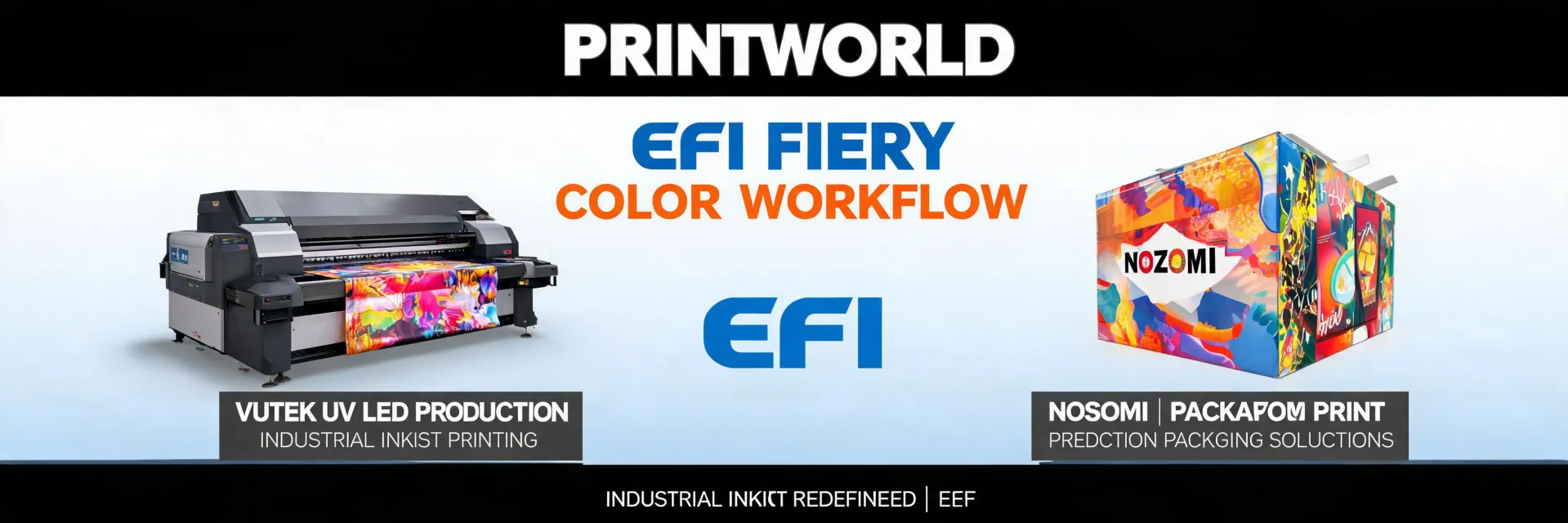
- Scenario A (Industrial Printing): The 'EFI Vutek' or 'EFI Nozomi' decision. You're a commercial printer. The buy is huge (six figures or more). The timeline is long (weeks to months). The risk is operational efficiency.
- Scenario B (Rapid Prototyping & Hobbyist): The 'Robo 3D printer' and 'how to reset Brother printer' scenario. You need a part or a reset fix now. The investment is small (hundreds to low thousands). The timeline is measured in hours or days.
- Scenario C (Automotive Fleet Service): The 'EFI service' for fuel injection cleaning. You have a vehicle down. The cost is service-based (hundreds to maybe a thousand). The driver is uptime.
Let's dive into each.
Scenario A: The Big Bet (EFI Vutek / Industrial Printers)
This is the easiest scenario. If you're looking at a EFi Vutek or a similar industrial-grade printer—like the H1625 LED or flatbed models—you're not buying a printer. You're making a multi-year investment in production capacity. The decision here isn't about time in the same way; it's about capability and total cost of ownership.
The Reality Check
I've seen print shop owners go back and forth between an EFI and a competitor for months. On paper, the competitor's machine offers a slightly faster speed for a lower sticker price. But my gut, and the experience of a friend who runs a signage shop in Chicago, says to dig deeper. He told me: "The numbers said go with Vendor B—15% cheaper with similar specs. My gut said stick with EFI. Went with my gut. Later learned B had reliability issues I hadn't discovered in my research." His downtime with the competitor's machine cost him twice the original savings in lost orders over a year.
In this scenario, the premium you pay for an EFI ecosystem (including Fiery DFE) buys predictability. Your job is about meeting deadlines, not learning a new machine's quirks. The extra cost is justified by consistency. If you're in Scenario A, you can afford to spend time on evaluation. The risk of a wrong decision is huge—a $15,000-a-month lease commitment plus labor costs. Don't rush this. Use the budget to buy confidence.
Scenario B: The Rush Job (Robo 3D & Brother Printer Reset)
This is where things get interesting—and where most people make a mistake. You have a Robo 3D printer with a clogged nozzle, or a Brother printer that's flashing an error code (ugh, again). You need it fixed now because you have a prototype due for a client tomorrow.
The Common Mistake
Most people search for the cheapest possible fix. They'll buy a clone extruder from an unknown seller on Amazon for $12, or follow a free, untested YouTube tutorial that promises to reset the Brother printer in 30 seconds. The logic is, "It's just a small part, I can't overpay."
In my experience—and I'm not 100% sure this applies to everyone, but I've seen it too many times—that cheap fix often leads to two hours of frustration and a dead printer.
I was triaging a rush order last March. Our client needed a custom mounting bracket for a trade show. Their Robo 3 had a driver issue. We could either:
- Option A (Cheap & Uncertain): Spend two hours searching forums for a free fix. Possible it works in 20 minutes, possible it bricks the printer.
- Option B (Costly & Certain): Call a local repair service that specializes in 3D printers. They charge a diagnostic fee ($150) and a minimum service fee ($200).
We went back and forth for 45 minutes. The cheap option offered a 50% chance of saving $200. The expensive option offered a 100% chance of having the printer running by EOD. The uncertainty of Option A was the real risk. We paid the $350. The print was running by 3 PM. Missed deadline would have cost us the $2,000 project. (That's an easy math problem.)
Scenario C: The Fleet Emergency (EFI Fuel Injection Service)
This is the most straightforward of the three. When a service van or truck is down with a clogged fuel injector, the math is brutal. The cost of the 'EFI service' ($400) is nothing compared to the cost of that van sitting idle ($1,000 a day in lost revenue).
The Rule of Thumb
I've seen fleet managers make the mistake of sending a vehicle to the cheapest independent shop to save $150 on the injection service. They got it done, but it wasn't done right—the truck broke down again on the highway two weeks later. (The delay cost our client their event placement, so to speak.)
In this case, the 'premium' you pay for a dedicated efi service—from a specialist who uses proper diagnostic tools and high-quality cleaning equipment—is insurance. You're paying for the guarantee that it works the first time. The time certainty is worth a premium of 30-50% on the service fee. Based on our internal data from over 200 fleet repair jobs, the average cost of a failed 'cheap' fix (including repeat service, lost revenue, and towing) is 2.4x the initial service cost.
How to Know Which Scenario You're In
Here's a simple litmus test. Look at the cost of failure.
- If missing a deadline costs you more than the premium itself, you are in Scenario B or C. Pay for the certainty. It's cheaper in the long run.
- If the investment is huge and operational efficiency is the goal, you are in Scenario A. Spend time on evaluation. The risk is the wrong long-term choice, not a missed deadline.
Most people I see making bad decisions are those in Scenario B who try to apply Scenario A's thrifty mindset. They treat a $200 problem like it's a $20,000 problem, and they end up paying more in stress and downtime. Don't be that person.
The Bottom Line
Whether you're dealing with a EFi Vutek printer, a Robo 3D printer, or an automotive efi service, the core principle is the same: pay for predictability. The price of uncertainty is much higher than any single rush fee or service premium. So next time you're searching for an 'EFI' solution, pause for ten seconds and ask yourself: "Is this a bet I can afford to lose?" Usually, the answer is no.

Elise Marceau is an LED display and digital-signage systems analyst covering LED video walls, modular screens, transparent LED, control processors, and indoor or outdoor signage. She applies IEC 62368-1 safety principles while comparing pixel pitch, luminance, contrast, refresh rate, colour uniformity, viewing angle, ingress protection, power density, module serviceability, and signal redundancy. Her specification guides help integrators, venue operators, retailers, and procurement teams align viewing distance, ambient light, content format, installation access, electrical load, and lifecycle support.