
I'm the procurement manager at a 40-person commercial printing and label company, and I've managed our equipment and supplies budget for six years. I've negotiated with vendors, chased invoices, and logged every order in our cost tracking system. One thing I've learned the hard way is that there is no universal best printer. There is only the best printer for a specific workload.
It took me about six years and a ton of invoice line items to fully understand that. I assumed the more expensive machine would always give me a lower cost per print. Didn't verify. Turned out the cost per print depends more on utilization, setup waste, spare parts, and operator hours than on the number at the top of the quote. So let's split your situation into three scenarios, because they need completely different solutions.
Scenario A: You're producing wide-format sign jobs and need production speed
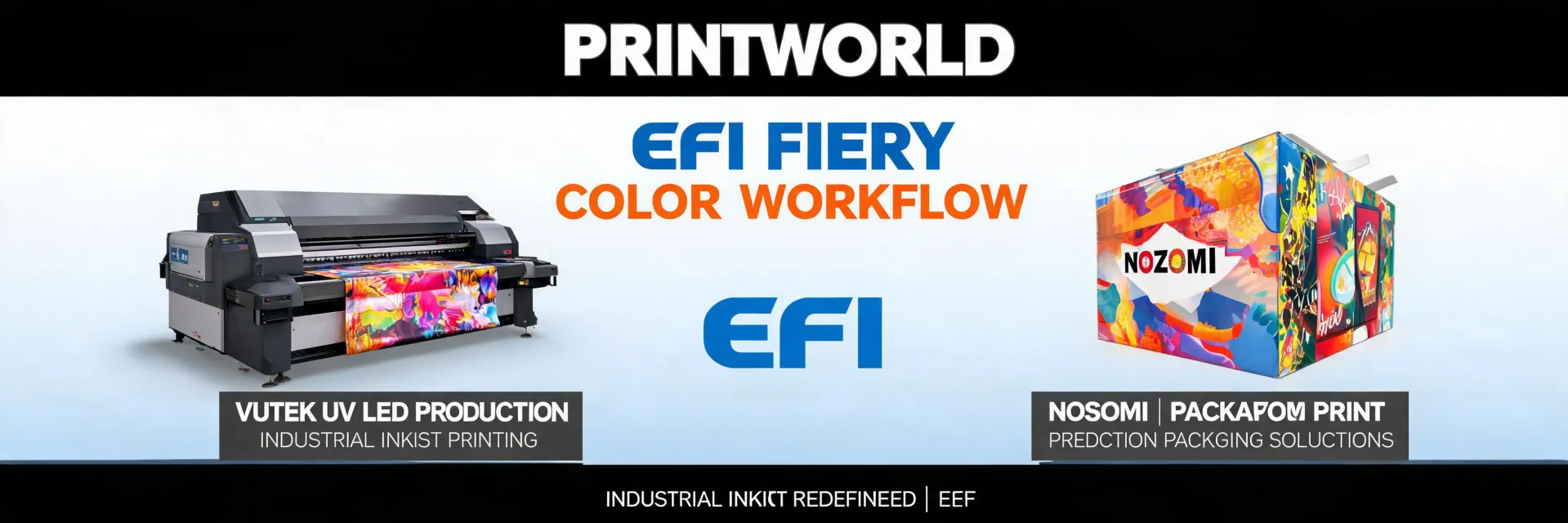
If your shop is quote-to-shop on banners, vehicle wraps, window graphics, and short-run signage, the EFI H1625 LED printer is probably on your list. I put machines like this in the capital investment category, not the printer purchase category. The question is not whether it will look impressive. The question is whether it can keep a sign job profitable.
When I audited our 2023 spending, I found that color-matching failures were eating up a noticeable chunk of gross margin on some wide-format contracts. If a client's corporate blue has to stay in spec across 200 panels, the color tolerance matters. Pantone guidelines (accessed January 2025) place brand-critical color tolerance around Delta E below 2. A production printer with proper calibration can get you there. A consumer printer cannot.
Resolution matters too, but not the way the marketing sheets make it sound. Commercial print is typically 300 DPI at final size, while large-format graphics viewed from a distance can often be fine at 150 DPI. The H1625 gives you the speed to handle both without making the operator manually massage every file. LED curing also helps with heat-sensitive substrates and reduces media curl. I don't have side-by-side lab data on every substrate, and I won't pretend I do. But based on our trials, curl was noticeably lower.
That said, if you're producing 20 yard signs a week, skip this machine. The floor space, power requirements, maintenance, and skilled operator time will make it a losing investment. It's a production tool, not a badge of honor.
Scenario B: Labels are the game, and run lengths are shrinking
Label work is where I see cost logic change fastest. If your customers keep asking for new designs, seasonal SKUs, barcode versions, and shorter runs, an EFI label printer can make sense. Digital label printing removes most plate costs and makeready waste, which is exactly where analog processes hurt on short runs.
I don't have hard data on industry-wide run lengths, but based on our order history, my sense is that most label shops have a long tail of small jobs. If you are frequently producing a few hundred to a few thousand labels per SKU, digital is often the lower-cost route. If you are running 500,000 identical labels, digital can still handle it, but a flexo line might be cheaper per unit. That is an honest limitation, not a sales pitch.
I almost outsourced all our short-run label work once because the per-label quote looked cheaper. Then I added inventory write-offs, obsolescence, and emergency shipping. The outsourced route would have cost us about $450 more per project in hidden fees. That 'free setup' offer was not actually free. When we finally committed to a digital label workflow, we cut waste and saved roughly $8,400 annually, which was about 17% of that category's budget.
So, bottom line: in labels, total cost per sellable label matters more than the invoice price of the press. Include ink coverage, substrate waste, operator time, and maintenance in your TCO spreadsheet. I built one after getting burned twice, and the waste line is what changed my mind.
Scenario C: You just want to print from your phone
If the phrase 'how do I connect my printer to my phone' appears in your search history, stop. You don't need an industrial printer. You need a solid consumer machine like the HP Envy 6000 printer with the HP Smart app.
This is the scenario where people waste the most money buying way more printer than they need. Setting up the HP Envy 6000 is straightforward:
- Download the HP Smart app from your phone's app store.
- Plug in the printer, load paper, and make sure it can connect to your Wi-Fi network.
- Open the HP Smart app and follow the add printer prompts. It usually asks you to put the printer into setup mode by holding the Wi-Fi button.
- Once the printer is on the same network as your phone, you can print photos, PDFs, and documents directly from the app. On iPhone, AirPrint also works as a backup.
Honestly, I've had to walk employees through this enough times. Keep the printer on the same Wi-Fi network, and don't change the network name unless you are ready to redo setup. That was our own mistake once.
If your monthly volume is somewhere around 12 pages, the right answer is an HP Smart app setup, not a production machine. If a salesperson suggests an industrial printer for that office, it's a red flag.
How to know which scenario you're actually in
I don't want to end with 'choose based on your needs,' because that's a useless sentence. Here is a practical test.
- What does one hour of downtime cost? If it delays a customer deadline and creates a financial risk, you're in Scenario A or B. If it just delays a school form, you're in Scenario C.
- How much volume do you produce each week? Thousands of square feet or labels means A or B. Dozens of pages means C.
- Does color have to meet a measured standard? If you need Delta E within a strict tolerance, that's A or B. If 'it looks good on my phone' is your color standard, that's C.
- Who will operate the machine? If the answer includes a trained operator who understands RIP settings and media profiles, that's A or B. If the answer is 'the person holding the phone,' that's C.
If you're still on the fence, project your volume 12 months from now. If it's likely to stay low, buy the consumer option. If it's already high and growing, the EFI H1625 LED printer or an EFI label printer might be the game-changer. Don't buy industrial hardware on hope.
There is no universal best. There is only a workload and a budget. I recommend EFI for production scenarios, and I recommend an HP Envy 6000 for home and small office scenarios. If your situation is somewhere in between, get quotes and run your own TCO. Then check the fine print, because the hidden fees are always where the real cost lives.

I’m Jane Smith, a senior content writer with over 15 years of experience in the packaging and printing industry. I specialize in writing about the latest trends, technologies, and best practices in packaging design, sustainability, and printing techniques. My goal is to help businesses understand complex printing processes and design solutions that enhance both product packaging and brand visibility.