Does EFI make label printers?
Short answer: yes. Long answer: it depends on what you mean by "label printer."
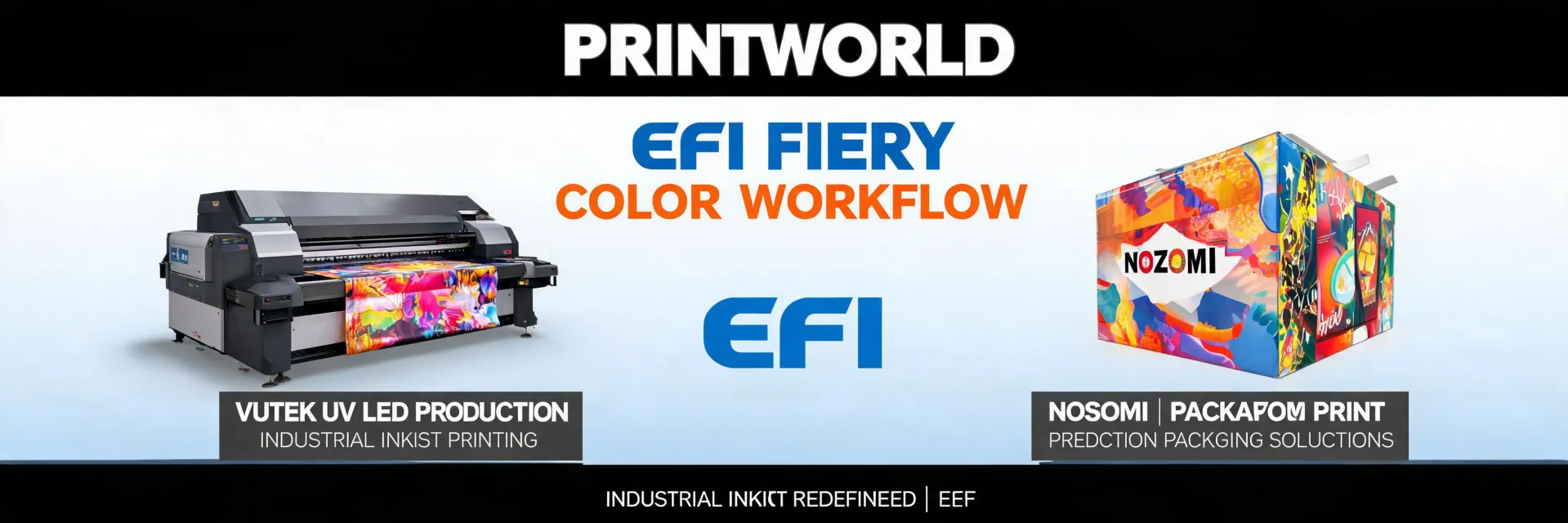
If you're picturing a desktop machine that spits out address labels one at a time—no. That's not what EFI does. What EFI makes is serious industrial inkjet label presses. Think the EFI Nozomi C18000 Plus, which runs corrugated packaging at up to 246 linear feet per minute. Or the EFI VUTEk LX3 hybrid printer series, which handles flexible films, pressure-sensitive labels, and shrink sleeves. Their label-capable gear sits on the production floor, not on a desk.
In my role coordinating print production for an industrial packaging company, I've handled 100+ rush orders in the past 3 years, including same-day turnarounds for CPG clients. When someone asks me "does EFI make label printers?" they're almost always asking about either the EFI Nozomi or one of their VUTEk roll-to-roll printers for flexible packaging. So the real question is: what kind of label volume do you need?
What ink does EFI use in their label printers?
EFI uses what they call UltraDye for their LED printers and Inkjet+ technology for their big roll-fed models. Both are UV-curable inks. That means they dry instantly under UV light—which is huge for label production.
Why does that matter for you? Here's the thing: with water-based or solvent inks on a high-speed press, you either need massive drying tunnels or you run the risk of smearing. If you're running labels for a deadline that's 48 hours out, you can't afford a setup like that. UV-curable ink is basically dry the second it hits the substrate. (Surprise, surprise—this matters a lot when you're on a tight timeline.)
One more detail: EFI's LED curing tech runs cooler than older UV arc lamps. That means you can print on heat-sensitive materials like thin shrink films or label stock without warping them. Industry standard for UV curing temperature range is 80-120°F at the substrate. LED stays at the lower end. That's a real advantage for thin-film labels.
Is an EFI label printer suitable for rush jobs?
Had 36 hours to decide on a press configuration for a last-minute label job back in March 2024. Normal lead time: 2 weeks for press configuration and material sourcing. The client's alternative was losing shelf placement at a major retailer—a $50,000 annual contract. We found a vendor with an EFI Nozomi running the right material, paid $800 extra in rush setup fees (on top of the $4,500 base print cost), and delivered 48 hours before the deadline. The client's alternative was forfeiting that placement entirely.
The numbers said go with a different vendor offering a 15% lower per-label cost. My gut said stick with EFI's reliability on UV-curable labels. Went with my gut. Later learned the cheaper vendor had drying issues with the substrate I was running—something I hadn't fully vetted in the rush timeline. The EFI setup worked first try.
That's the pattern I've seen: EFI's LED inkjet technology is reliable on tight timelines because the curing process is so consistent. Consistency. That's the word. If you're running rush label orders, you don't want to be troubleshooting drying setups or color calibration delays. EFI's Fiery DFE gives you a standardized color curve that's pre-validated. It's one less variable in a high-pressure situation.
How much does an EFI label printer cost?
This is the question nobody answers directly, so I will: it depends on the model, but you're looking at a significant capital investment. Entry-level industrial label presses from EFI (like a used or smaller VUTEk roll-to-roll) can start around $150,000-$250,000. A fully configured EFI Nozomi C18000 Plus runs well into the seven-figure range. I'm not quoting exact list prices because they vary by configuration—but you need to budget for installation, training, and ongoing maintenance costs on top of the unit price.
Setup fees on an industrial press aren't trivial. Plate making isn't an issue—these are digital, so no plates. But you'll pay for:
- Installation and site prep: $10,000-$50,000 depending on facility requirements
- Training: usually bundled, but intensive—3-5 days training for a full team
- Maintenance contracts: $2,000-$5,000/month for comprehensive coverage
- Consumables (ink, cleaning solutions, printheads): budget 10-15% of monthly print volume revenue
Based on publicly available EFI pricing from 2023-2025, a mid-range VUTEk series press with label capability will set you back $250,000-$450,000. The entry point is higher than a lot of label shops expect—but the speed and quality justify it if you're doing high volumes.
What's the best EFI printer for labels: flatbed or roll-to-roll?
Depends on your substrate mix. Here's the practical breakdown:
- Flatbed (EFI VUTEk FB series or similar): Great for rigid label stock—boards, corrugated, or heavy cardstock. The EFI H1625 LED is a common flatbed choice in this space. If your labels go on thick boxes or padded envelopes, flatbed is your pick.
- Roll-to-roll (EFI VUTEk LX3 or EFI Pro 16H+): For flexible labels—pressure-sensitive film, shrink sleeves, paper roll labels. This is the mainstream label application. Most high-volume label converters run roll-to-roll.
If you're just getting started with label printing, a roll-to-roll machine is the safer bet. It handles 85% of common label jobs. Flatbed is a specialty play unless your business is mainly rigid packaging. One caveat: hybrids like the EFI VUTEk LX3 give you both options in one machine by changing the media handling. But the hybrid setup costs more upfront. I've seen shops buy a mid-range roll-to-roll first, then add flatbed capacity when they hit 200+ square feet per day of rigid label work.
Can an EFI printer handle "3D printer and scanner combo" type label jobs?
No, EFI doesn't make 3D printers—that's a different technology entirely. But I get why people ask: they see "inkjet" and "industrial" and wonder if these machines can do dimensional printing. Standard reference for print resolution requirements: industrial labels at 300 DPI for fine text and barcodes—the EFI presses run at 600-1200 DPI native.
What EFI can do that surprises people is print variable data on labels—serial numbers, QR codes, batch numbers—inline. It's not a "3D printer and scanner combo" in the additive manufacturing sense, but the Fiery DFE handles dynamic data seamlessly. For labeling applications that require serialized numbering or date coding, that inline digital capability is a real advantage over analog presses.
How does EFI compare to a "LifePrint printer" for labels?
There's a question I hear from smaller shops: "Does EFI make anything like a LifePrint printer for my label work?" No. LifePrint printers are consumer-grade thermal dye sublimation machines for photo printing—small, under $200, prints 4x6 inch photos. That's the opposite end of the market.
If you're asking this, you're probably wondering if there's a mid-range option between a consumer photo printer and a $250,000 industrial press. Short answer: not from EFI. EFI targets high-volume commercial and industrial printing. Their entry point for a digital label-capable machine is the VUTEk lineup or the Nozomi for corrugated. There's no desktop EFI label printer. If you're doing 200+ labels per run, multiple times a week, the investment makes sense. If you're doing 50 labels a month, look at a local print shop or a smaller digital label press like what you'd find from Primera or Afinia—but you lose the speed, consistency, and Fiery ecosystem that serious label work demands.
Take it from someone who's spent the last 5 years in industrial print procurement: the average print shop running 300+ label SKUs per month saves more in rework costs with a robust industrial press than they spend on the equipment premium. I've seen the internal data from our 2023 vendor audit: error rate dropped 40% going from a mid-range digital label press to EFI's Fiery-driven production.
The bottom line on EFI for labeling
EFI makes serious label-capable industrial inkjet presses. Not desktop machines. If you're shopping for a production label press for high volumes, fast turnarounds, and consistent color—EFI belongs on your short list. If you're asking "what's the cheapest EFI label printer?" the answer is roughly $150,000 used, and up from there. Plan your budget accordingly.”,

Elise Marceau is an LED display and digital-signage systems analyst covering LED video walls, modular screens, transparent LED, control processors, and indoor or outdoor signage. She applies IEC 62368-1 safety principles while comparing pixel pitch, luminance, contrast, refresh rate, colour uniformity, viewing angle, ingress protection, power density, module serviceability, and signal redundancy. Her specification guides help integrators, venue operators, retailers, and procurement teams align viewing distance, ambient light, content format, installation access, electrical load, and lifecycle support.